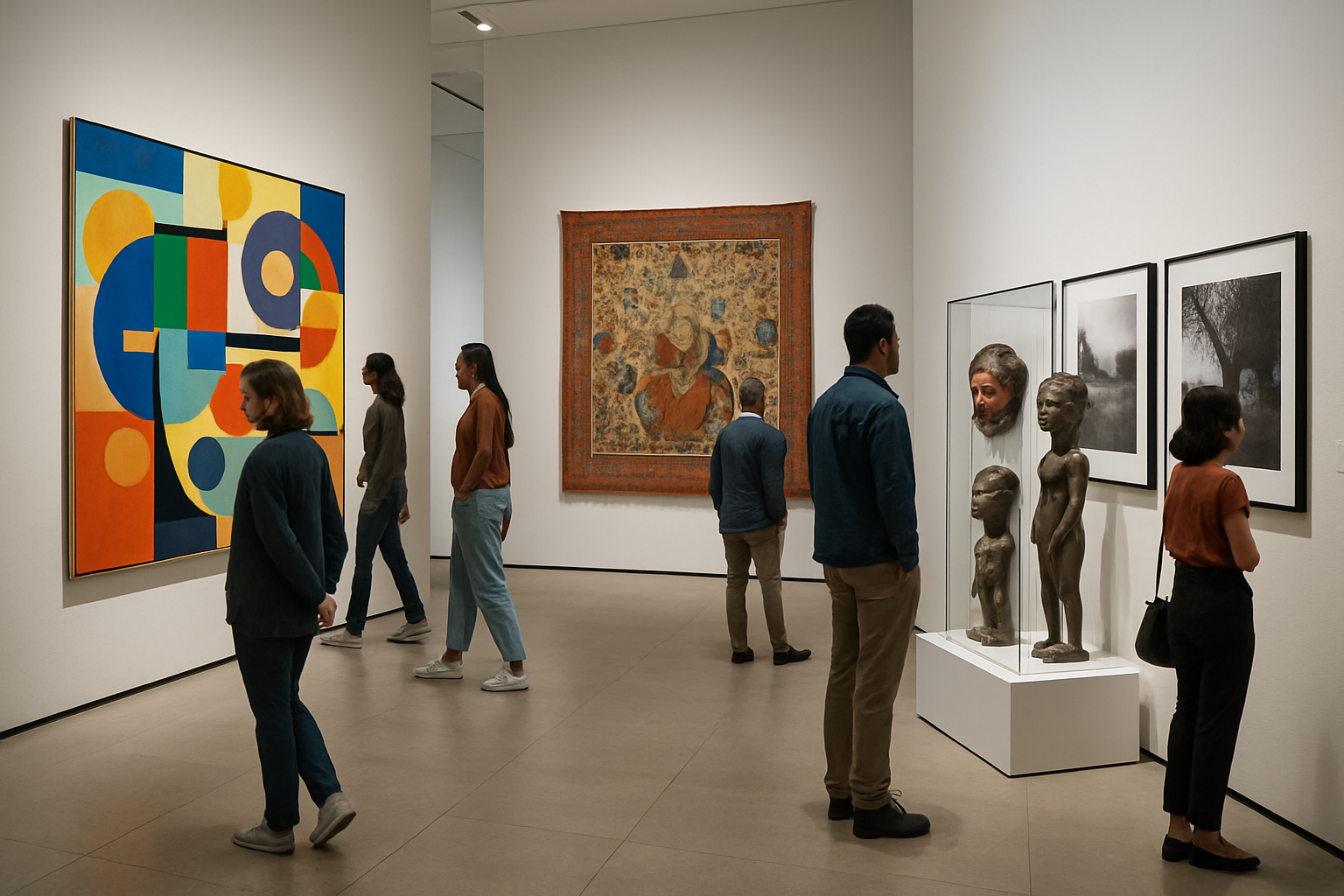
A wave of international art exhibitions and cultural celebrations spanning from Azerbaijan to India demonstrates the continuing vitality of the global cultural renaissance of 2026, as nations leverage art and heritage to strengthen diplomatic ties while preserving authentic cultural expression.
Four major cultural developments across continents this week highlight the sophisticated balance between honoring tradition and embracing innovation that has characterized the ongoing international cultural collaboration movement since early February 2026.
Azerbaijan Emerges as Cultural Bridge
Baku has positioned itself as a significant cultural crossroads with two simultaneous exhibitions opening this week. Hungarian tapestry artist Juja Perel's "Beyond the Frame of Truth" exhibition opened to showcase the intricate craft traditions of Central Europe, while the "Squares of Europe" photography exhibition at Crescent Mall presents architectural heritage from across the continent.
These exhibitions build on Azerbaijan's growing reputation as a cultural bridge between Eastern and Western traditions, following the successful Egyptian Cultural and Educational Center poetry evening earlier this month that celebrated shared literary heritage between Egypt and Azerbaijan.
"Azerbaijan's strategic positioning allows us to facilitate meaningful cultural exchanges that honor both European traditions and our own rich heritage."
— Cultural Ministry Official
India's Spiritual Arts Journey
In a remarkable display of cultural preservation and education, India's "Ekaa: The One" exhibition featuring 64 yoginis has embarked on an ambitious 81-day national tour, currently showcasing in Ahmedabad. The exhibition represents a sophisticated approach to making ancient spiritual traditions accessible to contemporary audiences while maintaining their sacred significance.
This initiative aligns with the broader trend documented throughout February 2026, where cultural institutions worldwide are evolving from static museum preservation to dynamic community-engaged programming that combines traditional heritage with innovative presentation methods.
Czech Republic's Digital Art Innovation
Prague's Galerie Rudolfinum presents perhaps the most forward-looking cultural development with "Beyond The City of Time" (Za hranicemi města času), featuring Indian artist Sahej Rahal's groundbreaking fusion of artificial intelligence, digital art, and traditional sculpture. The exhibition showcases mythological worlds created through computer technology alongside three-dimensional pedestrian sculptures, guiding viewers into an illusory contemporary world.
Rahal's work exemplifies the successful integration of cutting-edge technology with cultural authenticity that has emerged as a defining characteristic of the 2026 cultural renaissance. Rather than replacing traditional artistic methods, technology serves as an enhancement tool that preserves cultural context while reaching new global audiences.
Building on a Global Movement
These developments continue the unprecedented cultural preservation and innovation initiatives documented globally since early February 2026. From Qatar's "Empire of Light: Visions and Voices from Afghanistan" exhibition at the Museum of Islamic Art to Rwanda's emergence as a regional creative innovation hub, nations are positioning culture as strategic infrastructure for community development.
The success factors identified across these international initiatives include technology serving as enhancement rather than replacement of authentic traditions, international cooperation enabling resource sharing and expertise exchange, community engagement with traditional knowledge bearers, and economic viability through cultural tourism and educational partnerships.
Cultural Diplomacy in Action
The timing and coordination of these exhibitions suggest a sophisticated understanding of culture's role in international relations. Azerbaijan's European focus strengthens ties with EU nations, India's spiritual heritage tour builds internal cultural cohesion, and Prague's embrace of international digital artists positions Czech Republic as a forward-thinking cultural destination.
This approach reflects the broader shift documented throughout February 2026, where cultural institutions are evolving to serve multiple functions: heritage preservation, community bonding, economic development, intergenerational dialogue, and cultural diplomacy.

Technology as Cultural Bridge
The Prague exhibition's use of artificial intelligence in artistic creation represents a significant milestone in the ongoing debate about technology's role in cultural preservation. Rather than threatening traditional artistic expression, Rahal's work demonstrates how digital tools can expand the vocabulary of cultural storytelling while maintaining authentic spiritual and philosophical foundations.
This synthesis approach has proven successful across multiple cultural initiatives throughout 2026, from Singapore's digital heritage documentation to European museums' virtual reality programs that enable global accessibility while preserving local ownership of cultural artifacts.
Economic and Social Impact
The economic implications of this cultural renaissance extend beyond immediate tourism benefits. Cultural exhibitions serve as multiplier effects for local economies through increased international media attention, enhanced diplomatic relationships, and positioning of nations as attractive destinations for cultural investment and collaboration.
More significantly, these cultural initiatives address critical social functions in an increasingly connected yet fragmented world. They provide spaces for meaningful human connection, celebrate diversity while maintaining local authenticity, and offer alternatives to purely digital entertainment through embodied cultural experiences.
Challenges and Innovations
Despite the success stories, cultural institutions continue to navigate complex challenges including climate change threats to outdoor practices, economic pressures making traditions less viable for youth participation, and the delicate balance between global visibility and local authenticity.
The solutions emerging from successful programs emphasize community ownership of cultural preservation, international cooperation for resource and expertise sharing, and adaptive strategies that respect traditional practices while embracing methodological innovations that ensure sustainability.
Future Implications
As documented throughout the February 2026 cultural renaissance, these developments represent more than temporary exhibitions—they establish templates for 21st-century cultural stewardship that balances innovation with tradition, local authenticity with global cooperation, and economic viability with cultural integrity.
The success of Hungary's presence in Azerbaijan, India's national spiritual heritage tour, and Prague's digital art innovation suggests that the future of cultural preservation lies in dynamic, living traditions that adapt while maintaining essential character and community meaning.
These exhibitions demonstrate humanity's capacity for meaning creation and connection building across cultural boundaries, providing hope that international cooperation through shared appreciation of artistic expression can serve as a foundation for broader diplomatic and social progress in an interconnected world.