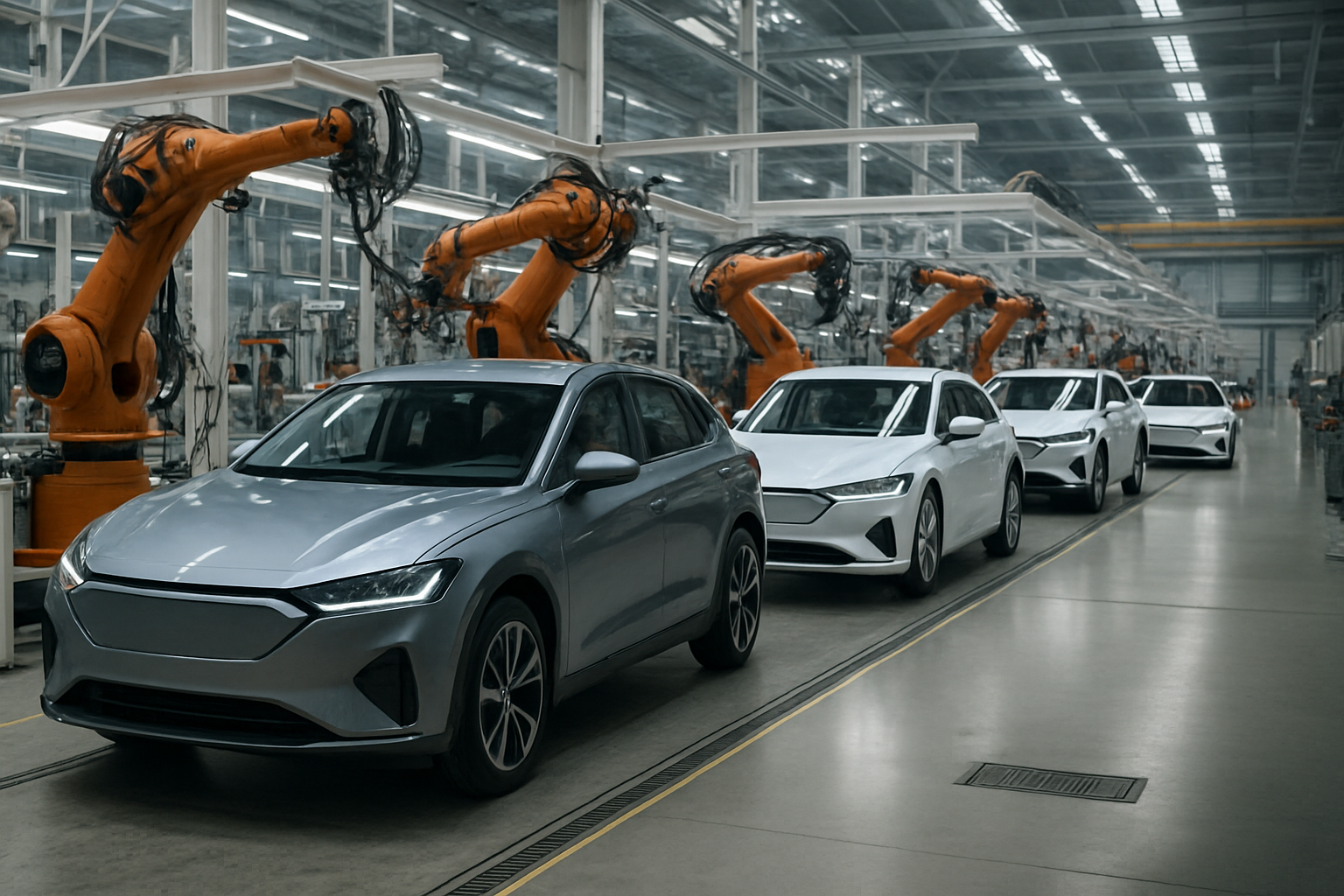
The global automotive industry is experiencing unprecedented transformation as electric vehicle markets expand in emerging economies, traditional automakers face mounting challenges, and major safety recalls highlight persistent quality concerns across the sector.
From Bolivia's burgeoning hybrid and electric vehicle market to BMW's resilient performance amid German automotive crisis, the industry's evolution reflects both opportunities and vulnerabilities in an increasingly complex global marketplace.
Electric Vehicle Growth in Emerging Markets
Bolivia has emerged as an unexpected success story in Latin America's electric vehicle transition. According to the Bolivian Automotive Chamber (CAB), over 1,000 electric vehicles now circulate within the country, marking a dramatic 2,700% growth rate from a minimal baseline. This acceleration far outpaces the global average of approximately 40% growth in electric vehicle adoption.
The surge reflects broader technological innovation, energy efficiency pursuits, and growing alternatives to fossil fuel dependency. Franco Soliz, General Manager of La Paz BUS, confirmed ongoing infrastructure developments including cable car elevator connections and express transportation routes connecting the Obrajes and Calacoto areas.
"The gradual but significant growth of electric and hybrid vehicles demonstrates Bolivia's commitment to sustainable transportation solutions while addressing urban congestion challenges," according to industry analysts.
— Bolivian Automotive Chamber Report
European Automotive Market Recovery
Estonia's automotive sector demonstrates resilience as dealers report market recovery following uncertainty in 2025. The Baltic Times confirmed that while many consumers postponed vehicle purchases due to new taxes and economic uncertainty, early 2026 has brought increased transaction volumes.
Car dealers indicate that automotive taxes are "no longer so intimidating" to consumers, suggesting market adaptation to the regulatory environment. This recovery pattern reflects broader European automotive market stabilization despite ongoing supply chain constraints and semiconductor shortages affecting the industry globally.
BMW's Strategic Resilience
BMW has demonstrated superior performance compared to competitors during Germany's automotive crisis. While the company experienced impacts from the broader German automotive industry downturn in 2025, it maintained better positioning than rivals through strategic management and operational efficiency.
Industry experts suggest 2026 could represent a transitional year for the German automotive sector, with traditional manufacturers adapting to electric vehicle transitions, supply chain disruptions, and changing consumer preferences. BMW's relative success provides a template for navigating current industry challenges while maintaining technological competitiveness.
Major Safety Recall Impacts Global Markets
Toyota issued a significant recall affecting approximately 550,000 Highlander and Highlander Hybrid vehicles in the United States due to defective seat adjustment mechanisms. The recall covers models produced between 2021 and 2024, specifically targeting second-row seat reclining mechanisms that may not lock properly after adjustment.
The National Highway Traffic Safety Administration (NHTSA) coordinated with Toyota to address the technical deficiency, which could compromise passenger safety by failing to maintain proper seating positions during vehicle operation. The recall demonstrates ongoing quality control challenges even among established manufacturers with strong safety reputations.

Supply Chain and Manufacturing Challenges
The automotive industry continues facing unprecedented supply chain constraints, particularly memory chip shortages causing sixfold price increases affecting vehicle control systems. These challenges are expected to persist until 2027 when new semiconductor fabrication facilities come online.
China maintains dominant control over critical materials production, holding 60% of global production capacity and 90% of refining capacity for lithium, cobalt, and rare earth elements essential for electric vehicle batteries and advanced automotive technologies.
Regional Manufacturing Strategies
Automakers are implementing regional manufacturing strategies to reduce supply chain vulnerabilities and transportation costs. This approach improves responsiveness to local market requirements while addressing geopolitical trade tensions affecting global automotive supply networks.
- Enhanced local sourcing capabilities reducing import dependencies
- Improved manufacturing flexibility responding to market demand fluctuations
- Reduced transportation costs and environmental impact from shorter supply chains
- Greater resilience against international trade disruptions
Technology Integration and Innovation
The automotive sector continues advancing technological integration despite supply chain constraints. Vehicle-to-grid technology development allows electric vehicles to serve as mobile energy storage, supporting electrical grid stability during peak demand periods while providing additional value to consumers.
Infrastructure expansion includes Austria's addition of 1,000 electric vehicle charging stations and Estonia's leadership in renewable electricity generation at 88% of total supply, supported by 90,000 household battery storage systems representing Europe's largest distributed energy storage network.
Battery Technology Advances
Recent studies of first-generation electric vehicles reveal battery longevity significantly exceeding initial industry predictions. Tesla Model S vehicles from 2012-2014 with over 200,000 miles demonstrate 85-92% battery capacity retention, while Nissan Leaf models from 2011-2013 show 75-85% retention after a decade of operation.
These findings suggest practical electric vehicle battery lifespans may extend 15-20 years, far beyond original manufacturer warranties of 8 years or 100,000 miles, improving total cost of ownership calculations and supporting robust used electric vehicle markets.
Climate Context and Industry Transformation
January 2026 marked the 18th consecutive month of global temperatures exceeding 1.5°C above pre-industrial levels, emphasizing the urgency of transportation electrification. The automotive industry's transformation represents one of the most significant industrial shifts in modern history, requiring coordination across energy systems, infrastructure development, materials supply chains, and regulatory frameworks.
Consumer adoption patterns show urban-rural disparities, with homeowners and rural residents advantaged through home charging access while urban apartment dwellers face infrastructure barriers. Workplace charging solutions are emerging as crucial components for comprehensive electric vehicle adoption across diverse demographic segments.
Market Outlook and Strategic Implications
The automotive industry's evolution reflects complex interactions between technological advancement, regulatory requirements, consumer preferences, and economic factors. Success depends on integrating innovation with strategic geographic positioning and supply chain resilience during accelerated sustainable mobility transition.
Regional markets demonstrate varying adaptation strategies: emerging economies like Bolivia focusing on gradual electric vehicle introduction, established markets like Estonia recovering from regulatory adjustments, and manufacturing centers like Germany balancing traditional automotive expertise with electric vehicle transformation requirements.
"The industry transformation involves evolution serving diverse market needs while preparing for an electrified future that addresses climate commitments and consumer demands simultaneously."
— Automotive Industry Analysis
Current developments indicate the automotive sector will continue experiencing significant changes throughout 2026, with successful companies demonstrating adaptability, operational excellence, and strategic vision in navigating complex global market dynamics during this critical transformation period.
The convergence of electric vehicle technology maturation, supply chain adaptation, and regulatory evolution creates both challenges and opportunities for automotive manufacturers, suppliers, and related industries worldwide. Long-term success requires sustained investment, international cooperation, and innovative approaches addressing diverse market conditions while accelerating sustainable mobility adoption.