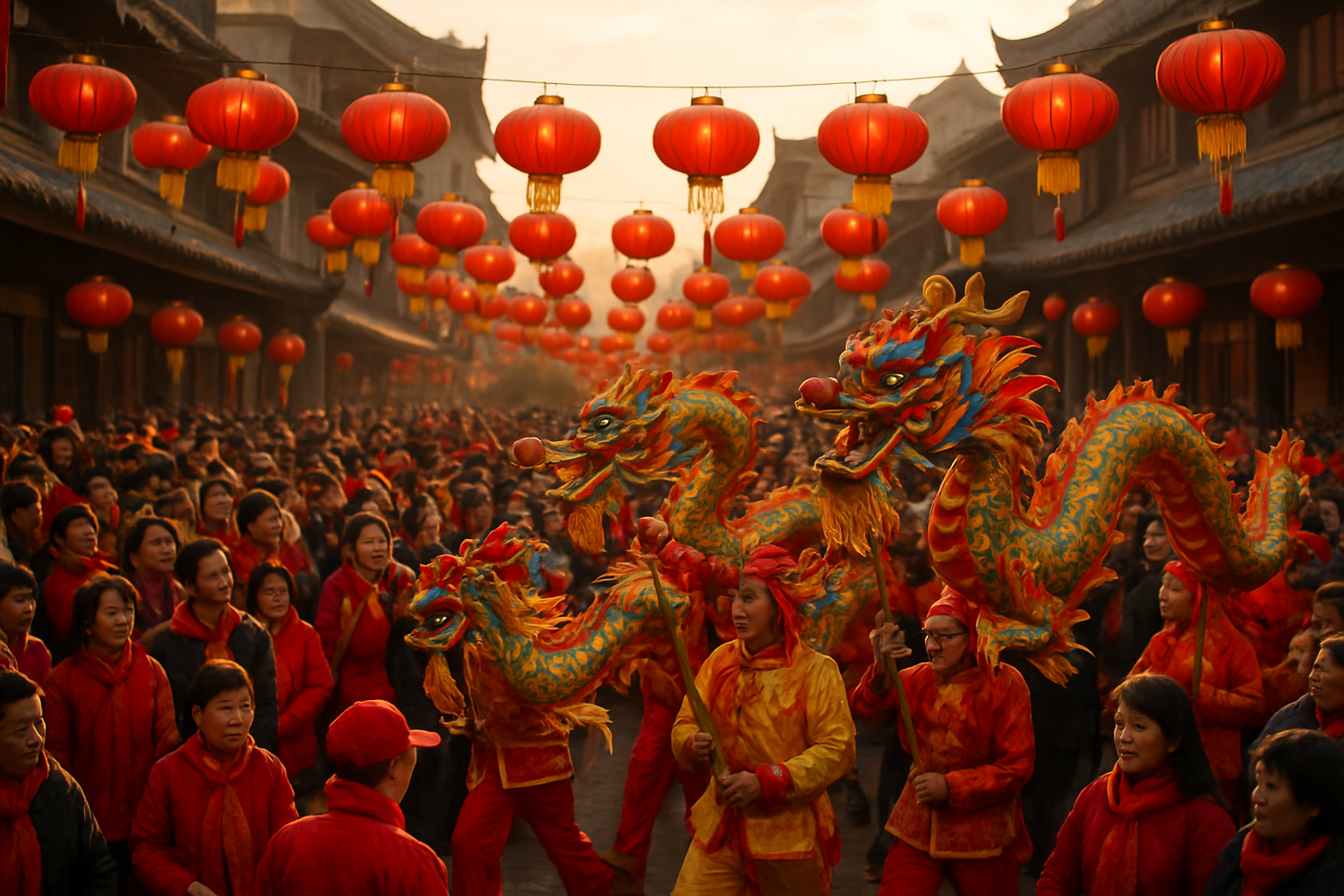
The Year of the Fire Horse has ignited celebrations across six continents as communities worldwide embrace Chinese New Year 2026 with unprecedented enthusiasm, transforming the ancient festival into a truly global cultural phenomenon that transcends ethnic boundaries while maintaining its authentic spiritual significance.
From Australia's record-breaking festivities to Peru's feng shui rituals and Taiwan's astrological insights, February 17, 2026 marked not just the lunar new year, but a remarkable demonstration of how traditional Chinese culture has evolved into an inclusive international celebration that strengthens diplomatic ties and builds community bonds across diverse populations.
Australia Leads Global Celebrations
Australia has positioned itself at the forefront of international Fire Horse celebrations, with tourism experts noting the immense crowds and soaring prices as communities prepare to "plunge into the Year of the Horse festivities." The Sydney Morning Herald reported that understanding Chinese New Year celebrations around the world has become essential for travelers seeking authentic cultural experiences during this auspicious period.
The significance of this year's celebration in Australia cannot be overstated, as it coincides with what experts describe as a "rare Red Horse year" that occurs only once every 60 years. This astronomical rarity has amplified the cultural and educational components of Australian celebrations, with enhanced programming designed to help international visitors understand the zodiac's significance and the Fire Horse's symbolism of energy and progress.
Hong Kong Faces Weather Challenges
In Hong Kong, the celebrations took an unexpected turn as unusually warm weather created challenges for traditional flower markets. The Observatory recorded a maximum temperature of 26.9 degrees Celsius (80.4 Fahrenheit) at its Tsim Sha Tsui headquarters, matching the record set in 2010 for the same lunar calendar day.
"Winter has become like summer, which is not a good situation for flower sellers during Lunar New Year fairs"
— Local flower vendor, Hong Kong Lunar New Year Fair
The premature blooms forced flower sellers to navigate a challenging retail landscape where heavy foot traffic masked a tightening of local purse strings. Despite these obstacles, the traditional flower fairs continued to attract massive crowds, demonstrating the enduring appeal of customary New Year preparations even in the face of climate-related challenges.
Economic Impact of Celebrations
The economic implications of global Fire Horse celebrations extend far beyond traditional tourism metrics. Previous coverage documented how Singapore exceeded revenue forecasts of $29-30.5 billion, while Hong Kong anticipated a 6% increase in Chinese visitors during the holiday period. Malaysia's Penang prepared for a unique convergence of Chinese New Year and Ramadan celebrations, with hotels achieving 60% occupancy rates.
Peru Embraces Mystical Elements
Peru's approach to Fire Horse celebrations has focused heavily on the spiritual and transformative aspects of the zodiac transition. El Comercio emphasized the Fire Horse's themes of transformation beginning February 17, with detailed coverage of seven traditional rituals designed for personal renewal and spiritual growth during this auspicious period.
The emphasis on avoiding certain activities on the first day of the Fire Horse year reflects Peru's integration of Chinese metaphysical traditions with local cultural practices. This synthesis demonstrates how Chinese New Year has adapted to local contexts while maintaining its core spiritual significance, creating what experts call "authentic multicultural celebrations."
Taiwan's Astrological Renaissance
Taiwan's approach to the Fire Horse year has been characterized by sophisticated astrological analysis and fortune-telling traditions. Local astrology experts observed that entering the first week of the Horse year, celestial arrangements revealed a period of "fortune tail-flicking" – symbolizing the casting off of past stagnation and acceleration into the new year's dynamic rhythm.
The concept of "甩尾" (tail-flicking) has become particularly popular in Taiwanese celebrations, representing not just personal transformation but also economic and social revitalization. Taiwanese astrologers have positioned the Fire Horse year as an opportunity for successful "fortune management," with the first week offering particular opportunities for financial prosperity.
Cultural Diplomacy Through Celebration
The global reach of Chinese New Year celebrations has evolved into a sophisticated form of cultural diplomacy, strengthening international relations through shared cultural experiences. Previous documentation showed how countries from Cyprus to Nigeria integrated Chinese Spring Festival elements with local cultural traditions, creating inclusive spaces that foster international understanding.
Technology Meets Tradition
The 2026 celebrations have demonstrated successful integration of modern technology with traditional elements. Previous reports documented robot displays alongside conventional ceremonies in Cyprus, while digital platforms enabled global sharing of local celebrations without compromising authentic community engagement.
This technological enhancement has proven particularly valuable for diaspora communities, enabling families separated by distance to participate in synchronized celebrations across time zones. The approach represents what cultural experts describe as "technology as amplification rather than replacement" of traditional cultural practices.
Fire Horse Symbolism Resonates Globally
The Fire Horse's symbolism of energy, perseverance, work, movement, and progress has found particular resonance in 2026's global context. Communities worldwide have embraced these themes as representing post-pandemic recovery, economic revitalization, and renewed international cooperation.
Cultural analysts note that the Fire Horse's characteristics align perfectly with contemporary global challenges, making this year's celebrations particularly meaningful for communities seeking transformation and renewal. The zodiac animal's association with determination and forward momentum has been interpreted as an auspicious sign for international recovery efforts.
Community Building and Inclusion
One of the most remarkable aspects of 2026's celebrations has been their success in creating inclusive multicultural spaces. Previous coverage documented how celebrations in Costa Rica, Nicaragua, and other Latin American countries featured free cultural activities organized by Chinese communities in partnership with local governments and embassies.
These collaborative approaches have demonstrated how traditional festivals can evolve to serve broader community-building functions while preserving their cultural authenticity. The success has created templates for other cultural celebrations seeking to balance heritage preservation with contemporary multicultural engagement.
Looking Forward: A New Model for Cultural Celebration
As the Fire Horse year unfolds, the 2026 Chinese New Year celebrations have established new precedents for how traditional festivals can successfully adapt to global contexts. The combination of authentic cultural preservation, inclusive community engagement, and innovative use of technology has created a model that other cultural traditions may seek to emulate.
The unprecedented international participation documented across Australia, Peru, Taiwan, and Hong Kong reflects broader trends toward cultural globalization that enriches rather than diminishes traditional practices. By maintaining their spiritual and cultural significance while embracing contemporary multicultural realities, these celebrations have demonstrated the enduring power of cultural traditions to unite diverse communities around shared experiences of renewal and hope.
As communities continue their Fire Horse celebrations throughout the lunar year, the success of this global cultural phenomenon suggests that traditional festivals, when approached with respect for their authenticity and openness to inclusive participation, can serve as powerful vehicles for international understanding and community building in an increasingly interconnected world.