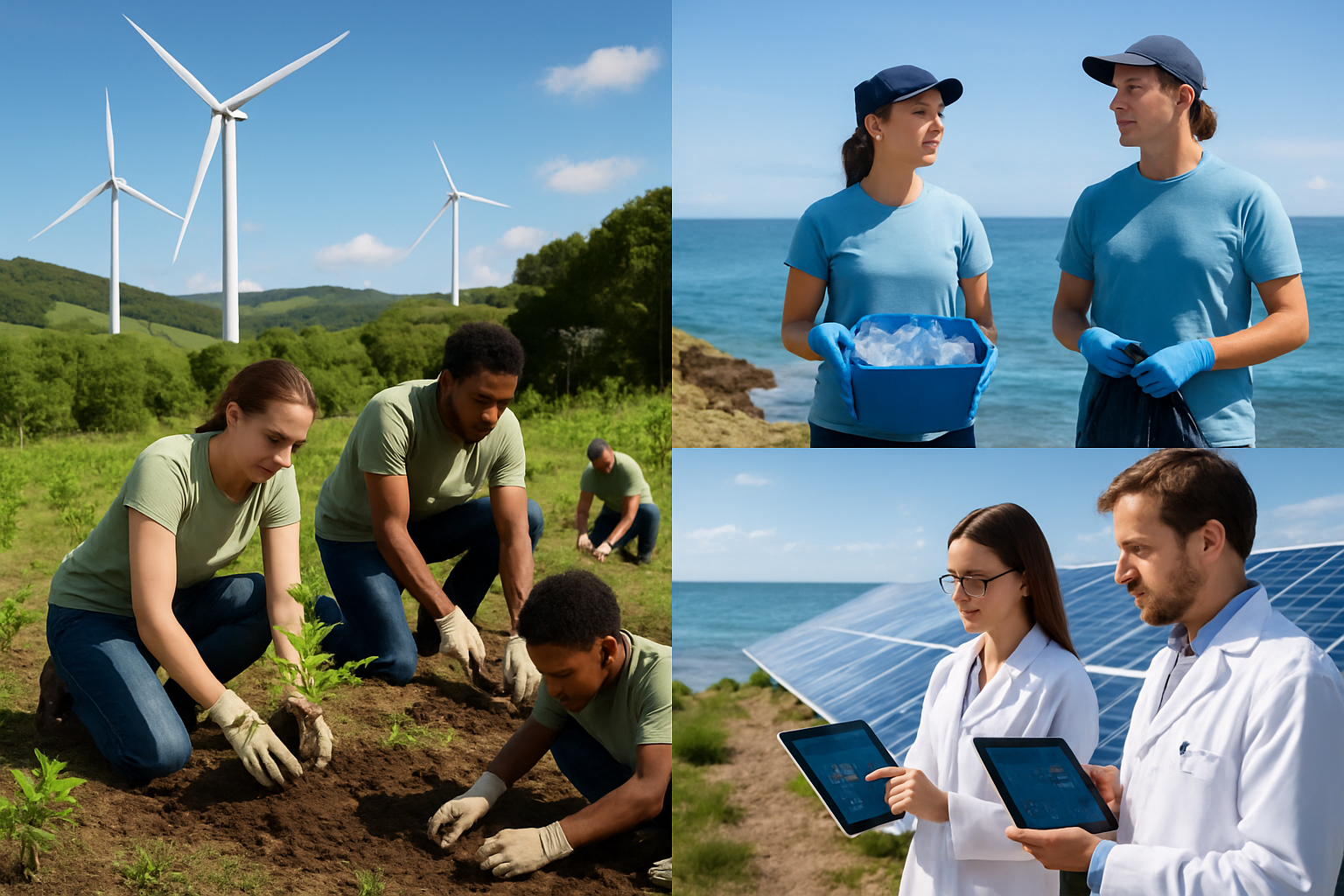
As Earth experiences its 21st consecutive month exceeding 1.5°C above pre-industrial levels, an unprecedented surge of environmental initiatives across Algeria, Denmark, Italy, Luxembourg, and Sweden demonstrates humanity's escalating response to the climate crisis, with nations implementing everything from revolutionary energy transitions to sustainable forest management programs.
The convergence of environmental policies emerges at a critical juncture when global temperatures have reached unprecedented levels, with January 2026 confirmed as the hottest month in recorded history. This sustained warming period, overriding natural climate variability including La Niña cooling effects, has catalyzed coordinated international action spanning renewable energy deployment, carbon reduction commitments, and innovative ecosystem management strategies.
Algeria's Revolutionary Energy Transition
Algeria is spearheading North Africa's clean energy transformation through a comprehensive strategy addressing both infrastructure modernization and environmental protection. The Port of Annaba has signed a groundbreaking agreement with the Environmental Research Center to implement dock electrification projects, directly responding to presidential directives for energy transition and ministerial guidelines promoting environmentally friendly technologies to reduce carbon emissions.
This initiative represents a fundamental shift from traditional fossil fuel-dependent port operations to sustainable maritime infrastructure, positioning Algeria as a regional leader in clean transportation technology. The project aligns with international shipping decarbonization efforts while demonstrating how developing nations can leverage environmental protection as economic development strategy rather than regulatory burden.
"The energy transition begins with infrastructure modernization that creates immediate environmental benefits while building long-term economic competitiveness."
— Environmental Research Center, Algeria
Simultaneously, Algeria has implemented comprehensive preventive measures against desert locust outbreaks, coordinating across multiple provinces to mobilize pesticide stocks, equipment, and technical intervention teams. This proactive environmental management reflects the sophisticated integration of climate science with traditional agricultural knowledge, addressing ecosystem challenges that climate change has intensified through altered precipitation patterns and temperature fluctuations.
Brazil's Ambitious Carbon Reduction Framework
Brazil has unveiled an aggressive new climate plan targeting 49-58% emissions reduction by 2035, representing one of the most ambitious national climate commitments among major economies. This framework positions Brazil as a crucial player in global climate action, leveraging the country's vast renewable energy resources and biodiversity assets while addressing deforestation challenges that have historically undermined environmental credibility.
The plan encompasses comprehensive approaches to forest conservation, renewable energy expansion, and sustainable development that could serve as a template for other large developing nations balancing economic growth with environmental protection. Brazil's commitment comes during a critical period when South-South cooperation is emerging as essential for global climate success, complementing traditional North-South aid frameworks.
Denmark's Renewable Energy Milestone
Denmark achieved a significant milestone with its largest wind farm delivering electricity for the first time, reinforcing the country's position as a global leader in renewable energy deployment. This achievement occurs amid broader European challenges including supply chain vulnerabilities and grid integration complexities that have affected renewable energy projects across the continent.
The Danish success story provides crucial lessons for renewable energy scaling, demonstrating how sustained political commitment, technological innovation, and community engagement can overcome infrastructure challenges. Denmark's model shows that small nations can achieve energy independence while contributing significantly to global climate goals through technology export and knowledge sharing.
Luxembourg's Innovative Forest Management
Luxembourg has pioneered a revolutionary approach to sustainable forest management through the Bambësch forest project, where animal traction is being utilized instead of heavy machinery to maintain climate-threatened ecosystems. This initiative represents sophisticated synthesis of traditional forestry practices with modern climate science, addressing forest fragility caused by climate change through less invasive management techniques.
The 600-hectare Bambësch forest serves as a living laboratory for climate adaptation strategies, demonstrating how urban forests can be maintained sustainably while providing essential ecosystem services including carbon sequestration, biodiversity conservation, and recreational opportunities for local communities. The project attracts international attention as cities worldwide seek models for integrating natural systems with urban development.

Sweden's Forest Policy Revolution
Sweden's government has announced increased freedom for forest owners through streamlined processes and enhanced access to information, representing a significant shift in forest policy during a critical period for climate action. Minister Peter Kullgren emphasized the need for "more freedom, not more socialism" in Swedish forest policy, reflecting ongoing debates about balancing economic interests with environmental protection.
This policy evolution occurs amid scientific warnings that current deforestation rates in Sweden could eliminate remaining old-growth forests below mountain regions within 25 years. The tension between immediate economic pressures and long-term environmental sustainability illustrates challenges faced by resource-dependent economies transitioning to climate-conscious policies while maintaining forest industry employment.
Technology-Tradition Integration Success
Across all initiatives, the most successful environmental programs demonstrate sophisticated synthesis of cutting-edge technology with traditional ecological knowledge and community-based management. Algeria combines port infrastructure technology with regional environmental expertise, Brazil integrates satellite monitoring with indigenous forest stewardship, Denmark employs advanced wind technology with maritime engineering traditions, Luxembourg blends modern climate science with centuries-old forestry practices, and Sweden balances industrial forestry with traditional land management.
This evolution represents fundamental departure from either purely technological or traditional approaches toward comprehensive frameworks that respect cultural autonomy while leveraging global technological capabilities. The integration creates resilient systems capable of adapting to rapidly changing environmental conditions while maintaining community support essential for long-term sustainability.
Economic Development as Environmental Strategy
These initiatives consistently demonstrate environmental protection functioning as economic development strategy rather than regulatory burden. Algeria's port modernization creates specialized employment while positioning the country for clean energy trade. Brazil's climate plan attracts sustainable investment and positions the nation for leadership in environmental markets. Denmark's wind energy generates billions in export revenue while ensuring energy independence. Luxembourg's forest innovation enhances the country's environmental credentials and attracts research partnerships.
Countries implementing comprehensive environmental protection show greater economic resilience and attract sustainable investment across multiple sectors including green technology manufacturing, eco-tourism, environmental services, and climate-adapted agriculture. The economic multiplier effects often exceed the costs of traditional extractive industries while building long-term competitiveness in clean technology markets.
International Cooperation Framework
Success across these diverse contexts highlights the essential role of international cooperation in addressing transnational environmental challenges. Atmospheric systems, ocean currents, and species migrations cross political boundaries, making unilateral efforts insufficient regardless of national commitment levels. The diversity of approaches—from Algeria's industrial transformation to Luxembourg's ecosystem management—provides resilience against single-solution dependencies while offering multiple adaptation pathways for complex global challenges.
Knowledge sharing creates global networks where successful approaches can be adapted to different contexts while respecting local conditions and cultural priorities. This evolution from traditional North-South aid toward peer-to-peer cooperation recognizes that developing nations are becoming environmental solution providers rather than merely aid recipients.
Critical Climate Context
These environmental initiatives emerge during Earth's most challenging environmental period in recorded history, with January 2026 representing the 21st consecutive month of temperatures exceeding the critical 1.5°C threshold. Human-induced climate change has fundamentally altered atmospheric systems beyond natural recovery mechanisms, creating compound environmental effects that traditional conservation approaches struggle to address.
The sustained warming overrides natural cooling mechanisms including La Niña effects that historically moderated global temperatures, demonstrating that the climate system has entered unprecedented territory requiring immediate coordinated responses. Environmental systems are approaching critical thresholds that could trigger irreversible changes affecting global food security, climate stability, and human settlements.
Implementation Challenges and Opportunities
Despite remarkable progress, significant implementation challenges remain. Funding sustainability proves particularly difficult for developing nations where immediate economic pressures can override long-term environmental considerations. Technical capacity building requires sustained investment in education, training, and institutional development. Climate change itself disrupts project timelines by creating rapidly changing conditions that require adaptive management capabilities.
However, opportunities include enhanced international cooperation, accelerated technology transfer, and innovative financing mechanisms that recognize ecosystem services value for economic stability and human prosperity. The diversity of successful approaches provides multiple pathways for addressing complex environmental challenges while building local capacity and international cooperation networks.
Strategic Significance for Global Climate Action
March 2026 represents a critical juncture between reactive crisis management and proactive ecosystem service management. The choice made during this decisive climate action decade may determine whether conservation efforts can keep pace with accelerating environmental change. The environmental action window is narrowing rapidly as ecological systems approach critical thresholds, but these initiatives demonstrate that the tools, knowledge, and cooperation frameworks exist for comprehensive environmental protection.
The convergence of political will, technological innovation, and community engagement offers hope for maintaining planetary habitability during Earth's most environmentally challenging period. Success depends on rapid scaling of proven solutions through sustained international cooperation, enhanced multi-sector coordination, and increased financial commitments that recognize environmental protection as essential infrastructure for human prosperity and planetary sustainability.
Future Trajectory Implications
The environmental initiatives emerging across Algeria, Denmark, Italy, Luxembourg, Sweden, and Brazil provide practical templates for scaling environmental protection globally. Their success or failure may prove decisive for conservation approaches in coming decades, influencing global biodiversity protection, climate adaptation, and sustainable development strategies.
These programs offer both inspiration and urgent guidance for the massive coordinated effort required to maintain planetary habitability. The integration of cutting-edge technology with traditional ecological wisdom creates adaptable frameworks that respect cultural diversity while leveraging global capabilities. As Earth crosses critical temperature thresholds, these coordinated responses may determine humanity's adaptive capacity for protecting the environmental systems upon which all life depends.
"The environmental renaissance emerging in 2026 demonstrates that when nations act with both urgency and wisdom, combining innovation with traditional knowledge, remarkable progress becomes possible even during the most challenging environmental period in human history."
— International Climate Research Consortium
The momentum building across these six nations suggests that humanity may be entering a new phase of environmental stewardship, where protection and restoration become central to economic development rather than obstacles to growth. The question now is whether this emerging environmental renaissance can scale rapidly enough to address the accelerating climate crisis while building the resilient, sustainable societies that future generations will inherit.