A sweeping analysis of environmental developments across Kazakhstan, New Zealand, and Sweden reveals the stark contrasts defining global climate action in February 2026, as breakthrough renewable energy partnerships advance alongside sobering setbacks in carbon capture technology and urgent flood adaptation measures.
The developments emerge during humanity's most critical climate moment, with January 2026 marking the 18th consecutive month of global temperatures exceeding 1.5°C above pre-industrial levels—a threshold scientists warn signals fundamental alterations to Earth's atmospheric systems that override natural climate variability.
Kazakhstan's Renewable Energy Milestone
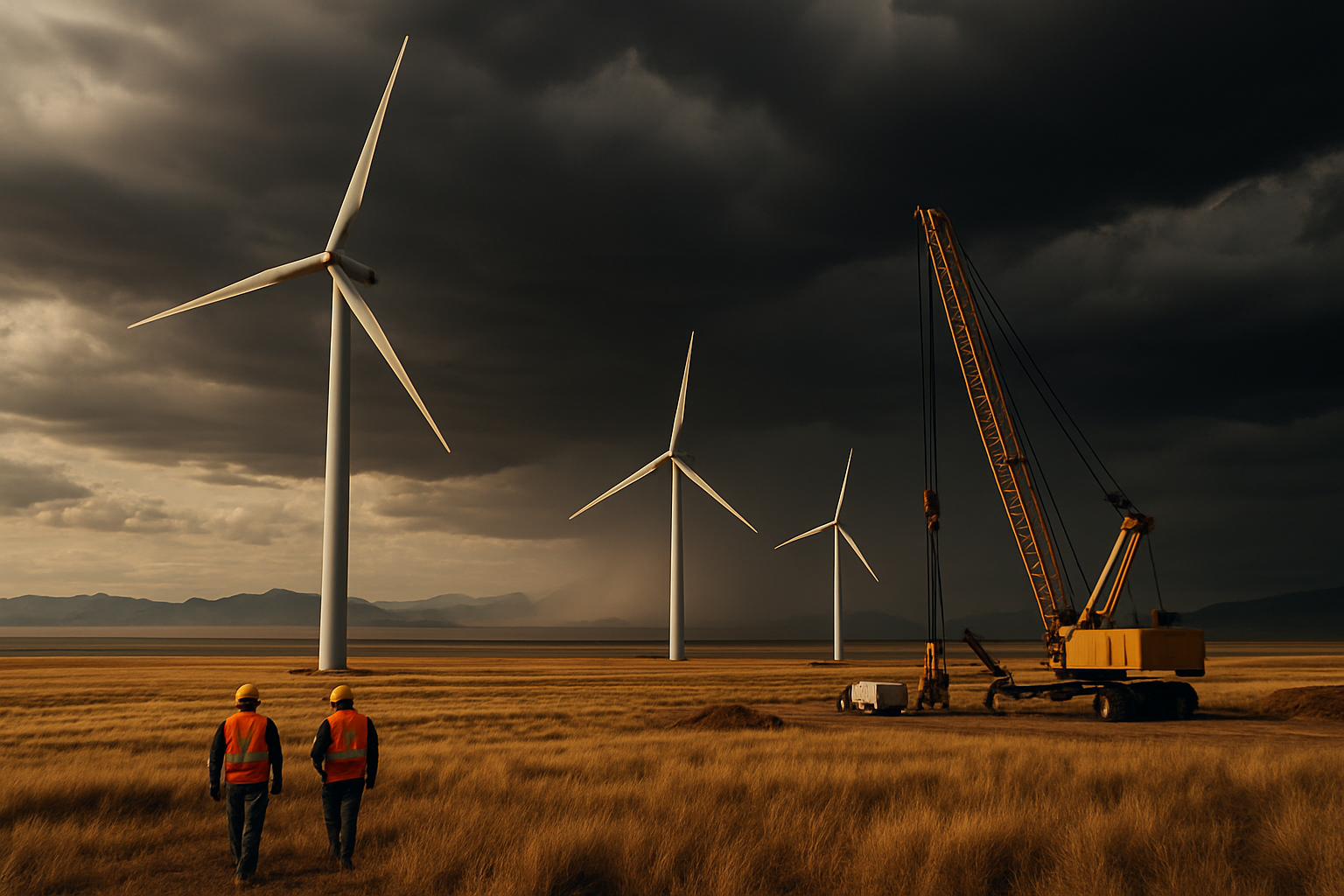
Kazakhstan and France have entered the active implementation phase of a transformative 1 gigawatt wind power project, following crucial meetings between Kazakhstan's Energy Minister Yerlan Akkenzhenov and senior executives of French energy company TotalEnergies on February 23rd. The project represents one of Central Asia's most ambitious renewable energy ventures, positioning Kazakhstan as a regional leader in clean energy transition.
The initiative builds on Kazakhstan's strategic geographic advantages, including vast steppes ideal for wind generation and growing demand for renewable energy infrastructure across Central Asia. French technical expertise combines with Kazakhstani resources to create a model for international clean energy cooperation, particularly significant given current global supply chain vulnerabilities in renewable energy materials.
"This project demonstrates how international partnerships can accelerate clean energy deployment at the scale and speed required to address climate challenges."
— Energy sector analyst, reviewing the Kazakhstan-France collaboration
The timing proves especially critical as global energy markets face disruption from Chinese dominance of critical materials supply chains, with China controlling 60% of production and 90% of refining capacity for lithium, cobalt, and rare earth elements essential for renewable infrastructure. The Kazakhstan project represents growing efforts to diversify renewable energy development through international partnerships.
New Zealand's Climate Adaptation Reality
Meanwhile, New Zealand faces the immediate reality of climate adaptation as the Tasman District launches comprehensive river catchment studies designed to protect communities during extreme weather events. The initiative responds directly to devastating back-to-back floods that struck the region last winter, causing extensive damage to farms and rural properties with crops inundated with silt, fences washed away, and land permanently lost to swollen rivers.
The floods represent more than isolated weather events—they embody the new climate reality facing communities worldwide. Agricultural operations that sustained families for generations found themselves underwater within hours, while infrastructure designed for historical weather patterns proved inadequate for current conditions.
The catchment studies employ sophisticated modeling techniques to understand how changing precipitation patterns, increased storm intensity, and sea level rise combine to create compound flood risks. Local authorities work with international climate adaptation experts to develop resilience strategies that protect both rural livelihoods and urban infrastructure.
New Zealand's approach emphasizes community-based adaptation, recognizing that effective climate resilience requires deep local knowledge combined with cutting-edge climate science. The studies will inform land use planning, infrastructure investment, and emergency preparedness protocols designed for climate conditions not yet fully experienced but scientifically projected.
Sweden's Carbon Capture Challenges
In a sobering development for climate technology, Swedish energy company Söderenergi has paused its high-profile carbon dioxide capture project due to insufficient market interest in paying for climate action measures. The decision highlights critical gaps between climate urgency and economic incentives for emerging clean technologies.
The project represented one of Europe's most ambitious carbon capture initiatives, designed to remove atmospheric CO2 at industrial scale while demonstrating commercial viability for similar projects globally. However, corporate and government customers proved reluctant to pay premium prices for carbon removal services, exposing fundamental challenges in scaling climate solutions beyond pilot projects.
The Swedish experience reflects broader struggles with carbon capture technology deployment, where technical feasibility often exceeds economic viability under current market conditions. Without robust carbon pricing mechanisms or government subsidies, many promising climate technologies struggle to achieve commercial scale needed for meaningful climate impact.
"The challenge isn't developing climate technologies—it's creating economic frameworks that make deployment financially sustainable at the scale required."
— Climate policy researcher analyzing the Swedish setback
Global Context and Systemic Challenges
These developments occur against unprecedented global warming trends that demonstrate human-induced climate change now overrides natural climate variability. Even La Niña cooling effects, which historically reduced global temperatures, prove insufficient to counter persistent warming driven by greenhouse gas concentrations.
The contrast between Kazakhstan's renewable energy success, New Zealand's adaptation necessity, and Sweden's carbon capture struggles illustrates the complex landscape of climate action in 2026. While renewable energy deployment accelerates through international cooperation and improving economics, more advanced climate technologies face significant market barriers.
Supply chain vulnerabilities represent another critical challenge, with European Union auditors warning that climate goals face threats from Chinese dominance of critical materials supply chains. The US-EU-Japan Critical Minerals Partnership, involving 55 countries and seven African alternative suppliers, attempts to address these strategic dependencies, but infrastructure development requires years of investment.
Technology and Community Integration
Successful environmental initiatives increasingly demonstrate the importance of integrating cutting-edge technology with traditional ecological knowledge and community-based management. Kazakhstan's wind project combines French engineering expertise with local land management traditions, while New Zealand's flood adaptation builds on indigenous understanding of natural water systems enhanced by modern climate modeling.
This integration represents an evolution from purely technological climate solutions toward comprehensive approaches that address social, economic, and environmental dimensions simultaneously. Community ownership and tangible local benefits prove essential for long-term project sustainability and effectiveness.
Economic Development Engine
Modern environmental protection functions increasingly as an economic development strategy rather than a regulatory burden. Kazakhstan's renewable energy project creates thousands of specialized jobs while positioning the country advantageously in global clean energy markets. New Zealand's adaptation investments protect agricultural productivity and tourism infrastructure worth billions annually.
Even Sweden's paused carbon capture project contributed to industrial innovation and technical expertise development, providing foundations for future deployment when economic conditions improve. Countries implementing comprehensive environmental protection demonstrate enhanced economic resilience and attract sustainable development investment.
Implementation Challenges and Success Factors
The experiences across all three nations highlight common implementation challenges facing environmental initiatives globally. Funding sustainability remains critical, particularly for developing nations where immediate economic pressures often override long-term environmental considerations. Technical capacity building requires sustained investment in education, training, and institutional development.
Climate change itself disrupts project timelines and operational assumptions, requiring adaptive management approaches that can respond to rapidly changing conditions. Success factors consistently include community engagement, international cooperation, economic viability creation, and integration of traditional knowledge with modern environmental science.
Strategic Global Implications
February 2026 represents a critical juncture for global environmental protection, as the window for effective climate action continues to narrow while environmental challenges accelerate. The diverse experiences of Kazakhstan, New Zealand, and Sweden provide crucial insights into scaling environmental protection efforts globally.
Kazakhstan's renewable energy progress demonstrates that international cooperation can accelerate clean energy deployment even amid supply chain challenges. New Zealand's adaptation necessity shows that climate impacts are not future projections but present realities requiring immediate response. Sweden's carbon capture pause illustrates that technological solutions require supportive economic frameworks for widespread deployment.
Together, these developments highlight the need for comprehensive climate strategies that combine renewable energy deployment, adaptation infrastructure, and supportive policy frameworks. Success depends on sustained international cooperation, enhanced coordination across sectors and scales, and increased financial commitments that recognize environmental protection as essential infrastructure for human prosperity and planetary sustainability.
Future Trajectory
The environmental initiatives examined represent both hope and urgency as humanity faces accelerating climate change during what many scientists call the "climate action decade." Tools and knowledge exist for effective environmental protection, but deployment requires unprecedented speed and scale to match the pace of environmental challenges.
The contrast between advancing renewable energy, necessary adaptation measures, and struggling carbon capture technologies demonstrates that climate action proceeds unevenly across different sectors and technologies. Strategic priorities must focus on scaling proven solutions while supporting promising technologies through challenging development phases.
As global temperatures continue exceeding critical thresholds month after month, the environmental developments in Kazakhstan, New Zealand, and Sweden provide templates for the comprehensive climate response required to protect both human prosperity and planetary sustainability in an era of accelerating environmental change.