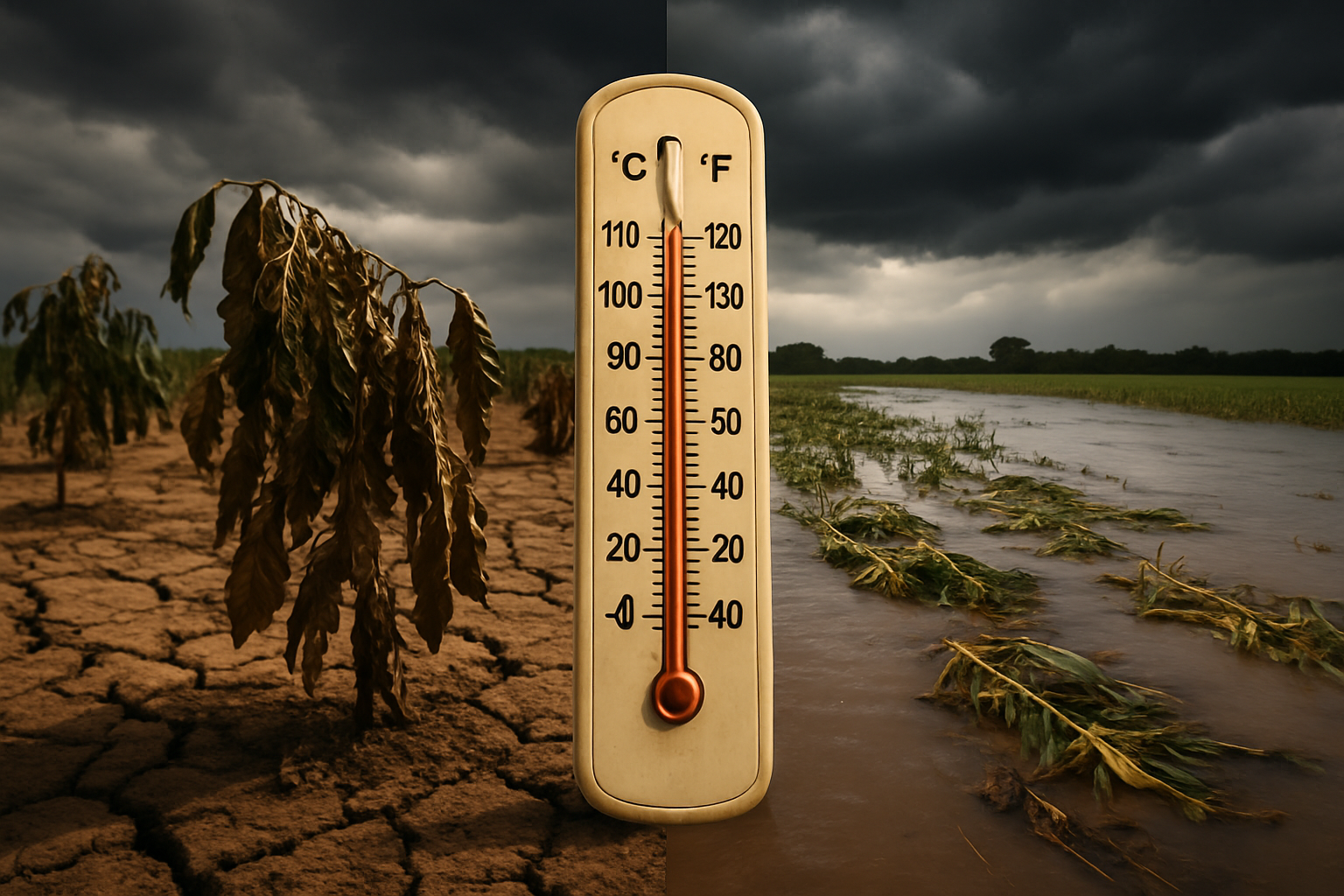
Coffee prices are soaring to unprecedented levels as extreme weather patterns devastate agricultural systems worldwide, marking the latest crisis in what has become the most sustained period of global warming in recorded human history.
The convergence of geopolitical conflicts and severe drought in Brazil has sent coffee prices skyrocketing, particularly for high-quality Arabica beans that form the backbone of the global coffee industry. This agricultural emergency unfolds against the backdrop of what climate scientists confirm is the 24th consecutive month of global temperatures exceeding the critical 1.5°C threshold above pre-industrial levels.
Coffee Crisis Reaches Breaking Point
Brazil, the world's largest coffee producer, is experiencing its worst drought in decades, devastating coffee plantations across key growing regions. The extreme weather has been exacerbated by ongoing geopolitical tensions affecting global supply chains, creating a perfect storm for coffee markets worldwide.
Agricultural experts report that traditional growing seasons have become increasingly unpredictable, with farmers struggling to adapt their centuries-old practices to rapidly changing environmental conditions. The timing mismatches between traditional planting schedules and actual weather patterns are forcing coffee producers to operate without the seasonal predictability that has historically guided agricultural planning.
Global Food Systems Under Unprecedented Stress
The coffee crisis represents just one facet of a broader agricultural emergency affecting food security worldwide. Recent UN warnings highlight how extreme heat is threatening global food systems, with agricultural workers unable to work safely outdoors during peak hours, livestock under severe stress, and crop yields declining across multiple continents.
"Places from which we source our food are drying up, and we are not immune to climate collapse."
— UN Climate Warning Report
Small island developing states and vulnerable coastal nations face particular challenges, requiring an estimated $12 billion annually for climate adaptation while receiving only $2 billion in international public finance. This massive funding gap highlights the urgent need for innovative approaches to climate resilience and agricultural sustainability.
Philippines Leads Call for Energy Transformation
As the world marked Earth Day amid an ongoing energy crisis, the Philippines has emerged as a leading voice calling for transformative thinking in addressing energy needs without further straining environmental systems. Government officials and environmental advocates are demanding accountability while scaling up sustainable, community-driven solutions.
The Philippine approach emphasizes the critical intersection between energy security and food security, recognizing that sustainable agricultural systems require reliable, clean energy infrastructure to support irrigation, processing, and distribution networks.
Bosnia Faces Agricultural Weather Threats
In Bosnia and Herzegovina, meteorologists have issued urgent warnings about extreme heat threatening agricultural productivity and food system stability. The combination of unprecedented temperatures and irregular precipitation patterns is forcing farmers to completely reimagine traditional agricultural practices.
Local agricultural communities report that traditional seasonal indicators—used for generations to guide planting and harvesting—are no longer reliable. This breakdown of agricultural rhythms represents a fundamental challenge to food production systems that have sustained communities for millennia.
Technology and Traditional Knowledge Integration
The most successful responses to these agricultural challenges demonstrate sophisticated integration of cutting-edge technology with traditional ecological knowledge. Advanced satellite monitoring, environmental DNA sampling, and AI-powered analysis are being combined with generations of traditional farming wisdom to create adaptive agricultural systems.
This technology-tradition synthesis represents a fundamental evolution in agricultural methodology, moving beyond purely technological solutions that ignore local contexts toward comprehensive frameworks that combine scientific rigor with cultural sensitivity and community ownership.
Economic Implications of Agricultural Disruption
The economic consequences of this agricultural crisis extend far beyond farm-level losses. Tourism industries face cancellations due to extreme weather, infrastructure suffers repeated damage, and recovery timelines have shifted from weeks to months or years—representing a fundamental change in how communities prepare for and respond to agricultural disasters.
Mental health services report increased demand related to climate anxiety and repeated trauma, particularly in agricultural communities where families are losing generational properties and businesses face extinction threats from recurring environmental disasters.
International Cooperation at Breaking Point
The simultaneity of agricultural crises across multiple continents is testing international cooperation mechanisms designed for sequential rather than concurrent global emergencies. Traditional mutual aid frameworks prove inadequate when multiple regions face food security challenges simultaneously.
The European Union's Civil Protection mechanism has been repeatedly activated, with the Sweden-Denmark assistance package of €246 million representing the largest coordinated European response on record. However, experts warn that even these unprecedented efforts remain insufficient for the scale and simultaneity of current challenges.
Critical Window for Action Narrows
Climate scientists emphasize that the window for effective action is narrowing rapidly as ecological systems approach critical thresholds that could trigger irreversible changes affecting global food security, climate stability, and human settlements. The current agricultural crisis offers both a stark warning of accelerating environmental threats and a testament to humanity's capacity for innovation and cooperation.
Success in addressing these challenges requires sustained international cooperation, enhanced multi-sector coordination, and increased financial commitments recognizing environmental protection as essential infrastructure for human prosperity and planetary sustainability.
Looking Forward: Building Resilient Food Systems
The convergence of climate change impacts, agricultural vulnerabilities, and geopolitical tensions demands transformative approaches to food system resilience. Communities worldwide are developing innovative strategies that combine immediate crisis response with long-term sustainability planning.
These efforts include drought-resistant crop varieties, water-efficient irrigation systems, community-based agricultural cooperatives, and international partnerships that respect local autonomy while providing essential technical and financial support.
As the world faces what may become the "new normal" of extreme weather frequency and intensity, the choices made in the coming months will prove decisive for global climate resilience strategies affecting generations. The question is no longer whether transformative action is needed, but whether humanity can organize and implement solutions rapidly enough to maintain planetary habitability during Earth's most environmentally challenging period in recorded history.