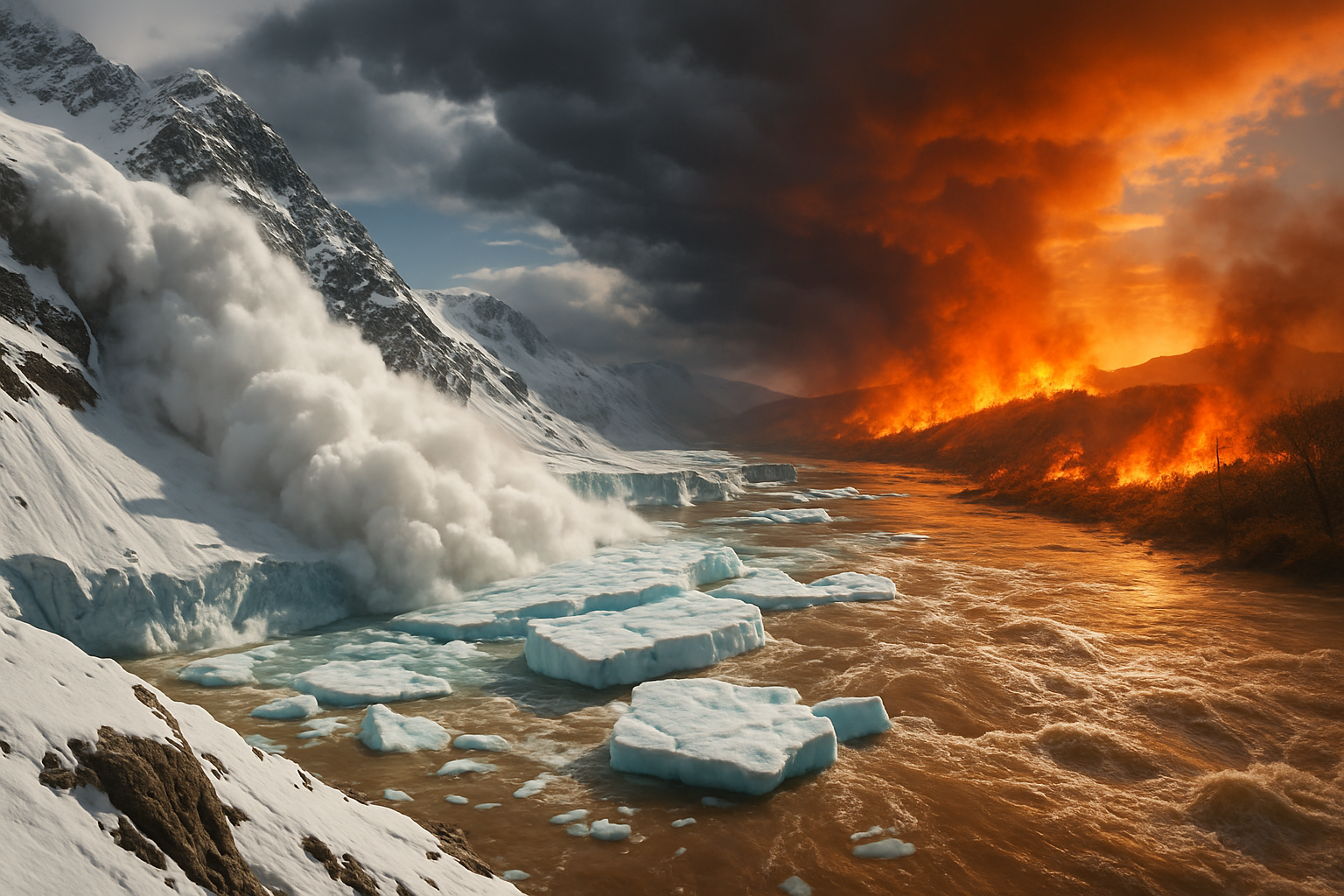
Multiple avalanche incidents across northern Italy have claimed at least four lives during the ongoing Milano-Cortina Winter Olympics, underscoring a broader pattern of extreme weather events that are devastating communities worldwide as climate volatility reaches unprecedented levels.
The avalanche tragedies occurred in the Dolomites region, where off-piste skiers were caught in separate incidents in Trentino Alto Adige and Lombardy, the same regions currently hosting Winter Olympic competitions. Emergency services report three confirmed fatalities from skiing accidents, with additional casualties from related mountain incidents, highlighting the dangerous conditions plaguing Alpine regions despite extensive safety warnings.
Olympic Region Under Siege
The timing proves particularly sobering as the Milano-Cortina Games proceed amid challenging natural conditions. These avalanche deaths occurred just kilometers from Olympic venues where athletes compete in alpine skiing and other mountain sports. Local authorities had issued extensive warnings about unstable snow conditions, but off-piste skiing continued to attract risk-taking enthusiasts.
The incidents represent a tragic intersection of extreme weather and recreational activity, as unseasonably harsh winter conditions create precisely the type of unstable snowpack that triggers deadly avalanches. Mountain rescue teams have been stretched thin responding to multiple emergencies across the Alpine region.
Global Environmental Crisis Context
These Alpine tragedies unfold within a broader context of environmental devastation affecting multiple continents simultaneously. From Australia's extreme bushfires to unprecedented Arctic warming, the first week of February 2026 has witnessed a convergence of climate-related disasters that scientists describe as consistent with accelerating global warming patterns.
"What we're seeing is the new normal - extreme events occurring with increasing frequency and intensity across multiple climate zones simultaneously."
— International Climate Research Analysis
In Australia, extreme heat and dust storms have exposed ancient ancestral remains in Victoria, as fires and erosion strip away protective soil layers. The ABC News reports that thousands-of-years-old remains have been uncovered by the combined effects of bushfires, extreme heat, and dust storms, revealing how climate change is literally reshaping the landscape and exposing cultural heritage.
Arctic Phenomena
Meanwhile, Denmark's scientific community has made a startling discovery that illuminates prehistoric climate connections. Researchers found remains of an extinct woolly rhinoceros in the stomach of a wolf pup, providing insights into ancient Arctic ecosystems. This paleontological finding comes as modern Arctic regions experience unprecedented warming, creating stark contrasts between ancient and contemporary climate scenarios.
Cascading Infrastructure Failures
The environmental disasters are triggering cascading infrastructure failures that underscore global vulnerability to extreme weather. Multiple European nations are grappling with transportation paralysis, power grid strain, and emergency service capacity limits as Storm Marta adds to the devastation from previous weather events.
Portugal has deployed its largest peacetime rescue operation, involving 1,975 military personnel and 30 naval vessels, responding to over 1,800 weather incidents since February 1. The country has extended its national calamity status through February 15, with power outages affecting 167,000 residents and critical transportation links severed.
In northern Italy, the same regions hosting Olympic events have experienced coordinated railway sabotage that authorities suspect may be Olympics-related, compounding natural weather challenges with human-created infrastructure vulnerabilities. The attacks on electrical cables near Bologna have disrupted high-speed train service across northern Italy, stranding thousands of passengers.
Emergency Response Overwhelmed
Emergency services across multiple countries report operating at capacity limits as simultaneous disasters strain response systems. From Colombian bridge collapses due to sudden flooding to Morocco evacuating 50,000 people from river flooding, the scale and simultaneity of events is testing international cooperation frameworks.
The European Union has activated its Civil Protection Mechanism, while Sweden and Denmark have announced a €246 million emergency assistance package to support affected nations. However, the rapid succession of extreme events is revealing gaps in preparedness for multiple concurrent crises.
Climate Science Implications
Perhaps most concerning to climate scientists is the timing of these extreme events. January 2026 was recorded as the hottest month in global history, marking the 18th time in the past 19 months that global temperatures exceeded 1.5°C above pre-industrial levels. This warming trend is occurring despite La Niña conditions that typically provide cooling effects.
The simultaneous occurrence of extreme cold in some regions (including record-breaking cold in Cuba and Estonia's coldest winter in 25 years) alongside extreme heat elsewhere demonstrates the volatility that characterizes climate change. Rather than uniform warming, the disrupted climate system is producing more frequent and intense extremes of all types.
"The warming trends are now overriding natural climate variability, creating a new baseline for extreme weather that our current infrastructure and emergency systems were not designed to handle."
— Climate Research Analysis
Economic and Social Impacts
The economic consequences extend far beyond immediate disaster response costs. Spain's agricultural sector faces billions in damages from flooding that has affected olive groves and citrus farms, while Portugal's tourism industry confronts massive losses during what should be a peak season.
Educational systems across multiple countries have been disrupted, with widespread school closures affecting hundreds of thousands of students. The intersection of these environmental disasters with democratic processes has become particularly evident in Portugal, where presidential elections proceeded despite infrastructure damage that raised questions about electoral fairness and accessibility.
Cultural and Heritage Losses
Beyond immediate human and economic costs, these environmental disasters are threatening cultural heritage and archaeological sites. In Australia, the exposure of ancestral remains through extreme weather represents irreplaceable losses of indigenous heritage. Similar concerns exist across affected regions where historical sites face unprecedented environmental pressure.
Looking Forward
As emergency responders work to save lives and restore infrastructure, the events of early February 2026 are providing a stark preview of the climate adaptation challenges ahead. The avalanche deaths in Olympic host regions serve as a sobering reminder that even well-prepared, technologically advanced areas remain vulnerable to nature's increasing volatility.
Recovery efforts are expected to take weeks or months across multiple affected regions, while the underlying climate trends that enabled these disasters continue to intensify. The convergence of extreme events across continents demonstrates that climate change impacts are no longer future projections but present realities requiring immediate, coordinated global response.
For communities worldwide, the February 2026 environmental crisis cluster represents both a warning and an opportunity to build more resilient systems capable of withstanding the increasing frequency and intensity of climate-related disasters. The question remains whether global response capabilities can scale quickly enough to match the accelerating pace of environmental change.