A catastrophic convergence of extreme weather events across four continents has exposed critical vulnerabilities in global emergency response systems, as the world experiences its 22nd consecutive month of temperatures exceeding 1.5°C above pre-industrial levels—the longest sustained warming period in recorded human history.
From Algeria's unprecedented mountain snowfall threatening northern provinces to Estonia's agricultural crisis forcing farmers to reconsider summer grain plantings, the current global climate emergency represents a fundamental shift from sequential regional disasters to simultaneous multi-continental crises that are overwhelming traditional emergency response mechanisms.
Unprecedented Arctic Research Under Threat
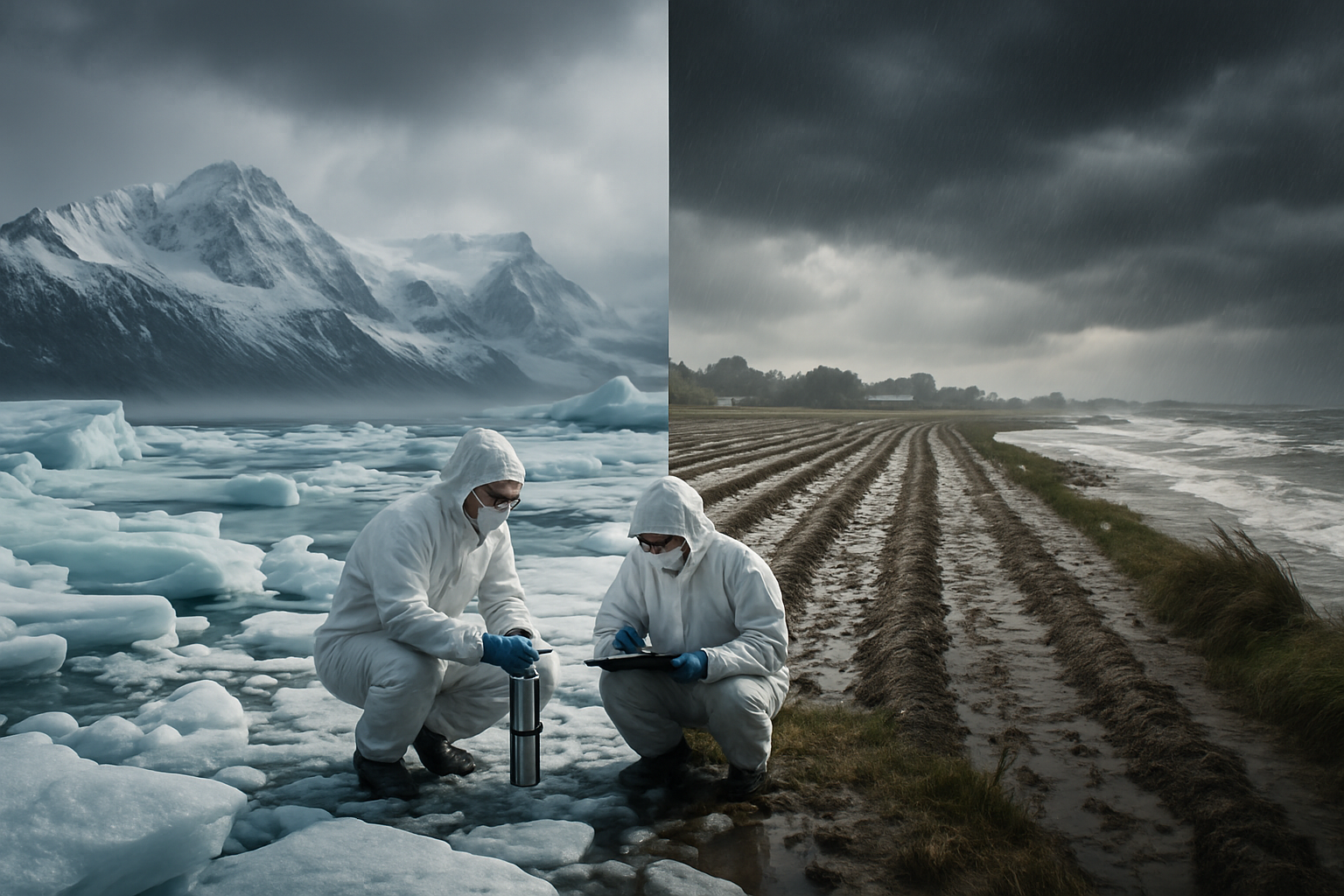
In one of the most striking examples of climate adaptation under extreme conditions, scientists are now training in Finland to dive beneath Arctic ice, studying fragile polar ecosystems threatened by accelerating climate change. These underwater research missions provide crucial data that robots cannot safely collect, offering rare insights into environments that are vanishing at an unprecedented rate.
"This hands-on research is essential for understanding underwater habitats that are disappearing faster than we can study them. We're racing against time to document these ecosystems before they're gone forever."
— Arctic Research Team Lead
The urgency of this research underscores the rapid pace of environmental change, as traditional Arctic conditions that have persisted for millennia are being fundamentally altered by sustained global warming.
Agricultural Systems Under Siege
Estonian farmers are facing an impossible choice: whether to plant summer grains at all this year due to soaring input costs and increasingly unpredictable weather patterns. This crisis exemplifies how climate change is disrupting agricultural systems worldwide, forcing fundamental changes to food production strategies that have sustained communities for generations.
The agricultural disruption extends far beyond Estonia. Traditional farming schedules across the Baltic region no longer align with actual weather patterns, forcing farmers to operate without the seasonal predictability that has historically guided food production. Early warming has triggered biological responses weeks ahead of schedule, creating ecosystem timing mismatches that have evolved over millennia.
Climate Volatility Paradox
Scientists have identified what they call the "climate volatility paradox"—a phenomenon where sustained global warming enables both record heat and devastating regional extremes through disrupted atmospheric circulation patterns. This paradox explains how the world can experience its hottest January on record while simultaneously witnessing extreme winter conditions across multiple regions.
Emergency Response Systems Breaking Down
Traditional mutual aid mechanisms designed for sequential regional disasters are proving inadequate when multiple continents face emergencies simultaneously. The European Union's Civil Protection Mechanism has been repeatedly activated, with Sweden and Denmark receiving €246 million in assistance—the largest coordinated European weather response on record—yet even these unprecedented efforts are insufficient for the scale and simultaneity of current challenges.
Emergency services across the globe are operating at or beyond capacity limits. Transportation networks, power grids, and communication systems designed for historical climate patterns are repeatedly failing as extreme weather exceeds their operational parameters. The shift from isolated regional disasters to compound, concurrent emergencies is fundamentally challenging resource allocation strategies that have been effective for decades.

Infrastructure at the Breaking Point
The current crisis has exposed critical vulnerabilities in infrastructure systems built for climate patterns that no longer exist. Recovery timelines have shifted from the traditional expectation of weeks to months or even years, representing a fundamental change in disaster response planning.
"Building back better" with climate-resilient infrastructure has evolved from an optional enhancement to an essential survival strategy. Communities are being forced to reassess everything from flood defenses to energy systems as traditional seasonal patterns become increasingly unreliable.
Economic Devastation Mounts
The economic toll is staggering. Agricultural sectors are facing billions in losses as extreme weather destroys crops and disrupts supply chains during critical growing seasons. Tourism industries are experiencing extended cancellations and infrastructure damage during peak revenue periods. Families are losing generational homes to repeated climate disasters, while businesses face extinction threats from the increasing frequency and intensity of extreme weather events.
Mental health services report increased demand for climate anxiety support and trauma counseling as communities struggle to cope with repeated extreme weather events. The psychological toll of permanent climate volatility is becoming a significant public health concern.
International Cooperation Under Strain
Environmental challenges transcend political boundaries, with atmospheric systems, ocean currents, and climate effects operating regardless of borders. The simultaneity of disasters is testing cooperation mechanisms that were developed assuming stable regions could assist others facing isolated emergencies.
Traditional bilateral aid frameworks are proving inadequate when multiple continents require simultaneous assistance. Success now depends on unprecedented cooperation, enhanced multi-sector coordination, and sustained financial commitments to environmental protection as essential infrastructure for human prosperity and planetary sustainability.
Technology-Tradition Integration
The most successful responses to the current crisis demonstrate sophisticated integration of cutting-edge technology with traditional ecological knowledge and community-based management. Estonia's combination of agricultural wisdom with advanced climate monitoring, and Arctic research that blends environmental DNA sampling with indigenous knowledge, represent the evolution of environmental protection strategies.
A Watershed Moment
March 2026 represents a potential watershed moment for global climate preparedness. The choice between reactive crisis management and transformative infrastructure adaptation has become increasingly critical as the window for effective climate action continues to narrow.
Current conditions provide a preview of what may become routine in the 2030s without immediate and comprehensive climate adaptation investment. The convergence of extreme weather, infrastructure vulnerabilities, and emergency response limitations underscores the urgent need for coordinated international action.
"We're at a critical juncture where the choices we make in the coming months will be decisive for climate resilience strategies that will affect generations. The question is no longer whether transformative action is needed, but whether humanity can organize and implement solutions rapidly enough to maintain planetary habitability during Earth's most environmentally challenging period in recorded history."
— International Climate Adaptation Expert
The Path Forward
The tools, knowledge, and cooperation frameworks exist for comprehensive environmental protection, but success depends on unprecedented speed and coordination through sustained international cooperation and political commitment to environmental protection as essential infrastructure.
Additional weather systems are developing in the Atlantic and Pacific regions, with authorities on high alert globally. The persistence of crisis conditions may establish a "new normal" of extreme weather frequency and intensity that will permanently challenge traditional emergency response frameworks.
As the world grapples with the 22nd consecutive month of record-breaking temperatures, the current crisis serves as both a warning and an opportunity. It demonstrates the urgent need for fundamental changes in how humanity responds to environmental challenges, while also showcasing examples of successful adaptation and international cooperation that could serve as templates for global resilience building.
The question facing world leaders, emergency responders, and communities everywhere is whether humanity can organize and implement solutions rapidly enough to maintain planetary habitability during what may be Earth's most environmentally challenging period in recorded history. The answer to that question may determine the fate of civilization as we know it.