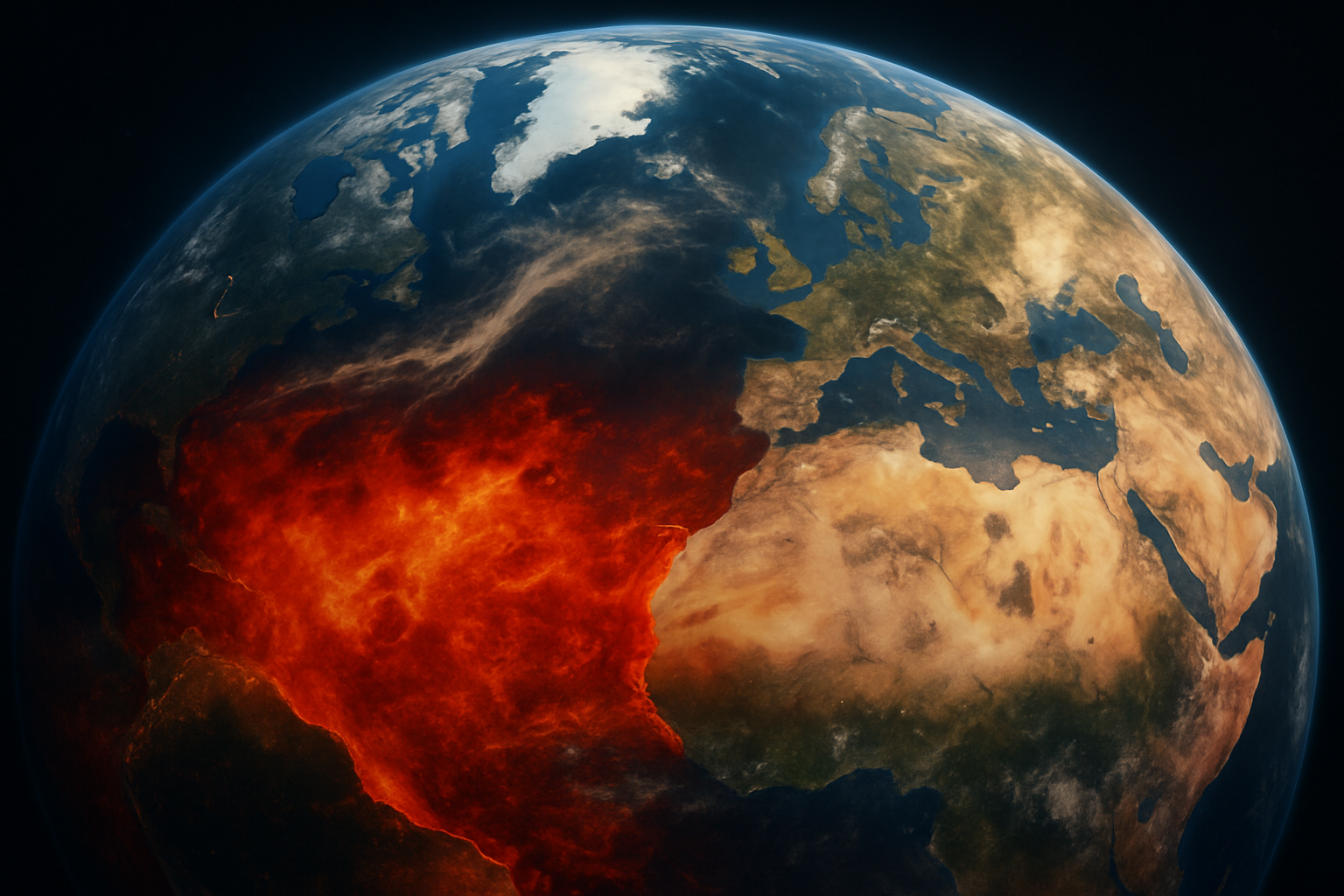
Ocean temperatures have surged to record-breaking levels of over 21°C globally, marking a dangerous milestone in Earth's accelerating climate crisis, while transformative changes in Saharan dust patterns are fundamentally altering European weather systems and creating new environmental challenges across continents.
According to European Copernicus program data, global ocean surface temperatures have reached an unprecedented average of more than 21°C, representing approximately 0.5°C above the estimated average between 1993 and 2022. This dramatic increase in marine temperatures coincides with what climate scientists are calling the longest sustained period of extreme warming in recorded human history.
Ocean Temperature Crisis Reaches Critical Threshold
The surge in ocean temperatures represents more than a statistical milestone—it signals a fundamental shift in Earth's climate system that threatens marine ecosystems, global weather patterns, and billions of people dependent on ocean resources. European Copernicus data reveals that the current thermal state of the oceans has moved beyond natural variability, with profound implications for global climate stability.
Marine ecosystem research conducted across 33,990 fish populations in the Northern Hemisphere demonstrates the catastrophic impact of these temperature increases. Scientists have documented that every 0.1°C of ocean warming per decade results in a 7.2% decline in fish populations, with some regions experiencing up to 20% annual biomass reductions. This marine ecosystem collapse affects food security for billions of people worldwide who depend on fish as their primary protein source.
"The ocean is absorbing significantly more thermal energy than it's releasing, creating a dangerous heat accumulation that threatens the stability of global climate systems."
— World Meteorological Organization Report, 2026
Saharan Dust Patterns Transform Under Climate Change
Simultaneously, climate change is fundamentally altering the world's largest desert, creating unprecedented changes in Saharan dust distribution that increasingly affects European weather systems. Portuguese climate research indicates that as the Sahara Desert transforms under rising global temperatures, Europe finds itself increasingly downwind of a mutating environmental crisis.
These dust patterns, historically following predictable seasonal routes, are now becoming more erratic and intense due to altered atmospheric circulation patterns. The transformation affects air quality, precipitation patterns, and agricultural conditions across Mediterranean and Northern European regions, creating cascading environmental and health impacts.
The changing dust dynamics represent a critical example of how climate change creates interconnected global effects. Atmospheric systems carry Saharan particles across continents, affecting air quality in regions thousands of kilometers away from their source. European populations are experiencing increased respiratory health challenges, while the altered atmospheric conditions contribute to unpredictable weather patterns.
Post-Wildfire Carbon Burial: A Critical Climate Solution
Amid these accelerating climate challenges, innovative approaches to carbon management are emerging as essential tools in the global response. Canadian research highlights the potential of post-wildfire carbon burial, where burnt logs and debris from forest fires are deliberately buried to prevent additional carbon release into the atmosphere.
This low-tech approach represents a significant departure from high-technology carbon capture solutions, offering immediate implementation potential across fire-affected regions worldwide. The method involves using heavy machinery to bury burnt organic material in designated areas, effectively creating long-term carbon storage sites that prevent decomposition and atmospheric carbon release.
The technique addresses two critical climate challenges simultaneously: preventing additional greenhouse gas emissions from decomposing fire debris while creating permanent carbon storage. Given the increasing frequency and intensity of wildfires globally, this approach could scale rapidly to address millions of tons of post-fire organic material that would otherwise contribute to atmospheric carbon concentrations.
Unprecedented Environmental Context
These developments occur during what climate scientists confirm as the 23rd consecutive month of global temperatures exceeding 1.5°C above pre-industrial levels—the longest sustained period of extreme warming in recorded human history. January 2026 remains the hottest month ever recorded, with human-induced climate change completely overriding natural cooling mechanisms, including La Niña effects that historically moderated global temperatures.
The World Meteorological Organization projects a 50-60% probability of El Niño development during July-September 2026, potentially driving unprecedented temperature combinations that would combine baseline warming with natural cycle amplification. This "climate volatility paradox" demonstrates how sustained global warming enables simultaneous heat records and devastating regional extremes through disrupted atmospheric circulation patterns.
Global Emergency Response Systems Under Strain
Emergency response systems worldwide are operating beyond capacity limits, with traditional mutual aid mechanisms proving inadequate for simultaneous multi-continental disasters. The European Union's Civil Protection mechanism has been repeatedly activated, with recent Sweden-Denmark assistance totaling €246 million representing the largest coordinated European response on record—yet insufficient for the scale and simultaneity of current challenges.
Transportation networks, power grids, and communication systems designed for historical climate patterns are repeatedly failing as extreme weather exceeds operational parameters. Infrastructure systems built for climate conditions that no longer exist require fundamental reassessment and climate-resilient adaptation strategies.
Technology and Traditional Knowledge Integration
Successful environmental responses increasingly demonstrate the necessity of sophisticated integration between cutting-edge technology and traditional ecological knowledge. Satellite monitoring, environmental DNA sampling, and AI-powered analysis provide unprecedented capabilities for species tracking, habitat assessment, and threat detection. However, maximum effectiveness is achieved when these technologies are combined with generations of traditional knowledge and community stewardship practices.
This hybrid approach is evident in carbon burial initiatives, where modern heavy machinery and site selection technology work alongside traditional forest management wisdom to create effective carbon storage solutions. Similarly, ocean monitoring programs combine advanced Copernicus satellite data with local marine knowledge to understand and respond to temperature changes.
Economic and Social Implications
The convergence of rising ocean temperatures, altered atmospheric patterns, and increased wildfire frequency creates cascading economic and social impacts. Agricultural sectors face mounting losses as extreme weather destroys crops and disrupts supply chains during critical growing seasons. Tourism industries confront extended cancellations and infrastructure damage during peak revenue periods.
Mental health services report increased demand for climate anxiety support, with repeated extreme weather events causing psychological trauma for communities. Recovery timelines have fundamentally shifted from weeks to months or years, transforming disaster response planning and economic assumptions about climate resilience.
"Building back better has evolved from an optional enhancement to an essential survival strategy for communities facing repeated climate extremes."
— European Scientific Advisory Council on Climate Change, 2026
Critical Action Window Narrowing
Climate scientists emphasize that the window for effective climate action is narrowing rapidly as ecological systems approach critical thresholds that could trigger irreversible changes affecting global food security, climate stability, and human settlements. The current conditions represent a preview of routine circumstances expected in the 2030s without immediate, comprehensive climate adaptation investment.
The choice between reactive crisis management and proactive climate resilience has become increasingly critical. Environmental protection is now recognized as essential infrastructure for human prosperity and planetary sustainability, requiring unprecedented speed and coordination in implementation.
Tools, knowledge, and cooperation frameworks exist for comprehensive environmental protection, but success depends on sustained international cooperation, enhanced multi-sector coordination, and increased financial commitments to environmental protection as essential planetary infrastructure.
Strategic Significance for Global Climate Response
April 2026 represents a potential watershed moment in global climate preparedness. The convergence of ocean temperature records, atmospheric pattern changes, and innovative carbon management solutions demonstrates both the severity of current challenges and the potential for coordinated human response.
The question facing humanity is no longer whether transformative climate action is needed, but whether global society can organize and implement solutions rapidly enough to maintain planetary habitability during Earth's most environmentally challenging period in recorded history. The simultaneous development of multiple climate indicators suggests that the current period may establish a "new normal" characterized by extreme weather frequency and intensity that will challenge traditional frameworks permanently.
International cooperation frameworks require fundamental restructuring to address simultaneous global disasters rather than sequential regional emergencies. Success in managing these interconnected environmental crises will determine climate resilience strategies for generations and potentially define humanity's ability to maintain civilization-supporting environmental conditions in the decades ahead.