Earth's energy imbalance has reached its highest level since records began in 1960, according to the World Meteorological Organization, as global temperatures exceed the critical 1.5°C threshold for the 22nd consecutive month—the longest sustained extreme warming period in human history.
The State of the Global Climate 2025 report, released Monday by the WMO, confirms that Earth trapped record amounts of heat in 2025, with an unprecedented energy imbalance expected to persist for thousands of years. This milestone coincides with urgent global initiatives to protect Earth's rapidly disappearing glaciers and address mounting environmental challenges across multiple continents.
Critical Climate Indicators Flash Red
UN Secretary-General António Guterres declared the global climate in a "state of emergency," noting that "every key climate indicator is flashing red." The decade from 2015-2025 has been confirmed as the hottest on record, with 2025 ranking as the second or third hottest year at 1.43°C above the 1850-1900 baseline.
For the first time, scientists have measured Earth's energy imbalance—the dangerous accumulation of heat as greenhouse gases reduce the planet's ability to release energy to space. This fundamental disruption of Earth's energy system represents a critical threshold in climate science.
"The climate system is in a state of emergency. Earth is being pushed beyond its limits. All the indicators are showing that we are in uncharted territory."
— UN Secretary-General António Guterres
Global Glacier Crisis Accelerates
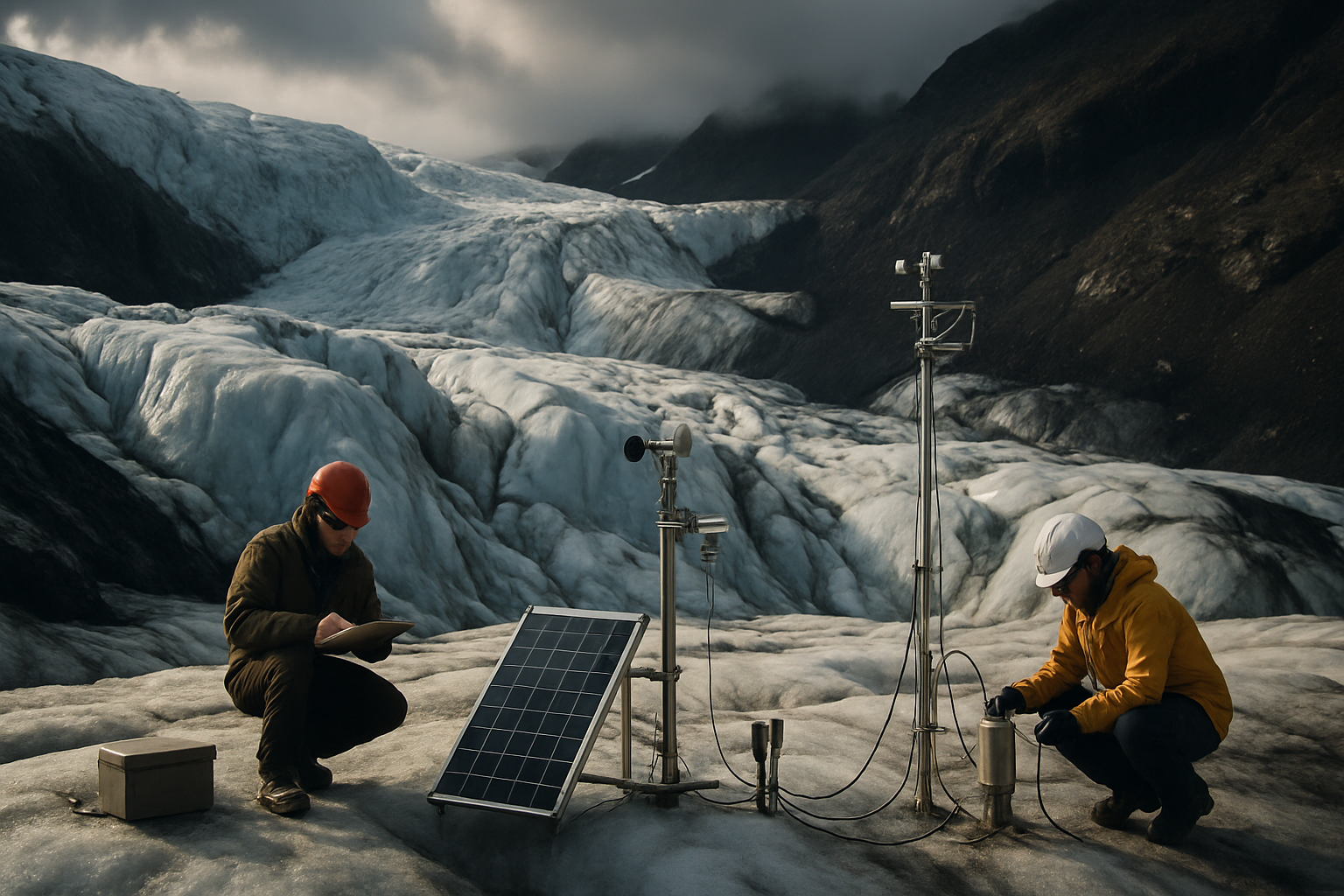
March 21 marked World Day for Glaciers, highlighting the critical role these "water towers" play in Earth's ecosystem. Glaciers store approximately 70% of the world's freshwater and serve as essential regulators of sea levels and biodiversity support systems. Their seasonal meltwater sustains rivers, forests, and farmlands worldwide.
In a stark illustration of the crisis, Germany's four remaining glaciers have lost more than a quarter of their total area in just two years. According to geographer Wilfried Hagg from Munich University of Applied Sciences and glaciologist Christoph Mayer from the Bavarian Academy of Sciences, complete disappearance is expected by the 2030s.
The situation is even more dire in the Hindu Kush Himalayas, where glaciers are losing ice at twice the rate since 2000. This "water tower of Asia" supports over 2 billion people who depend directly on Himalayan glacier meltwater for daily needs, agriculture, and economic survival.
Innovative Environmental Protection Responses
Despite the alarming trends, coordinated global initiatives are emerging to address the crisis. Finland has developed advanced environmental DNA (eDNA) technology for biodiversity monitoring, allowing scientists to identify species through water sample DNA traces without direct wildlife observation. This revolutionary non-invasive monitoring provides unprecedented accuracy in mapping species distribution and habitat health.
Germany's water management experts are implementing comprehensive strategies to address the "disrupted water cycle," which includes groundwater depletion, increased droughts, and wetland destruction. The nation is developing new approaches to save this "precious resource" through innovative conservation and recycling technologies.
Luxembourg's climate researchers have contributed to the WMO's groundbreaking measurement of Earth's energy imbalance, providing critical data on how the planet accumulates heat with potentially devastating consequences lasting hundreds or thousands of years.
Marine Ecosystem Collapse Warning
The climate emergency extends beyond terrestrial systems. Recent research examining 33,990 fish populations shows that every 0.1°C of ocean warming per decade reduces fish populations by 7.2%. This decline represents a fundamental threat to global food security, as billions of people depend on marine protein sources.
Antarctic ice loss equivalent to the area of Vienna occurs annually, with total ice retreat since 1996 reaching 12,820 square kilometers. West Antarctica is particularly vulnerable—complete melting of its ice sheets would contribute significantly to global sea level rise, affecting coastal communities worldwide.
Economic and Social Cascades
The climate emergency is creating cascading effects across economic and social systems. Agricultural losses from extreme weather amount to billions of dollars, destroying crops and disrupting supply chains during critical growing seasons. The tourism industry faces extended cancellations and infrastructure damage during peak revenue periods.
Emergency response systems are being overwhelmed globally. Traditional mutual aid mechanisms designed for sequential regional disasters prove inadequate when multiple continents face simultaneous emergencies. The EU Civil Protection mechanism has been activated repeatedly, with the Sweden-Denmark assistance package of €246 million representing the largest coordinated European response on record.
Technology and Traditional Knowledge Integration
Successful environmental protection increasingly requires sophisticated synthesis of cutting-edge technology with traditional ecological knowledge and community-based management. This evolution represents a fundamental shift in conservation methodology.
Estonia has achieved 88% renewable electricity generation and operates continental Europe's largest battery storage facility, capable of powering 90,000 households. However, supply chain vulnerabilities persist, with China controlling 60-90% of critical materials for renewable infrastructure, highlighting the need for diversified approaches.
The US-EU-Japan Critical Minerals Partnership, involving 55 countries and seven African alternative suppliers, addresses these strategic dependencies through enhanced cooperation and innovative recycling technologies.
International Cooperation Under Strain
Environmental challenges transcend national boundaries through atmospheric systems, ocean currents, and species migrations, making unilateral efforts insufficient. The simultaneity of global disasters is testing cooperation mechanisms developed for more stable conditions where individual regions could assist others facing isolated emergencies.
Despite these challenges, innovative partnerships are emerging. South-South cooperation is expanding, with developing nations becoming environmental solution providers rather than aid recipients. This evolution leverages indigenous knowledge, renewable resources, and innovative governance systems.
Critical Action Window Narrowing
The WMO projects a 50-60% probability of El Niño development during July-September 2026, potentially driving unprecedented temperatures by combining baseline warming with natural cycle amplification. Current conditions provide a preview of routine circumstances expected in the 2030s without immediate adaptation investment.
Scientists warn that Earth is approaching critical thresholds that could trigger irreversible changes affecting global food security, climate stability, and human settlements. The concept of "building back better" has evolved from optional to essential survival strategy as infrastructure designed for historical climate patterns repeatedly fails.
"We are at a watershed moment between reactive crisis management and proactive climate resilience. The tools and knowledge exist for comprehensive environmental protection, but success depends on unprecedented speed of coordination."
— World Meteorological Organization Assessment
Path Forward
March 2026 represents a critical juncture in global environmental protection. The convergence of record-breaking climate indicators, accelerating glacier loss, and mounting environmental pressures demands immediate coordinated action. Success requires sustained international cooperation, enhanced multi-sector coordination, and increased financial commitments recognizing environmental protection as essential infrastructure for human prosperity and planetary sustainability.
The integration of technological innovation with traditional ecological wisdom offers pathways for maintaining planetary habitability during Earth's most environmentally challenging period. Whether humanity can organize and implement solutions rapidly enough to protect essential environmental systems remains the defining question of our time.