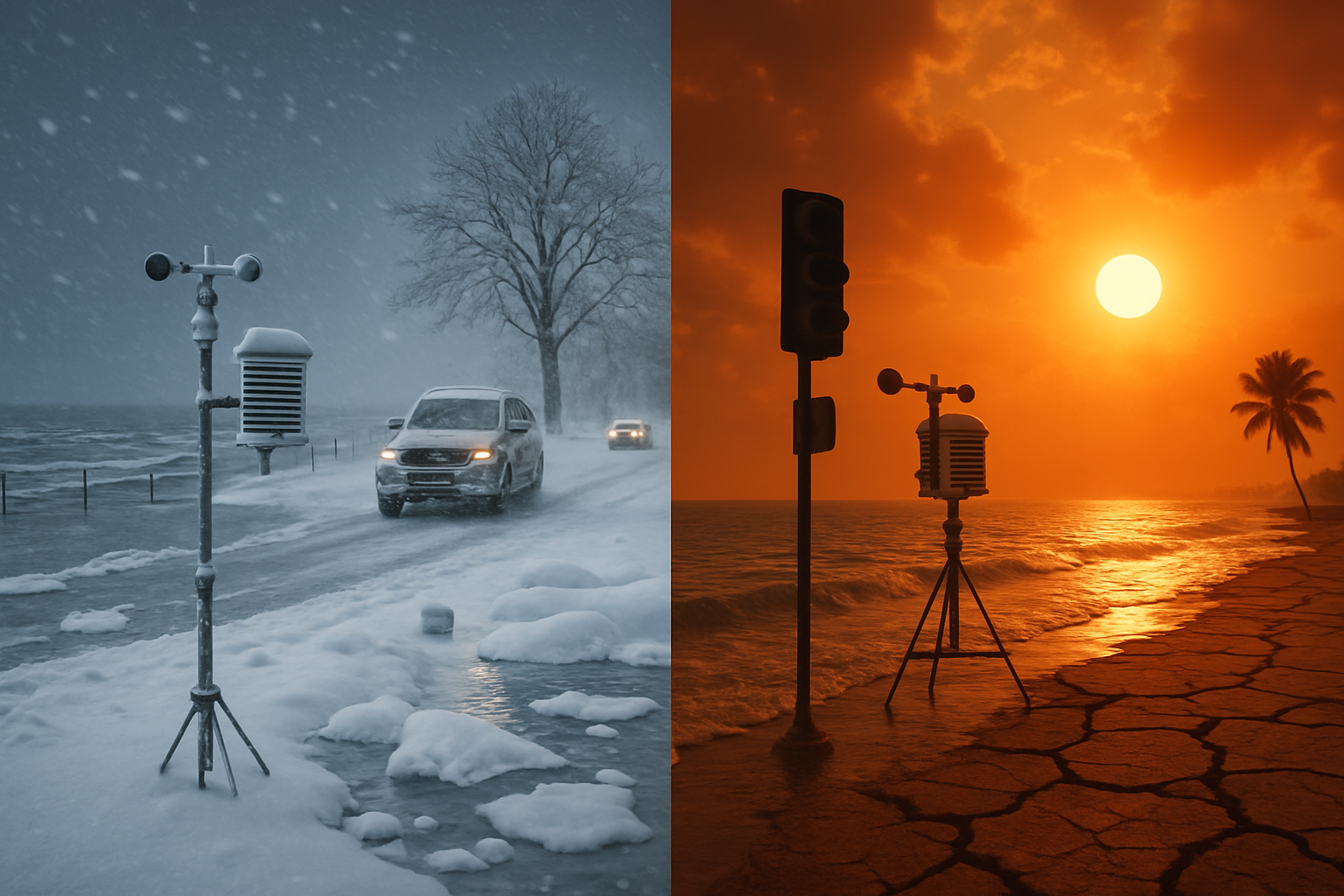
February 25, 2026, has become a watershed moment in global climate history, as four nations simultaneously recorded their warmest February temperatures on record while devastating floods and extreme weather events continue to overwhelm emergency services across multiple continents.
Belgium experienced its warmest February 25th since records began, with temperatures reaching 18.9°C at the Royal Meteorological Institute's Ukkel weather center in Brussels. Just across the border, the Netherlands recorded an even more dramatic milestone as temperatures hit 19.3°C in Maastricht, making it the warmest February 25th ever documented in Dutch history.
Unprecedented Global Temperature Surge
These record-breaking European temperatures come as January 2026 was confirmed as the hottest month in recorded human history, marking the 18th consecutive month that global temperatures have exceeded 1.5°C above pre-industrial levels. This sustained warming trend has now overridden natural climate variability, including the typically cooling effects of La Niña conditions.
The climate volatility paradox is starkly evident as these heat records coincide with devastating winter storms across other regions. The sustained temperature elevation demonstrates that human-induced climate change has fundamentally altered Earth's atmospheric systems beyond natural recovery mechanisms.
Multi-Continental Weather Emergencies
While Europe experiences unprecedented warmth, Australia faces a complex weather transition as a tropical low system currently flooding the outback is expected to track south over the weekend, potentially bringing major drought relief to southeastern states. The Bureau of Meteorology describes the system as offering "potential for major drought relief," highlighting the extreme variability in global weather patterns.
In East Africa, Kenya's meteorological department has issued fresh flood warnings for 12 regions, including the capital Nairobi. Heavy rainfall exceeding 20mm within 24 hours is expected to persist over the Lake Victoria Basin and the Highlands West of the Rift Valley, creating dangerous conditions for millions of residents.
Infrastructure Under Unprecedented Strain
The simultaneous nature of these extreme weather events is exposing critical vulnerabilities in infrastructure systems designed for historical rather than current climate conditions. Transportation networks across affected regions are operating beyond their design parameters, with power grids, communication systems, and emergency services reaching operational capacity limits.
"The infrastructure challenges we're seeing represent a fundamental mismatch between systems designed for yesterday's climate and the reality of today's environmental conditions."
— European Scientific Advisory Council on Climate Change
Emergency services are reporting that traditional mutual aid mechanisms are being strained as multiple countries face simultaneous disasters, preventing the usual regional compensation that has historically helped manage localized extreme weather events.
Historical Context and Escalating Crisis
February 2026 builds upon a devastating succession of extreme weather events that have characterized recent months. The European continent has been battered by a relentless series of Atlantic storms—Kristin, Leonardo, Marta, Nils, and Pedro—that have claimed more than 30 lives across Portugal, Spain, and France since the beginning of February.
Portugal has maintained its largest peacetime rescue operation, deploying 26,500 personnel including 1,975 military personnel and 30 naval vessels to respond to over 1,800 weather incidents. The scale of this response underscores the unprecedented nature of the current crisis.
The EU Civil Protection Mechanism has been activated, with Sweden and Denmark providing a €246 million assistance package—the largest coordinated European weather response on record. This international cooperation demonstrates both the severity of the current situation and the evolution of climate emergency response protocols.
Economic and Social Devastation
The economic toll of these simultaneous extreme weather events is mounting rapidly. Agricultural sectors across affected regions are reporting billions in losses, with disrupted supply chains creating ripple effects throughout global commerce. The tourism industry, particularly vulnerable during what should be peak season in some regions, faces extended cancellations and infrastructure damage.
Recovery timelines have shifted from the traditional weeks to months or even years for some infrastructure damage. This extended recovery period represents a fundamental shift in how societies must prepare for and respond to climate-related disasters.
Climate Science Implications
The convergence of these extreme weather events provides stark evidence of what climate scientists have long warned: that global warming would lead to increased climate volatility, enabling both unprecedented heat records and devastating regional extreme weather events through disrupted atmospheric circulation patterns.
The polar vortex disruption and altered Atlantic circulation systems are creating conditions where record global warmth can coexist with devastating regional winter storms and extreme weather events. This climate volatility paradox is becoming increasingly evident as the primary characteristic of our rapidly changing climate system.
International Cooperation and Response
The scale and simultaneity of current extreme weather events is testing international cooperation frameworks like never before. Traditional bilateral assistance mechanisms prove inadequate when multiple nations face disasters simultaneously, requiring fundamental restructuring of global emergency response systems.
The European experience is providing crucial lessons for global climate adaptation, demonstrating both the necessity and effectiveness of continental cooperation while highlighting the urgent need for enhanced resilience frameworks designed specifically for the era of permanent climate volatility.
Adaptation Imperatives
Climate scientists and policy experts are emphasizing that current conditions represent a preview of routine circumstances expected in the 2030s without significant climate adaptation investment. The choice between reactive crisis management and transformative infrastructure adaptation approaches is becoming increasingly urgent.
The concept of "building back better" with climate-resilient infrastructure is being emphasized over traditional reconstruction methods that simply restore systems to their previous, inadequate specifications. This represents a fundamental shift in how societies approach recovery from extreme weather events.
Looking Forward: A Critical Juncture
February 2026 may prove to be a watershed moment forcing fundamental reconsideration of global climate preparedness strategies. The window for effective climate action continues to narrow while the costs of both adaptation and inaction escalate rapidly.
Additional Atlantic storm systems are developing, suggesting that the current crisis may persist for weeks, establishing what experts warn could become the "new normal" of extreme weather frequency. This persistence of extreme conditions over extended periods represents a significant departure from historical weather patterns.
As emergency services continue operating at capacity limits and infrastructure vulnerabilities become increasingly apparent, the urgent need for transformative approaches to climate adaptation has never been clearer. The coordinated international response demonstrated in February 2026 may serve as a template for managing the permanent climate volatility that characterizes our rapidly changing planet.
"We are no longer preparing for climate change—we are managing it. The question now is whether our response will be adequate to the scale of the challenge we face."
— International Climate Adaptation Expert
The events of February 2026 underscore that effective climate action now requires unprecedented coordination across technological innovation, international cooperation, financial commitment, and adaptive management capable of responding to rapidly evolving environmental conditions. The stakes have never been higher, and the urgency for comprehensive global climate action has never been more apparent.