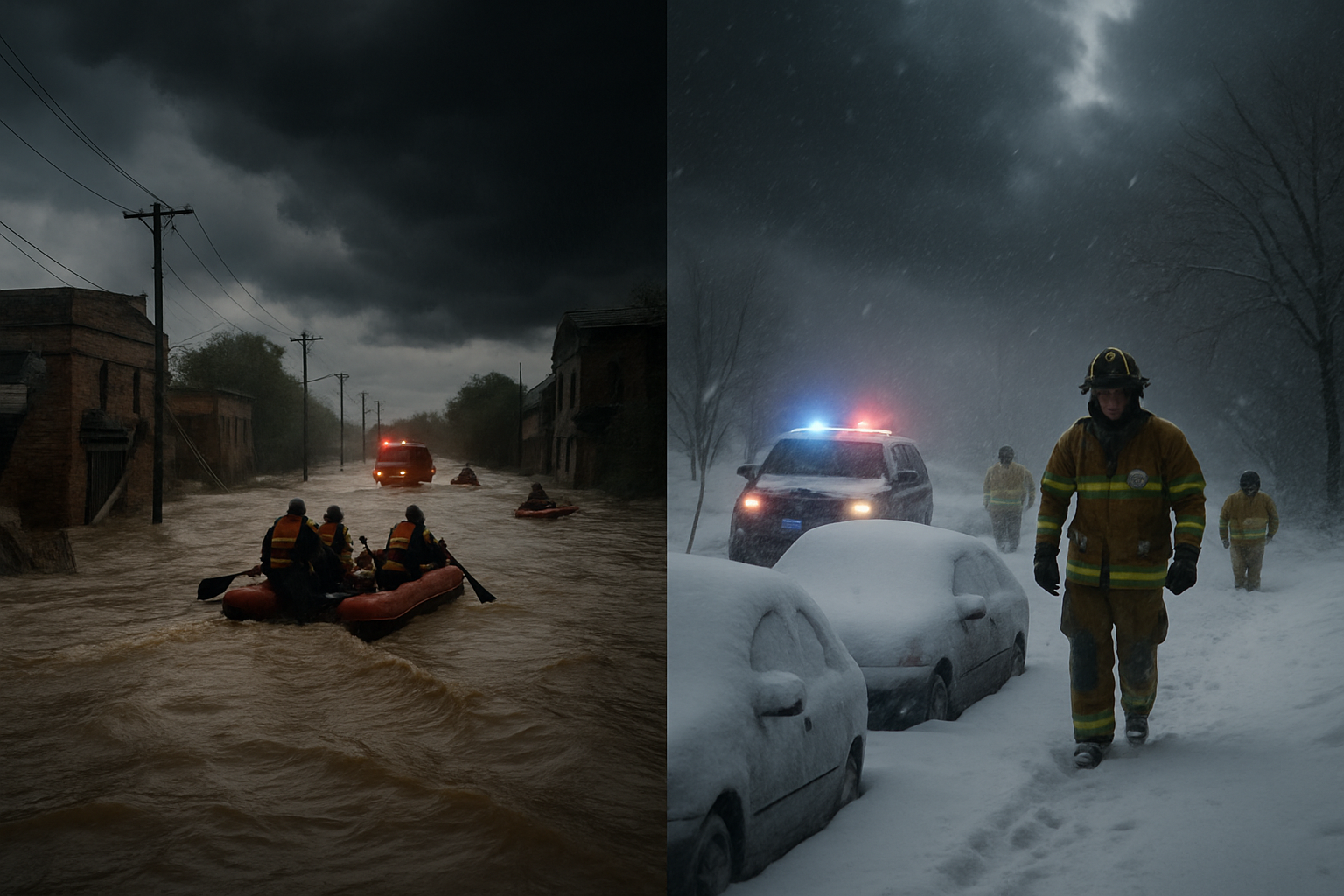
A catastrophic convergence of extreme weather events across multiple continents is overwhelming global emergency response systems, exposing critical gaps in climate adaptation infrastructure as the planet experiences its 18th consecutive month of record-breaking temperatures.
From Australia's "apocalyptic rain" creating dangerous flash flooding to Japan's unprecedented heat warnings and Peru's urgent flood response measures, the simultaneous nature of these disasters represents a fundamental shift in how climate change manifests globally. Emergency services across six nations are struggling to cope with conditions that exceed the design parameters of existing infrastructure.
Australia Faces "Summer of Extremes"
Australia's summer has been characterized by repeated cycles of bushfires followed by devastating floods, with Lake Eyre preparing for its second major flooding event in two years. The Bureau of Meteorology has issued warnings for "very dangerous thunderstorms" hitting Sydney and surrounding regions, describing conditions as bringing "apocalyptic rain" that has trapped commuters in dangerous flash flooding situations across New South Wales.
Queensland is experiencing record-breaking rainfall, with some areas recording their wettest day since 2010. The meteorological services report being overwhelmed by precipitation intensity that exceeds infrastructure capacity, forcing emergency coordinators to manage diverse hazards from bushfire risks to major flooding simultaneously across vast geographical areas.
"The intensity of these weather events is unlike anything we've witnessed in our operational experience. We're seeing the driest regions simultaneously recording the wettest conditions in decades,"
— Senior Emergency Coordinator, Australia
Japan Braces for Record-Breaking Summer Heat
The Japan Meteorological Agency has released alarming forecasts predicting a 60 percent probability of above-normal temperatures across Kyushu, Shikoku, and the southern and eastern parts of Honshu between June and August. Climate experts warn that Japan is likely to face another record-setting summer as global warming continues to shrink Arctic ice, alter wind patterns, and heat ocean temperatures.
The warming trend affecting Japan is part of a broader pattern where human-induced climate change is overriding natural cooling cycles, including the typical La Niña effects that would normally moderate regional temperatures. This represents a fundamental alteration of the atmospheric systems that have governed regional weather patterns for millennia.
South American Crisis Response
Peru has activated an urgent response plan following severe damage from intense rainfall and river overflows affecting multiple regions of the country. The Rímac River in Lurigancho-Chosica has triggered orange-level alerts, with authorities identifying 12 critical points at risk of overflow and landslides as intense rainfall creates huaicos (debris flow) conditions.
The response comes as the region faces a complex weather pattern where traditional seasonal predictions have become unreliable. Emergency management teams report that infrastructure designed for historical climate patterns is operating beyond intended parameters, requiring fundamental reassessment of disaster preparedness protocols.
European Infrastructure Under Strain
Portugal's insurance industry faces an estimated €750 million in claims following recent extreme weather events, with 140,000 incidents reported and insurers pointing to a dangerous 80 percent deficit in risk coverage. The scale of damage represents a watershed moment for European climate preparedness, exposing vulnerabilities in systems designed for historical rather than current climate conditions.
The United Kingdom, despite experiencing significant flooding and storms throughout winter, has recorded weather patterns that meteorologists describe as "nowhere near a record breaker" compared to historical extremes. This apparent contradiction highlights the complex nature of climate volatility, where some regions experience unprecedented conditions while others remain within historical ranges, often simultaneously.

The Science Behind Simultaneous Extremes
According to historical climate data analyzed from memory, January 2026 marked the 18th consecutive month of global temperatures exceeding 1.5°C above pre-industrial levels, representing the hottest month in recorded history. This unprecedented warming streak demonstrates human-induced climate change overriding natural climate variability, including La Niña cooling effects that would typically moderate global temperatures.
Climate scientists describe this phenomenon as the "climate volatility paradox," where sustained global warming enables both unprecedented heat records and devastating regional weather extremes simultaneously. The disruption of atmospheric circulation patterns, particularly polar vortex disruptions and altered Atlantic circulation systems, creates conditions where extreme weather events can occur across different hemispheres and seasons concurrently.
Infrastructure Vulnerabilities Exposed
The simultaneous nature of current extreme weather events has exposed critical vulnerabilities in infrastructure systems designed for sequential rather than concurrent disasters. Transportation networks, power grids, and communication systems across multiple continents are operating beyond their historical design parameters, creating cascading failures that amplify the impact of individual weather events.
Emergency services report reaching operational capacity limits globally, with traditional mutual aid mechanisms becoming strained when multiple countries face disasters simultaneously. This represents a fundamental challenge to disaster response frameworks that historically assumed regional disasters with neighboring assistance available.
Economic and Social Implications
The economic devastation from simultaneous extreme weather events is mounting across multiple sectors. Agricultural systems face billions in losses from damaged crops and disrupted supply chains, while tourism industries grapple with transportation disruptions and safety concerns during peak seasons. Recovery timelines have shifted from weeks to months and years, representing a fundamental change in how societies must approach disaster response and infrastructure investment.
Mental health services across affected regions report increased demand as communities struggle to cope with repeated extreme weather trauma. The psychological impact of successive disasters, combined with the disruption of traditional community support networks during widespread emergencies, presents new challenges for post-disaster recovery planning.
"We're witnessing a fundamental shift from managing isolated weather events to coordinating responses across multiple simultaneous crises. Our current systems weren't designed for this level of concurrent stress."
— International Emergency Response Coordinator
Adaptation Imperatives
The February 2026 weather crisis represents what scientists describe as a watershed moment for global climate preparedness. The choice between reactive crisis management and transformative infrastructure adaptation has become increasingly urgent as the window for effective climate action continues to narrow.
Experts emphasize that current conditions likely represent a preview of routine circumstances expected in the 2030s without significant climate adaptation investment. The development of "build back better" climate-resilient infrastructure has shifted from being preferable to essential for community survival and economic stability.
International Cooperation Under Stress
The global nature of current extreme weather events has tested international cooperation frameworks beyond their intended capacity. Traditional assistance mechanisms that assume some regions remain available to help others during emergencies have proven inadequate when multiple continents face disasters simultaneously.
Enhanced international cooperation frameworks specifically designed for multi-continental climate emergencies are becoming critical for managing what scientists warn will be the permanent climate volatility era. The development of these systems represents one of the most pressing challenges facing global governance in the climate change era.
Looking Forward: The New Climate Reality
Climate scientists warn that the extreme weather patterns observed in February 2026 are likely to become increasingly frequent and intense as global warming progresses. The simultaneous nature of current disasters represents a fundamental evolution in how climate change manifests, requiring unprecedented coordination across all sectors of society.
The success of humanity's response to these accelerating challenges will depend on rapid scaling of climate adaptation measures, enhanced international cooperation, and a fundamental transformation in how societies prepare for and respond to extreme weather events. The tools and knowledge exist for effective climate protection, but implementation success depends on sustained political commitment, adequate funding, and recognition that environmental protection has become essential infrastructure for human prosperity and planetary sustainability.
As additional weather systems develop across multiple ocean basins, authorities maintain high alert levels worldwide. The persistence of extreme conditions across vast geographic areas suggests that February 2026 may represent the beginning of a new phase in global climate volatility, requiring fundamental shifts in how humanity prepares for and adapts to an increasingly unstable environmental future.