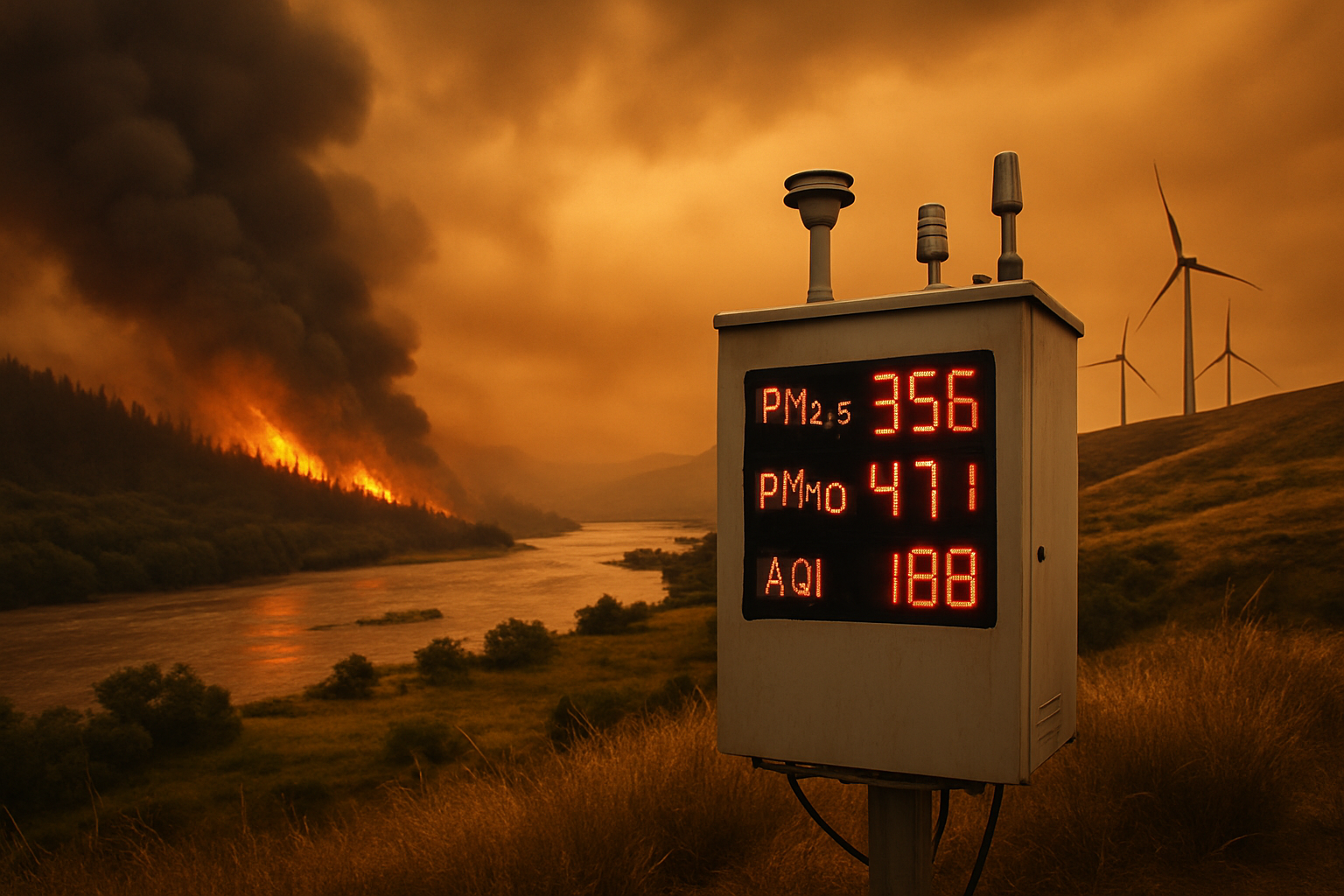
The world faces an unprecedented environmental crisis as April 2026 marks the 23rd consecutive month of global temperatures exceeding 1.5°C above pre-industrial levels—the longest sustained extreme warming period in recorded human history—while new research reveals climate change is claiming 10 million lives annually through heat, fires, floods, and disease outbreaks.
A devastating convergence of environmental disasters across multiple continents this week has exposed critical gaps in global emergency response systems while highlighting both the accelerating pace of climate change and remarkable advances in renewable energy solutions that offer hope for the future.
Deadly Heat Wave Grips 2.5 Billion People
Landmark research from The Nature Conservancy reveals that one-third of the world's population—over 2.5 billion people—now lives in areas where extreme heat severely limits daily activities, making simple summer tasks dangerous and potentially deadly. The study, conducted during the longest sustained warming streak in human history, shows heat stress now affects outdoor work, routine movement, and basic daily activities across previously temperate regions.
The crisis has reached alarming proportions across multiple regions simultaneously. In Algeria, Civil Protection services are conducting multiple rescues amid a triple weather threat featuring heavy snowfall, thunderstorms with winds exceeding 100 km/h, and dangerous dust storms creating respiratory hazards. New Zealand's Far North continues prolonged recovery from devastating March flooding that left entire communities isolated for weeks.
Finland has recorded its warmest March in 145 years, triggering the earliest tick season in recorded history and extending dangerous conditions to northern Oulu regions typically unaffected until summer. These unprecedented biological disruptions demonstrate how rapidly changing climate conditions are overwhelming natural ecosystems developed over millennia.
WHO Warning: 10 Million Annual Climate Deaths
The World Health Organization and The Lancet have issued stark warnings that the climate crisis is now claiming 10 million lives annually through extreme heat events, wildfires, toxic smoke, flooding, and the surge of infectious diseases. The death toll reflects a dramatic acceleration in climate-related mortality as global temperatures continue to exceed critical thresholds.
"We are witnessing the breakdown of Earth's life support systems in real-time. The climate crisis has evolved from a future threat to a present reality claiming millions of lives each year."
— World Health Organization Climate Health Assessment
Cyprus health authorities report unprecedented challenges as climate-related health emergencies strain medical systems. The convergence of extreme weather events with public health crises represents a fundamental shift from isolated regional emergencies to compound disasters affecting vast geographic areas simultaneously.
Renewable Energy Breakthrough Amid Crisis
Despite the mounting environmental emergency, significant advances in renewable energy offer crucial hope for rapid decarbonization. Portugal's government has announced plans to evaluate abandoned mining areas for renewable energy installations, demonstrating innovative approaches to land use optimization for clean energy deployment.
Poland has achieved a remarkable milestone with negative electricity prices for residential solar customers, as powerful wind and solar production exceeded demand during optimal weather conditions. This breakthrough demonstrates the economic viability of distributed renewable energy systems and offers a template for rapid energy transition globally.
The success stories contrast sharply with ongoing supply chain vulnerabilities, where China continues to control 60-90% of critical materials essential for renewable infrastructure. The US-EU-Japan Critical Minerals Partnership, involving 55 countries and seven African suppliers, represents urgent efforts to diversify supply chains amid accelerating climate action needs.
Emergency Response Systems Overwhelmed
Traditional emergency response mechanisms designed for sequential regional disasters are proving inadequate as multiple continents face simultaneous extreme weather events. The EU Civil Protection Mechanism has been repeatedly activated, with Sweden and Denmark receiving €246 million in assistance—the largest coordinated European weather response on record—yet insufficient for the scale and simultaneity of current challenges.
Emergency services are operating at or beyond capacity limits globally, while transportation networks, power grids, and communication systems designed for historical climate patterns repeatedly exceed operational parameters. The shift from isolated disasters to "compound disasters" fundamentally challenges traditional resource allocation and mutual aid frameworks.

Economic Devastation Mounts Globally
The economic implications of the climate crisis continue to escalate dramatically. Agricultural sectors are experiencing billions in losses as extreme weather destroys crops during critical growing seasons. Tourism industries face extended cancellations and infrastructure damage during peak revenue periods, while families potentially lose generational properties multiple times per decade.
Recovery timelines have fundamentally shifted from weeks to months or years, representing a permanent change in disaster response planning. The concept of "building back better" with climate-resilient infrastructure has evolved from an optional enhancement to an essential survival strategy for communities worldwide.
Mental health services report increased demand for climate anxiety counseling and repeated trauma support, particularly affecting vulnerable populations including children, elderly residents, and those with pre-existing respiratory conditions.
International Cooperation at Breaking Point
Environmental challenges transcend political boundaries through atmospheric systems and ocean currents that transport climate effects across continents regardless of borders. The simultaneity of disasters is testing international cooperation mechanisms that were designed assuming stable regions could assist others during isolated emergencies.
Traditional aid frameworks require fundamental restructuring as multiple continents face concurrent environmental crises. Success now requires unprecedented coordination, enhanced multi-sector cooperation, and sustained financial commitments recognizing environmental protection as essential infrastructure for human prosperity and planetary sustainability.
Technology-Tradition Integration Emerges
Successful climate responses increasingly demonstrate sophisticated synthesis of cutting-edge technology with traditional ecological knowledge and community-based management systems. Finland authorities are implementing "transformative adaptation" approaches that move beyond reactive emergency responses to proactive systems designed for permanent climate volatility.
Estonia operates continental Europe's largest battery storage system serving 90,000 households, while maintaining 88% renewable electricity generation. These achievements combine advanced engineering with traditional Nordic approaches to energy independence and environmental stewardship.
Critical Action Window Narrowing Rapidly
April 2026 represents a critical watershed moment for global climate preparedness. The choice between reactive crisis management and transformative infrastructure adaptation becomes increasingly urgent as the window for effective climate action continues to narrow.
Current extreme weather conditions are establishing a "new normal" of unprecedented frequency and intensity that permanently challenges traditional emergency frameworks. Additional weather systems developing across the Atlantic and Pacific suggest crisis conditions may persist for weeks, representing a potential turning point toward permanent climate volatility.
"We face a fundamental question: can humanity organize and implement solutions rapidly enough to maintain planetary habitability during Earth's most environmentally challenging period in recorded history?"
— UN Secretary-General António Guterres
Future Trajectory Depends on Immediate Action
The World Meteorological Organization confirms a 50-60% probability of El Niño development between July-September 2026, potentially driving unprecedented temperatures by combining baseline warming with natural cycle amplification. This convergence could push global climate systems beyond critical thresholds with irreversible consequences for food security, climate stability, and human settlements.
Tools, knowledge, and cooperation frameworks exist for comprehensive environmental protection, but success depends on unprecedented speed and coordination through sustained international cooperation and political commitment. The experiences of April 2026 may prove decisive in determining global climate resilience strategies that will affect generations to come.
As emergency services worldwide struggle to cope with simultaneous disasters and renewable energy solutions demonstrate both promise and supply chain vulnerabilities, the coming months will test humanity's capacity to rapidly scale climate solutions while building adaptive resilience for the environmental challenges ahead.