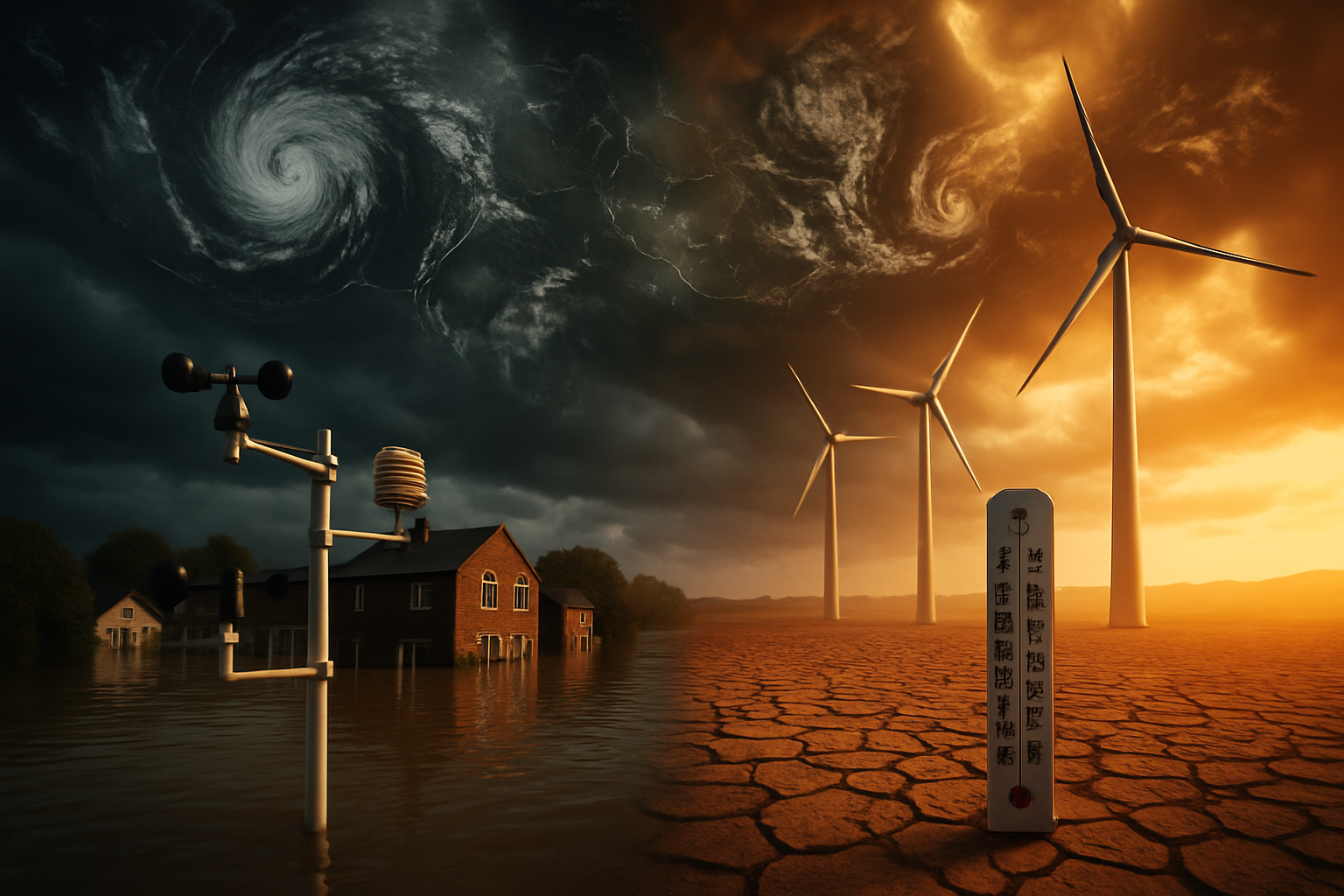
A catastrophic convergence of extreme weather events is devastating multiple countries simultaneously as global temperatures potentially reach a historic 24th consecutive month exceeding the critical 1.5°C threshold above pre-industrial levels, representing the longest sustained warming period in recorded human history.
Algeria faces a dangerous triple threat of environmental disasters as meteorological services issue urgent warnings for severe weather conditions affecting multiple provinces. Powerful thunderstorms are generating rainfall exceeding 50mm across 14 provinces including Blida, Boumerdès, Tizi Ouzou, and Béjaïa, while mountain regions above 1,100 meters experience heavy snowfall. Simultaneously, dangerous winds exceeding 100 km/h are creating dust storms that pose serious respiratory hazards to vulnerable populations.
Middle East Grapples with Unprecedented Weather Volatility
Jordan's southern valleys are experiencing dangerous rainwater flows, with authorities urgently warning citizens to avoid streams and collection areas. The unusual weather patterns represent a dramatic departure from typical seasonal conditions, demonstrating the increasing unpredictability that has become characteristic of the region's climate.
Meanwhile, Latvia is witnessing extraordinary temperature swings that exemplify the climate volatility paradox affecting the Baltic region. The country has experienced dramatic transitions from winter conditions to near-spring temperatures, with some areas recording potential 20-degree fluctuations within days. The Environment, Geology and Meteorology Center reports that widespread flooding threatens agricultural communities as rivers undergo ice breakup following rapid temperature changes.
Pacific Islands Face Mounting Environmental Pressures
Mauritius has issued heavy rain warnings as atmospheric instability in the Indian Ocean creates dangerous conditions across the island nation. The Mauritian Meteorological Service warns of potential thunderstorms and localized flooding, highlighting the vulnerability of small island developing states to increasingly intense weather patterns.
"These conditions demonstrate the reality of climate change impacts on island nations, where even moderate weather intensification can create disproportionate challenges for infrastructure and communities."
— Regional Climate Expert
New Zealand continues its prolonged recovery from devastating March flooding, with MetService issuing complex weather warnings as multiple systems converge on the North Island. The country's emergency services remain stretched thin, managing ongoing recovery operations while preparing for new potential threats—a situation that emergency experts describe as the new reality of "compound disasters."
Breaking Point for Emergency Response Systems
Traditional mutual aid mechanisms designed for sequential regional disasters are proving inadequate when multiple continents face simultaneous emergencies. Emergency services across affected nations are operating at or beyond capacity limits, while transportation networks, power grids, and communication systems designed for historical climate patterns repeatedly fail as extreme weather exceeds their operational parameters.
The shift from isolated regional disasters to what Australian Fire and Emergency Services Authority (AFAC) terms "compound disasters"—multiple emergency types occurring concurrently across vast geographic areas—is fundamentally challenging traditional resource allocation and mutual aid mechanisms. International cooperation frameworks designed to assist isolated emergencies are being tested by the simultaneity and scale of current global climate impacts.
Scientific Evidence Points to Critical Threshold
Climate scientists confirm that January 2026 marked the hottest month in recorded history, extending an unprecedented warming streak where human-induced climate change has completely overridden natural cooling mechanisms, including La Niña effects. The World Meteorological Organization indicates a 50-60% probability of El Niño development from July to September 2026, which could potentially drive temperatures to unprecedented levels by combining baseline warming with natural cycle amplification.
This "climate volatility paradox" demonstrates how sustained global warming enables both record heat and devastating regional extremes through disrupted atmospheric circulation and polar vortex patterns. The phenomenon explains how Arctic conditions can simultaneously occur in some regions while others experience record-breaking heat waves.
Infrastructure Adaptation Becomes Survival Strategy
Recovery timelines have fundamentally shifted from weeks to months and years, representing a permanent change in disaster response approaches. The concept of "building back better" through climate-resilient infrastructure has evolved from an optional enhancement to an essential survival strategy for communities facing repeated extreme weather events.
Traditional seasonal patterns that have guided infrastructure design, agricultural planning, and emergency preparedness for centuries are no longer reliable frameworks. Current conditions provide a preview of what could become routine in the 2030s without comprehensive climate adaptation investment and transformative infrastructure changes.
Economic and Social Devastation Mounting
Agricultural sectors are experiencing billions in losses as extreme weather destroys crops and disrupts supply chains during critical growing seasons. Tourism industries face extended cancellations and infrastructure damage during peak revenue periods, while families confront the prospect of losing generational properties multiple times within a decade.
Mental health services report increased demand for climate anxiety treatment and repeated trauma counseling, particularly affecting vulnerable populations including the elderly and children with respiratory conditions. The psychological burden of unprecedented environmental volatility is creating new challenges for social support systems.
International Cooperation Under Strain
Environmental challenges transcend political boundaries through atmospheric systems and ocean currents that transport climate effects globally, making unilateral adaptation efforts insufficient. The simultaneity of disasters across multiple continents is testing cooperation mechanisms that were developed assuming stable regions could assist others during isolated emergencies.
Recent examples include the EU Civil Protection mechanism being repeatedly activated, with the Sweden-Denmark €246 million assistance package representing the largest coordinated European weather response on record—yet still insufficient for the scale and simultaneity of current challenges.
Technology and Traditional Knowledge Integration
Successful climate responses increasingly require sophisticated integration of cutting-edge technology with traditional ecological knowledge and community-based management systems. Advanced monitoring capabilities using satellite imagery, environmental DNA sampling, and AI-powered analysis must be combined with community engagement and traditional knowledge systems for maximum effectiveness.
Countries demonstrating successful approaches include Estonia, which operates continental Europe's largest battery storage system serving 90,000 households with 88% renewable electricity, and Finland, which is implementing "transformative adaptation" through proactive systems designed for permanent climate volatility.
April 2026: A Watershed Moment
Climate scientists describe April 2026 as a critical watershed moment in global climate preparedness, representing a fundamental choice between reactive crisis management and transformative infrastructure adaptation. The convergence of extreme weather events, infrastructure vulnerabilities, and emergency response limitations underscores the urgent need for coordinated international action.
The window for effective climate action is narrowing as ecological systems approach critical thresholds that could trigger irreversible changes affecting global food security, climate stability, and human settlements. Current crisis conditions may establish a "new normal" characterized by extreme weather frequency and intensity that permanently challenges traditional emergency response frameworks.
Strategic Implications for the Future
Environmental protection is increasingly recognized as essential infrastructure for human prosperity and planetary sustainability, rather than a regulatory burden. Countries implementing comprehensive environmental protection demonstrate greater economic resilience and attract sustainable investment across multiple sectors.
The tools, knowledge, and cooperation frameworks exist for comprehensive environmental protection, but success depends on unprecedented speed and coordination through sustained international cooperation and political commitment. Additional weather systems are developing in the Atlantic and Pacific regions, with authorities on high alert as crisis conditions may persist for weeks or months.
"The question is no longer whether transformative climate action is needed, but whether humanity can organize and implement solutions rapidly enough to maintain planetary habitability during Earth's most environmentally challenging period in recorded history."
— International Climate Assessment Panel
The convergence of environmental challenges across continents in April 2026 provides both urgent warnings and grounds for hope, demonstrating humanity's capacity for coordinated response during Earth's most challenging environmental period. The choices made in the coming months may prove decisive for climate resilience strategies affecting generations, determining whether conservation efforts can keep pace with accelerating environmental change during what experts describe as the decisive climate action decade.