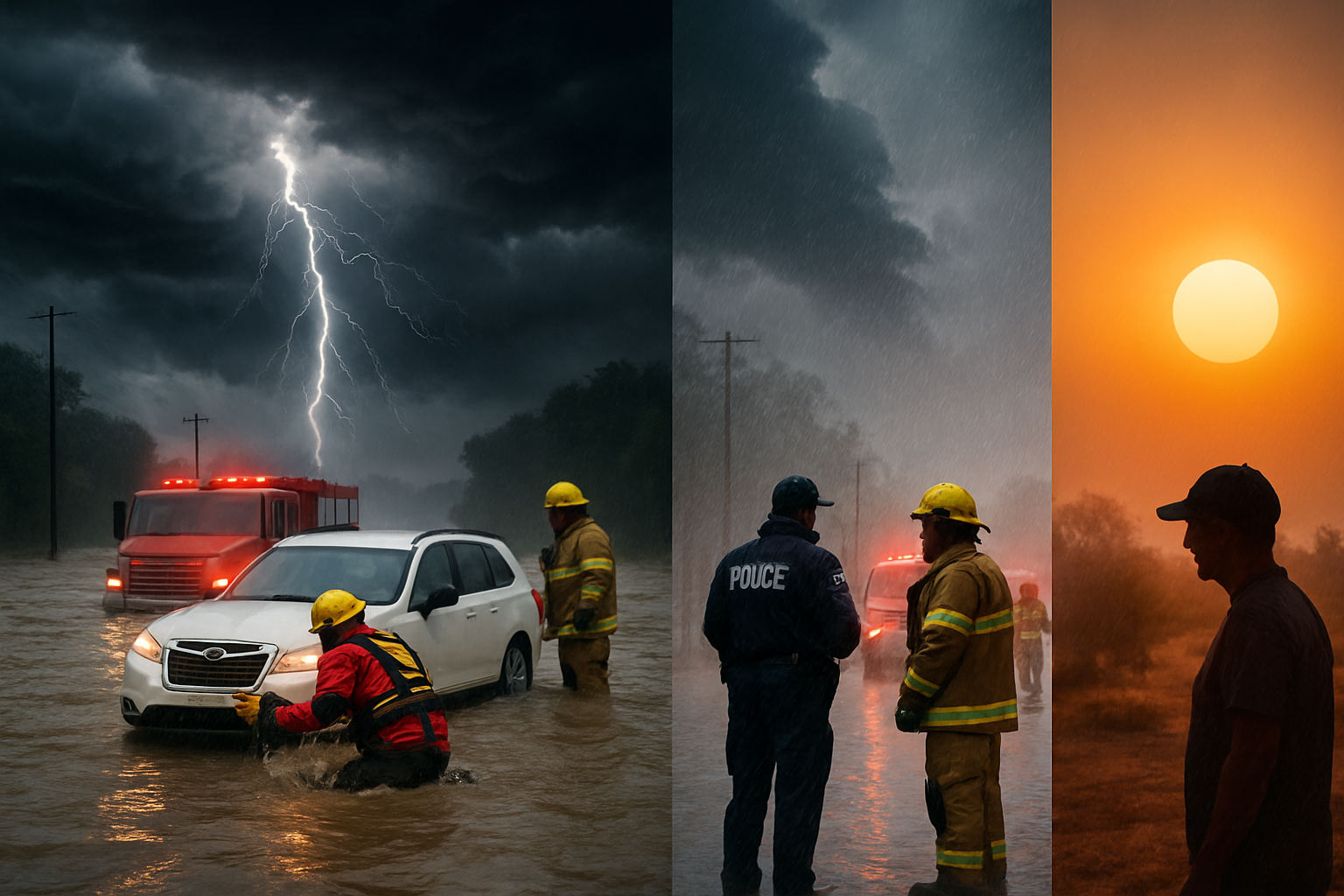
A catastrophic convergence of extreme weather events across five continents has pushed global emergency response systems beyond their breaking points, as March 20, 2026 marks the 21st consecutive month of temperatures exceeding the critical 1.5°C pre-industrial threshold—the longest sustained warming period in recorded human history.
From devastating floods in Canada's Fraser Valley to deadly torrential rains in Colombia, the simultaneous nature of these disasters represents a fundamental shift in climate patterns that is overwhelming traditional emergency response frameworks designed for sequential, not concurrent, global crises.
Fraser Valley Under Siege
British Columbia authorities have issued evacuation alerts for nearly 40 homes in the Chilliwack area as heavy rainfall triggers severe flooding throughout the Fraser Valley. The Chilliwack River has reached dangerous levels, forcing residents to abandon their homes as water overwhelms traditional flood defenses designed for historical weather patterns that no longer apply.
Environment and Climate Change Canada reports the region is experiencing rainfall intensities that exceed infrastructure design parameters, highlighting the growing mismatch between existing systems and current climate realities. Emergency services describe the flooding as part of a broader pattern of "climate whiplash" affecting the Pacific Northwest.
Colombian Communities Devastated
In one of the most severe impacts, torrential rains that began March 18 have triggered catastrophic flooding in Facatativá, a town 40 kilometers west of Bogotá, affecting more than 1,000 families according to local authorities. The flooding has destroyed homes, overwhelmed drainage systems, and cut off essential services to entire neighborhoods.
"The scale of this rainfall event is unprecedented for our region. We're seeing weather patterns that our infrastructure simply wasn't designed to handle."
— Colombian Emergency Management Official
Colombian emergency services report that the intensity and duration of the rainfall exceed historical records, forcing a complete reassessment of regional flood management strategies. The disaster builds on a pattern of increasing extreme weather across South America throughout 2026.
Kenya Faces Flooding Crisis
The Kenya Meteorological Department has warned of moderate-to-heavy rainfall across Nairobi and surrounding regions, with precipitation between 15-20mm creating significant flooding risks for the metropolitan area home to over 4 million residents. The warnings extend across seven regions expected to receive heavy rains over the next five days.
Lake Victoria Basin and Highlands West of the Rift Valley are particular concern areas, where saturated ground conditions from previous weather events have reduced the landscape's ability to absorb additional rainfall, creating dangerous flash flood potential.
Europe Confronts Unprecedented Heat
Germany's meteorological services report extreme temperatures exceeding 40°C across southwestern United States regions being monitored as part of global climate tracking networks. The unusual March heat wave demonstrates the climate volatility paradox, where sustained global warming enables both record temperatures and devastating regional weather extremes.
German climate researchers describe current conditions as a preview of routine weather patterns expected in the 2030s without immediate and comprehensive climate adaptation investments. The heat wave coincides with other extreme weather across Europe, straining continental emergency response systems.
Infrastructure at Breaking Point
Emergency services across all affected regions report operating at or beyond capacity limits, with traditional mutual aid mechanisms proving inadequate when multiple continents face simultaneous disasters. Transportation networks, power grids, and communication systems designed for historical climate patterns are repeatedly failing under current extreme conditions.
The European Union's Civil Protection Mechanism has been activated repeatedly throughout 2026, including a €246 million assistance package for Sweden and Denmark—the largest coordinated European weather response on record. However, experts warn that even these unprecedented efforts are insufficient for the scale of simultaneity characterizing current global weather patterns.
Climate Science Warning
January 2026 marked the hottest month in recorded history, extending an unprecedented warming streak that has fundamentally altered atmospheric systems beyond natural recovery mechanisms. The World Meteorological Organization reports a 50-60% probability of El Niño development during July-September 2026, which could drive global temperatures into uncharted territory by combining baseline warming with natural cycle amplification.

Climate scientists describe the current pattern as a "climate volatility paradox" where sustained global warming enables simultaneous extreme heat records and devastating regional weather events through disrupted atmospheric circulation and polar vortex instability.
Economic and Human Impact
The convergence of extreme weather events is devastating economic sectors worldwide. Agricultural operations face mounting losses as extreme weather destroys crops and disrupts supply chains during critical growing seasons. Tourism industries confront extended cancellations and infrastructure damage during peak revenue periods.
Mental health services report increased demand related to climate anxiety and repeated extreme weather trauma. Families face the prospect of losing generational homes, while small businesses confront extinction threats from repeated disruptions. Recovery timelines have shifted from weeks to months or years, representing a fundamental change in disaster response approaches.
International Cooperation Under Strain
Environmental challenges transcend political boundaries, as atmospheric systems and ocean currents carry climate effects globally regardless of borders. Traditional aid frameworks that assume stable regions can assist others during isolated emergencies are breaking down when multiple continents face simultaneous disasters.
Success in addressing this crisis requires unprecedented international cooperation, enhanced multi-sector coordination, and substantial financial commitments recognizing environmental protection as essential infrastructure for human prosperity and planetary sustainability.
Adaptation Imperative
March 2026 represents a watershed moment in global climate preparedness, forcing a choice between reactive crisis management and transformative infrastructure adaptation. "Building back better" with climate-resilient infrastructure has evolved from an optional enhancement to an essential survival strategy.
"We're no longer dealing with exceptional weather events—we're entering an era of permanent climate volatility that requires fundamental transformation of how we design and operate our systems."
— International Climate Adaptation Expert
Traditional seasonal patterns that have guided infrastructure design, agricultural planning, and emergency preparedness for centuries are no longer reliable frameworks. The convergence of extreme weather, infrastructure vulnerabilities, and emergency response limitations underscores the urgent need for coordinated international action.
The Path Forward
Current conditions provide a preview of routine weather patterns expected in the 2030s without comprehensive climate adaptation investment. The window for effective climate action is narrowing rapidly, while the costs of adaptation and inaction are escalating exponentially.
Tools, knowledge, and cooperation frameworks exist for comprehensive environmental protection, but success depends on unprecedented speed and coordination through sustained international cooperation and political commitment. The question is no longer whether transformative climate action is needed, but whether humanity can organize and implement solutions rapidly enough to maintain planetary habitability during Earth's most environmentally challenging period in recorded history.
Additional weather systems are developing across Atlantic and Pacific regions, with authorities maintaining high alert status globally. The persistence of current crisis conditions may establish a "new normal" characterized by extreme weather frequency and intensity that permanently challenges traditional emergency response frameworks, making the choices of the coming months potentially decisive for global climate resilience strategies affecting generations to come.