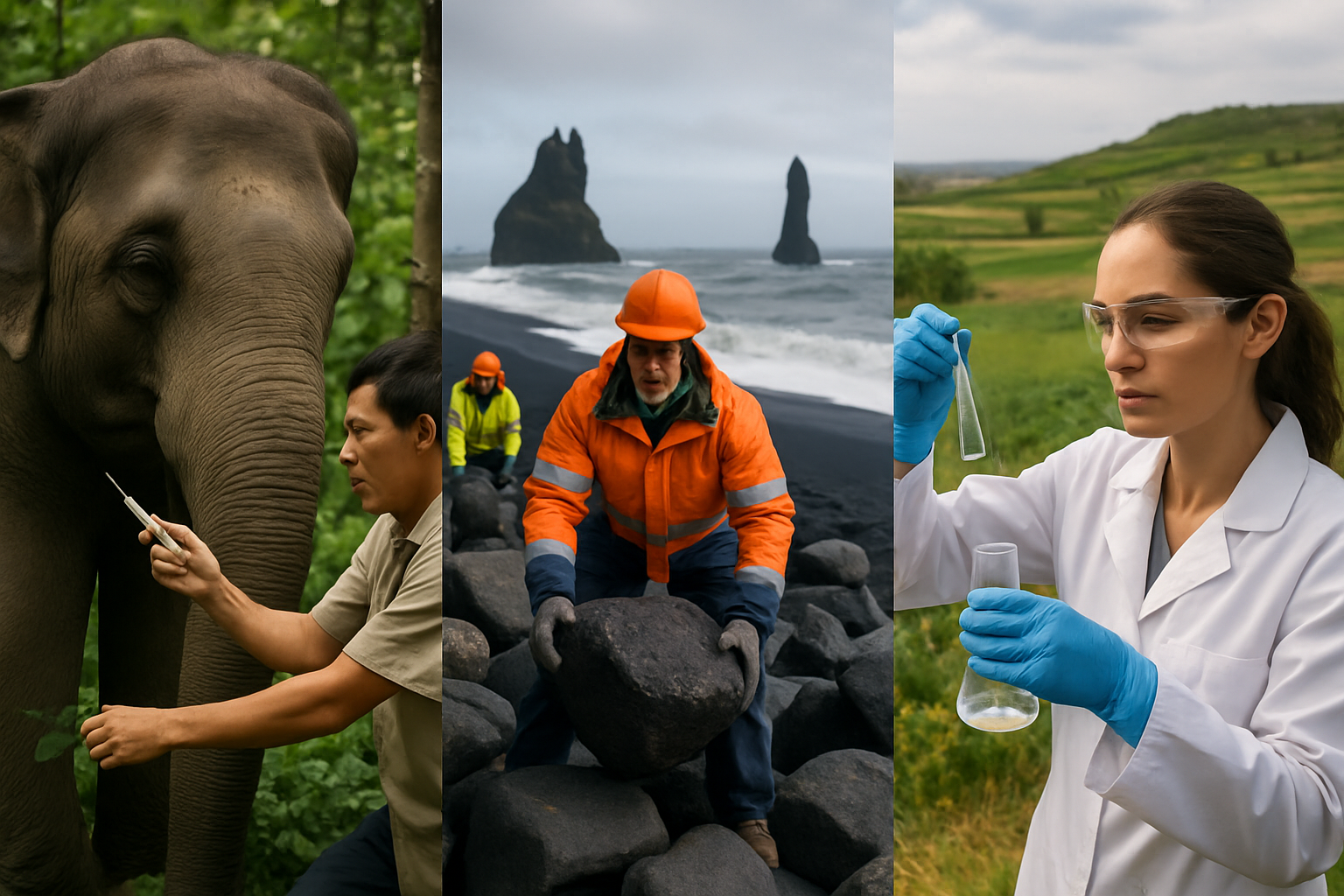
As climate pressures intensify worldwide, three distinct conservation crises from Thailand, Iceland, and Malta reveal the complex challenges facing environmental protection efforts in February 2026, highlighting innovative solutions and mounting threats to natural ecosystems.
Thailand has initiated a groundbreaking wildlife contraception program targeting wild elephants, as agricultural expansion forces these majestic creatures from their natural habitats. The contraceptive vaccine represents an unprecedented approach to managing human-wildlife conflict in regions where farmland increasingly encroaches upon traditional elephant territories.
The program addresses a critical conservation dilemma: as forests shrink and agricultural fields expand, elephant populations face displacement from their historical ranges. Rather than traditional methods of relocation or barrier construction, Thai wildlife authorities are pioneering reproductive control as a humane population management strategy.
Iceland's Coastal Defense Battle
Meanwhile, in Iceland's dramatic coastal landscape, landowners at Reynisfjara beach wage an uphill battle against relentless coastal erosion that threatens infrastructure and tourist access. Ívar Guðnason, a local farmer and landowner, describes desperate measures to protect viewing platforms and signage from the advancing sea.
"We are trying to protect the viewing platform that we put up here, and the signs, and we have moved stones from the beach and placed them here to see whether that does anything... But we do not know whether it will be enough."
— Ívar Guðnason, Farmer and Landowner
The private conservation effort involves relocating massive volcanic stones from the beach to create protective barriers, entirely funded by local landowners who handle all maintenance costs. The initiative represents grassroots environmental action in the face of natural forces intensified by changing weather patterns.
Recent easterly winds have accelerated the erosion process, with Guðnason noting that "a huge amount has been eroded away and it will just continue if nothing is done." The defensive measures test whether community-led conservation can effectively counter natural coastal dynamics.
Malta's Silent Water Crisis
In Malta, a more insidious environmental threat emerges from beneath the surface. Intensive potato and vegetable cultivation is systematically contaminating the island nation's groundwater with nitrates, posing long-term risks to Malta's primary potable water source.
The contamination results from agricultural intensification driven by economic pressures and limited arable land. As farmers maximize yields through heavy fertilizer use, excess nutrients leach into underground aquifers that supply the majority of Malta's drinking water.
This slow-moving crisis represents a fundamental challenge for small island developing states: balancing food security and economic development against environmental sustainability. Unlike dramatic events such as oil spills or wildfires, groundwater contamination occurs gradually, making it difficult to detect and address before significant damage occurs.
Global Context and Climate Pressures
These three conservation challenges occur against the backdrop of accelerating climate change, with January 2026 marking the 18th consecutive month of global temperatures exceeding 1.5°C above pre-industrial levels. The unprecedented warming trend overrides natural climate variability, creating additional stress on ecosystems already under pressure from human activities.
The conservation efforts reflect a broader global pattern of environmental protection evolving from reactive crisis management to proactive ecosystem service management. Recent months have witnessed coordinated conservation initiatives across continents, from Bhutan's advanced biodiversity monitoring using environmental DNA technology to Romania's massive solar expansion and Zimbabwe's wetland restoration projects.
Technology Meets Traditional Conservation
Modern conservation increasingly integrates cutting-edge technology with traditional environmental knowledge. Thailand's elephant contraception program combines veterinary science with community-based wildlife management, while Iceland's stone relocation applies traditional coastal protection methods informed by modern understanding of erosion processes.
Malta's groundwater monitoring represents sophisticated environmental assessment capabilities, though the challenge lies in translating scientific knowledge into effective policy responses that balance agricultural needs with water security.
These technological integrations demonstrate how contemporary conservation success requires synthesis of multiple knowledge systems: scientific innovation, traditional ecological practices, community engagement, and economic viability. No single approach proves sufficient for addressing complex environmental challenges spanning biological, physical, and human systems.
Economic Dimensions of Conservation
Each conservation effort carries significant economic implications extending beyond immediate environmental concerns. Thailand's elephant management affects tourism revenue in regions where wildlife viewing represents major economic activity, while protecting agricultural productivity essential for rural livelihoods.
Iceland's coastal protection directly impacts tourism infrastructure, with viewing platforms and access routes generating revenue for local communities. The private funding model demonstrates how environmental protection creates economic value, but also raises questions about sustainability when costs fall entirely on local stakeholders.
Malta's agricultural intensification reflects economic pressures on small-scale farmers competing in global markets, while groundwater contamination threatens long-term economic sustainability through increased water treatment costs and potential health impacts.
Implementation Challenges and Opportunities
Success in these diverse conservation contexts depends on addressing several common challenges: sustained funding, technical capacity building, community engagement, and adaptive management responding to changing environmental conditions.
Thailand's elephant program requires ongoing veterinary expertise, monitoring systems, and coordination with agricultural communities. Iceland's coastal protection needs continuous maintenance and potentially expanded engineering solutions. Malta's groundwater protection demands agricultural policy reform and alternative farming practices.
Yet these challenges also create opportunities for international cooperation, knowledge sharing, and innovative financing mechanisms. Conservation successes in one region often provide templates for addressing similar challenges elsewhere, particularly as climate change creates comparable pressures across different geographical contexts.
Future Conservation Strategies
The three cases highlight essential elements of effective 21st-century conservation: integration of multiple knowledge systems, community ownership of solutions, economic viability, and adaptive management capabilities. Success requires moving beyond single-issue approaches toward comprehensive strategies addressing interconnected environmental, economic, and social factors.
As climate change accelerates environmental pressures worldwide, the window for effective conservation action narrows rapidly. However, the diversity of approaches demonstrated across Thailand, Iceland, and Malta provides multiple pathways for addressing environmental challenges through local innovation supported by international cooperation and knowledge sharing.
The conservation efforts of February 2026 represent a critical moment in global environmental protection, demonstrating both the urgency of environmental challenges and the capacity for innovative human responses. Success in these diverse contexts may determine whether conservation can keep pace with accelerating environmental change in the crucial years ahead.