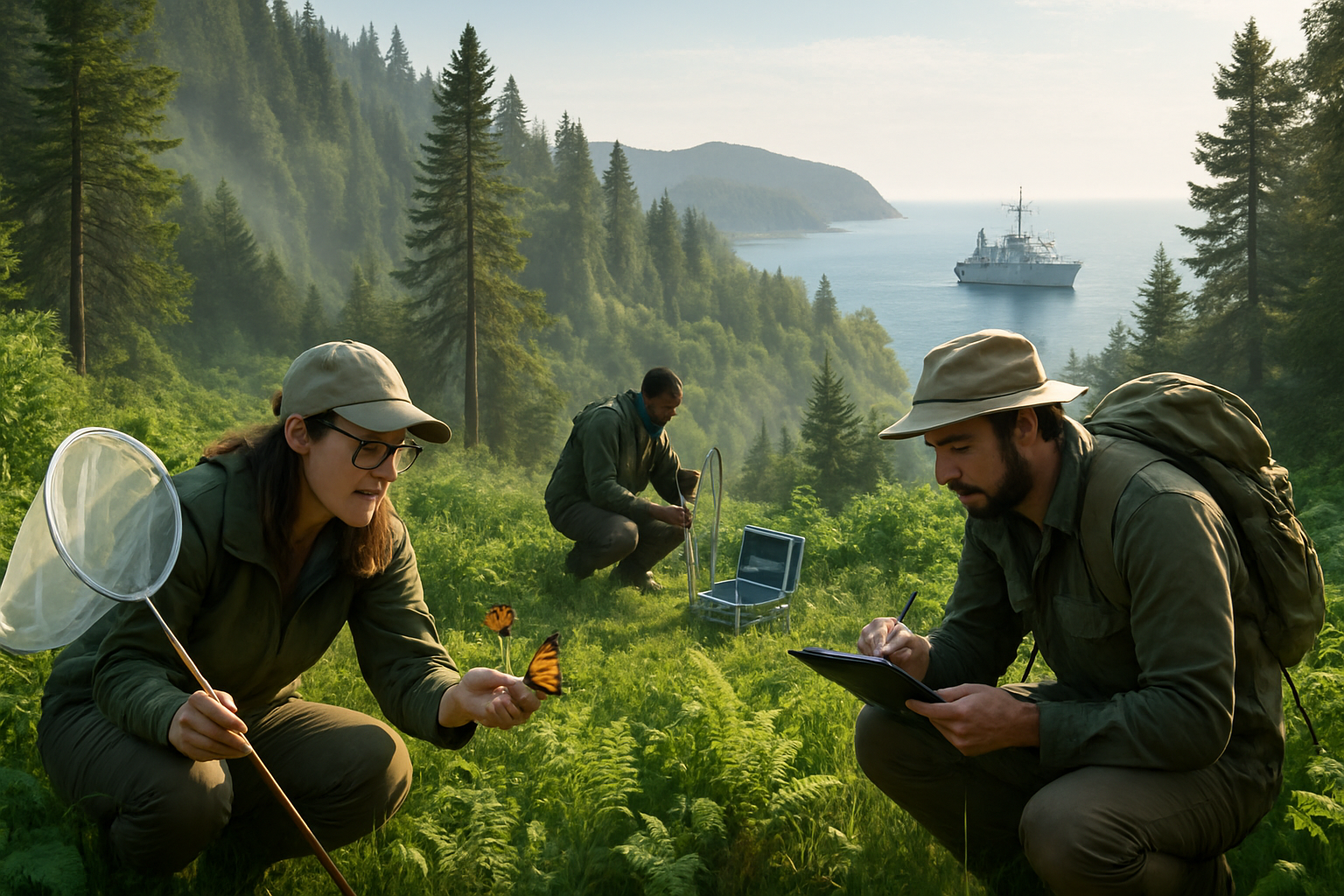
A major international conservation surge is emerging across multiple continents, with Malta's dismantling of 11 illegal trapping sites in protected areas marking just the latest development in what environmental experts are calling a "Global Conservation Renaissance" during Earth's most challenging climate period.
Malta Leads Mediterranean Wildlife Protection
The Malta Ranger Unit revealed a cluster of illegal trapping operations discovered within a Natura 2000 site stretching just 1.5 kilometers along Malta's coastline. The operation, which resulted in the confiscation of equipment and reporting to the Environmental Protection Unit, demonstrates the island nation's commitment to protecting its Mediterranean biodiversity.
Many of the sites were operating without licenses, even during open season, with one particularly shocking discovery perched on the edge of Dingli Cliffs with a drop of over 200 meters below. Rangers reported that nets were often left in place day and night, creating constant threats to wildlife in the protected area.
"The nets posed a constant threat to wildlife in the area, representing a serious violation of our protected area regulations."
— Malta Ranger Unit
Mozambique's Conservation Education Revolution
Simultaneously, Karingani Game Reserve in Mozambique hosted recent graduates from the Master's Programme in Conservation Biology at Gorongosa National Park as part of a strategic three-day learning exchange. This initiative reinforces Karingani's role as a leading platform for conservation, research, and capacity building in Mozambique.
The visit provided graduates with direct exposure to advanced conservation techniques and represented a growing trend of South-South cooperation in environmental protection, moving beyond traditional North-South aid models to peer-to-peer knowledge sharing.
UK Scientists Pioneer Innovative Forest Growth
In the United Kingdom, scientists behind a groundbreaking project to transform human waste into plant fertilizer are preparing to grow their first forest. This innovative circular economy approach demonstrates how environmental challenges can become solutions, turning waste streams into ecosystem restoration opportunities.
The project represents the evolution of conservation methodology beyond traditional approaches toward comprehensive frameworks that integrate technological innovation with environmental restoration.
Technology-Tradition Integration Drives Success
These coordinated conservation initiatives demonstrate a sophisticated synthesis of cutting-edge technology with traditional ecological knowledge and community-based management. Malta's enforcement combines advanced monitoring systems with generations of Mediterranean conservation wisdom, while Mozambique integrates satellite tracking with traditional African stewardship practices.
Environmental DNA sampling, GPS tracking, and AI-powered analysis are working alongside traditional conservation techniques to create comprehensive protection strategies that respect cultural knowledge systems while leveraging global technological capabilities.
Economic Development Through Environmental Protection
Modern conservation increasingly functions as an economic development strategy rather than a regulatory burden. Malta's wildlife protection enhances its appeal as an eco-tourism destination and positions the island as a regional environmental leader. Mozambique's conservation education programs attract international climate finance and research partnerships.
Countries implementing comprehensive environmental protection consistently demonstrate greater economic resilience and attract sustainable investment across multiple sectors including eco-tourism, green technology manufacturing, and environmental services.
Climate Crisis Context
These conservation victories emerge during an unprecedented climate period, with recent months representing some of the hottest on record. The ongoing environmental challenges create additional ecosystem stress, making coordinated international conservation efforts particularly significant.
Climate change is creating compound environmental effects that traditional conservation approaches struggle to address: rising sea levels threaten coastal ecosystems, changing precipitation affects forest regeneration, and increased extreme weather disrupts marine food chains and terrestrial habitats.
International Cooperation Framework
Success across these diverse initiatives highlights the importance of international cooperation in addressing transnational environmental challenges. Ocean currents, atmospheric systems, and species migrations cross political boundaries, making unilateral conservation efforts insufficient.
The diversity of approaches—from Malta's enforcement to Mozambique's education to the UK's innovation—provides resilience against single-solution dependencies while offering multiple adaptation pathways for complex environmental challenges.
Implementation Success Factors
Common success factors across these initiatives include community ownership and engagement, transparent governance frameworks, economic incentives that make protection financially viable, and sophisticated integration of traditional ecological knowledge with modern conservation science.
Challenges persist, including funding sustainability for developing nations, technical capacity building requirements, and the need for adaptive management responding to rapidly changing environmental conditions driven by climate change.
Strategic Significance for Global Conservation
April 2026 represents a critical juncture in global environmental protection, presenting a choice between reactive crisis management and proactive ecosystem service management. Environmental scientists warn that the action window is narrowing rapidly as ecological systems approach critical thresholds that could trigger irreversible changes.
The coordinated response demonstrated by Malta's anti-poaching efforts, Mozambique's education initiatives, and the UK's innovative research provides templates for comprehensive environmental protection that can be scaled globally through sustained international cooperation.
"We are witnessing a fundamental evolution in conservation methodology—moving beyond traditional protected areas toward integrated landscape-scale management that addresses climate adaptation, community resilience, and sustainable development simultaneously."
— Environmental Conservation Analyst
Future Implications and Scaling Potential
These conservation initiatives potentially provide decisive templates for environmental protection approaches in the decades ahead. The integration of cutting-edge technology with traditional ecological wisdom creates adaptable frameworks that respect cultural diversity while leveraging global capabilities.
Success depends on sustained international cooperation, enhanced multi-sector coordination, and increased financial commitments that recognize environmental protection as essential infrastructure for both human prosperity and planetary sustainability.
The conservation renaissance emerging in April 2026 may prove decisive in determining whether wildlife and ecosystem protection can keep pace with accelerating environmental change during this critical climate action decade. Tools, knowledge, and cooperation frameworks exist for comprehensive environmental protection—the challenge lies in implementing them with sufficient speed and coordination to meet the urgency of our environmental moment.