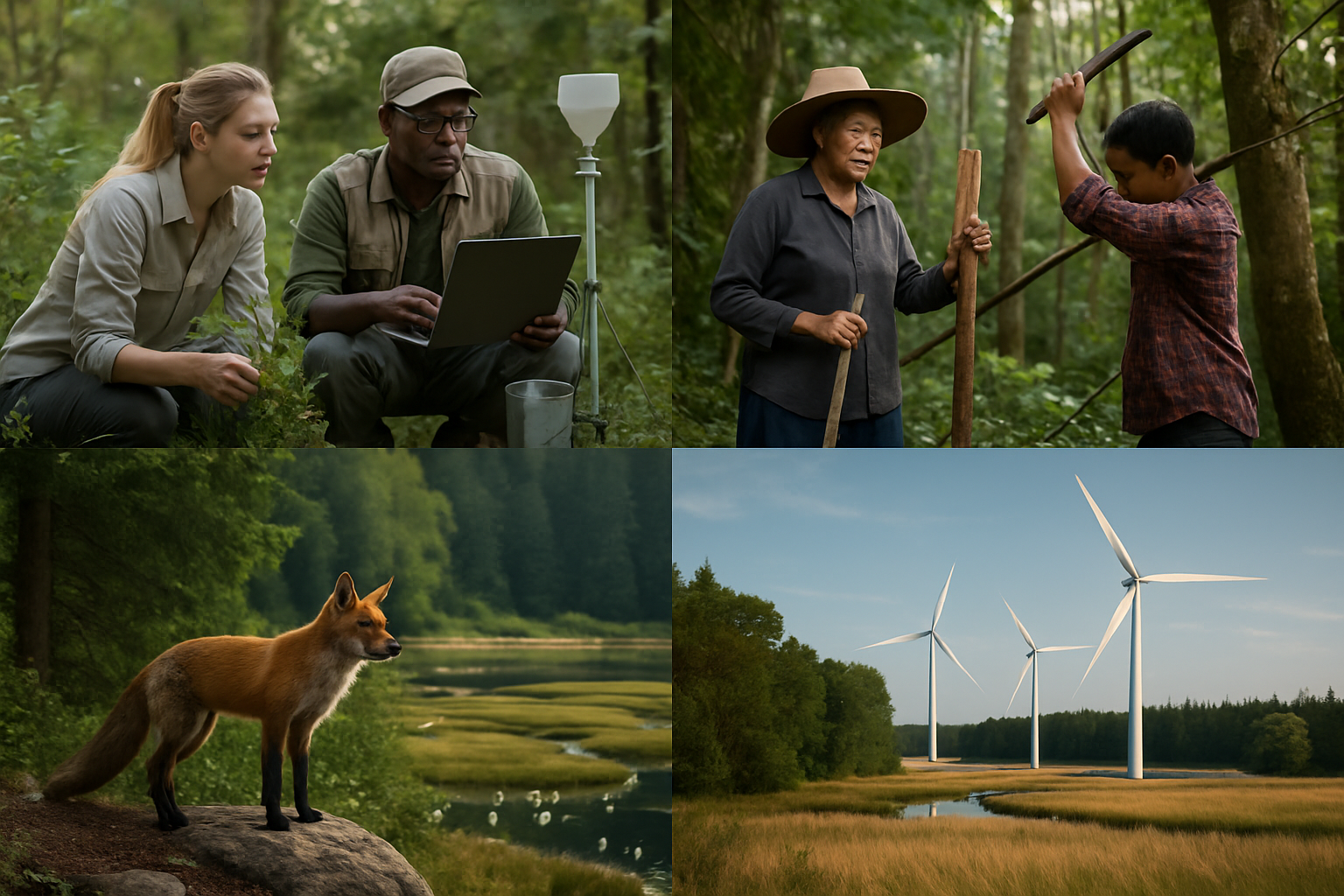
As Earth faces its 19th consecutive month of temperatures exceeding 1.5°C above pre-industrial levels, a remarkable surge in environmental conservation initiatives across Jamaica, New Zealand, and Uganda demonstrates humanity's evolving response to unprecedented ecological challenges.
Jamaica's Forest Renaissance: The RE-LEAF Initiative
Four months after Hurricane Melissa devastated southwestern Jamaica, leaving thousands of trees scorched and lifeless, the island nation has launched one of its most ambitious reforestation programs in history. The Forestry Department's RE-LEAF Initiative has already planted 4,000 trees since January 2026, representing a fundamental shift toward proactive ecosystem restoration.
"We have developed a programme called the The RE-LEAF Initiative that is designed to mobilise Jamaicans and mobilise efforts towards replanting, especially those areas with significant impact," explained Forestry Department CEO and Conservator of Forests Ainsley Henry during this week's Jamaica Observer Monday Exchange.
The initiative's ambitious Phase One, running from January through June 2026, aims to plant 300,000 seedlings, including 30,000 fruit trees specifically chosen to enhance food security. This represents more than just environmental recovery—it embodies a comprehensive approach to climate resilience that integrates ecological restoration with community sustenance.
New Zealand's Aquatic Ecosystem Restoration
Thousands of kilometers away, New Zealand faces its own environmental rehabilitation challenge as a years-long cleanup project works to restore Lake Horowhenua to health after decades of raw sewage contamination. The comprehensive restoration effort involves removing hundreds of tonnes of invasive weeds while addressing the underlying pollution sources that have degraded this critical freshwater ecosystem.
The Lake Horowhenua restoration project exemplifies New Zealand's broader commitment to aquatic ecosystem health, particularly significant given the country's recent decisive rejection of seabed mining proposals. This precautionary approach to marine and freshwater protection reflects a growing international recognition that healthy aquatic ecosystems provide irreplaceable services that far outweigh short-term extractive benefits.
Uganda's Complex Wildlife Management Challenges
In East Africa, Uganda's Abim District presents a stark illustration of the complex challenges facing human-wildlife coexistence in an era of climate disruption. Residents live in constant fear as stray wild animals, including dangerous buffalo attacks, threaten both human safety and agricultural livelihoods.
James Lokwang, a retired nursing officer from Abim District Local Government, was recently attacked by buffaloes while working in his garden in Alokiwinyo Ward. His case represents a growing pattern across Africa where climate change and habitat pressures force wildlife into increased contact with human settlements, creating dangerous situations that require sophisticated management approaches balancing conservation with community safety.
The Broader Global Conservation Context
These regional initiatives emerge against the backdrop of an unprecedented global conservation renaissance. Memory analysis reveals that February 2026 marked a critical turning point in international environmental cooperation, with coordinated initiatives spanning from Antarctica's glacier protection research to the Arabian Peninsula's species reintroduction programs.
"February 2026 represents critical environmental protection juncture demonstrating sophisticated multi-sector coordination required effective climate action."
— Global Conservation Analysis Report
Technology-Tradition Integration: A New Conservation Paradigm
Across all three regions, successful conservation efforts demonstrate a sophisticated integration of cutting-edge technology with traditional ecological knowledge. Jamaica's RE-LEAF Initiative combines satellite monitoring of forest recovery with indigenous plant selection expertise developed over generations. New Zealand employs advanced water quality sensors alongside traditional Māori environmental stewardship principles. Uganda's wildlife management increasingly relies on GPS tracking and environmental DNA sampling while respecting traditional human-wildlife coexistence practices.
This synthesis represents a fundamental evolution in conservation methodology, moving beyond purely technological or traditional approaches toward comprehensive, culturally sensitive strategies that harness both scientific innovation and ancestral wisdom.
Economic Dimensions of Environmental Protection
Increasingly, environmental protection is being recognized not as a regulatory burden but as an economic development engine. Jamaica's reforestation efforts support eco-tourism while providing employment in forest management and tree nursery operations. New Zealand's water restoration protects valuable fisheries and tourism assets worth millions annually. Even Uganda's challenging wildlife situation, when properly managed, can support conservation-based tourism that provides sustainable income for rural communities.
The economic multiplier effects extend far beyond direct conservation activities, encompassing green technology manufacturing, environmental services, and climate-adapted agriculture that collectively represent billions in economic activity across these three nations.
Climate Crisis Context: The 19th Consecutive Month
These conservation efforts unfold during Earth's most challenging environmental period on record. January 2026 confirmed the hottest month in recorded history, marking the 19th consecutive month of temperatures exceeding the critical 1.5°C threshold above pre-industrial levels. This sustained warming pattern overrides natural climate variability, including La Niña cooling effects that typically moderate global temperatures.
The persistence of extreme temperatures creates additional stress for vulnerable ecosystems while simultaneously driving innovation in conservation approaches. Traditional seasonal patterns that have guided environmental management for centuries are being disrupted, requiring adaptive management strategies that can respond to rapidly changing conditions.
International Cooperation and Knowledge Sharing
The success of these regional initiatives increasingly depends on unprecedented international cooperation. Jamaica's hurricane recovery benefits from global expertise in disaster-resilient forestry. New Zealand's aquatic restoration draws on pollution remediation techniques developed worldwide. Uganda's wildlife management challenges require coordination with neighboring countries to address transboundary conservation needs.
This represents an evolution from traditional North-South environmental aid toward peer-to-peer cooperation where developing nations emerge as environmental solution providers, sharing locally-adapted innovations that can be scaled across similar ecological and cultural contexts.
Implementation Challenges and Success Factors
Despite remarkable progress, all three regions face persistent challenges in scaling their conservation efforts. Funding sustainability remains critical, particularly for developing nations where immediate economic pressures often override long-term environmental considerations. Technical capacity building requires sustained investment in education, training, and institutional development.
Climate change itself disrupts project timelines, as unpredictable weather patterns affect everything from tree planting schedules to wildlife migration routes. However, the diversity of approaches across these regions provides resilience against single-solution dependencies, offering multiple pathways for addressing complex environmental challenges.
Strategic Significance for Global Environmental Protection
The conservation initiatives across Jamaica, New Zealand, and Uganda represent more than isolated success stories—they provide templates for the coordinated international response required to address accelerating environmental change. The window for effective climate action continues to narrow as ecological systems approach critical thresholds that could trigger irreversible changes.
These projects demonstrate that the tools, knowledge, and cooperation frameworks exist for comprehensive environmental protection. Success depends on rapid scaling through enhanced international cooperation, sustained political commitment, and recognition that environmental protection constitutes essential infrastructure for both human prosperity and planetary sustainability.
Future Implications: A Conservation Renaissance
As March 2026 unfolds, the coordinated conservation momentum across these three nations suggests the emergence of a global conservation renaissance—a fundamental shift from reactive crisis management to proactive ecosystem service management. This evolution emphasizes community participation, technological innovation, and international cooperation as essential components of 21st-century environmental protection.
The success or failure of these initiatives may prove decisive for conservation approaches in the coming decades, influencing global strategies for biodiversity protection, climate adaptation, and sustainable development. With ecological systems under unprecedented stress, the collaborative spirit demonstrated across Jamaica's forests, New Zealand's waters, and Uganda's wildlife corridors offers both urgent lessons and grounds for hope in humanity's capacity to protect the natural systems upon which all life depends.