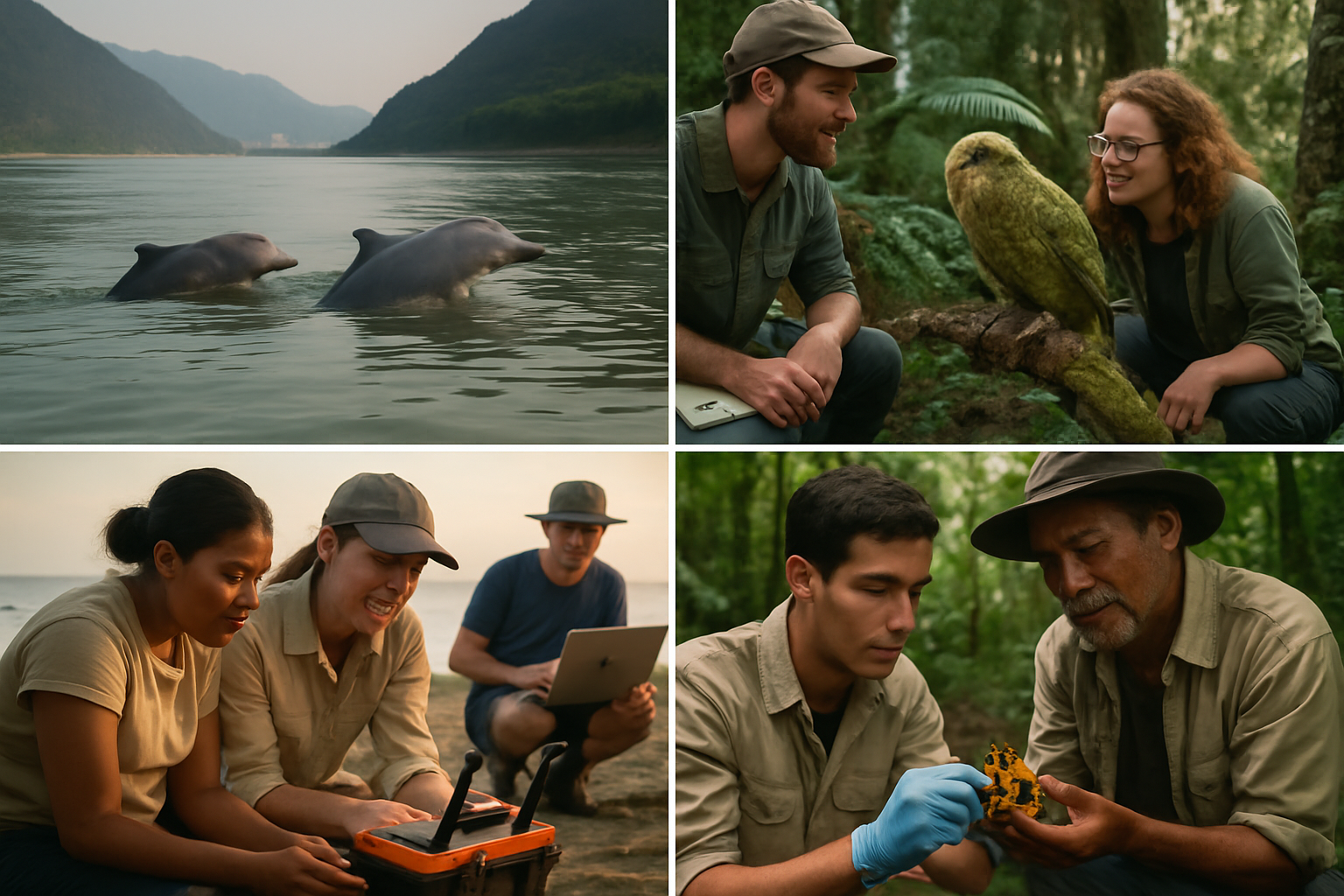
A remarkable wave of conservation breakthroughs is sweeping across continents, delivering both stunning successes and sobering setbacks in humanity's race to protect biodiversity during Earth's most environmentally challenging period.
From the revival of China's mighty Yangtze River to the tragic vandalism at Panama's golden frog sanctuary, February 2026 has witnessed an extraordinary surge in wildlife conservation efforts that are fundamentally reshaping how nations approach ecosystem protection.
China's Yangtze River: A Conservation Miracle in Progress
China's ambitious 10-year fishing ban on the Yangtze River has delivered remarkable results just halfway through its implementation, according to a groundbreaking new study. The ecological health of one of the world's most biodiverse rivers is undergoing what researchers describe as a "meaningful recovery."
The Yangtze, which once contributed more than 60 percent of China's freshwater fisheries output, had faced sustained ecological decline since the 1950s. Now, marine biomass is surging, with the critically endangered Yangtze finless porpoise—numbering fewer than 1,000 individuals—showing signs of population stabilization for the first time in decades.
"This recovery demonstrates that large-scale conservation interventions can work, even in heavily industrialized waterways," said Dr. Li Zhang, lead researcher on the Yangtze restoration project. "The finless porpoise is our canary in the coal mine—its recovery signals the entire ecosystem is healing."
— Dr. Li Zhang, Yangtze Conservation Research Team
Oceanic Revelations Challenge Scientific Understanding
In Australian waters, a 12-year research project has debunked long-held theories about shark behavior following orca attacks. The study, examining the 2015 incident where six orcas killed a great white shark near South Australia's Neptune Islands, found that sharks' two-month absence from the area was not directly caused by the attack itself.
This revelation challenges previous assumptions about apex predator interactions and highlights how much remains unknown about marine ecosystems, even those under intensive study.
New Zealand's Cultural Conservation Approach
In New Zealand, the Taranaki region is pioneering a unique approach to conservation through cultural exhibition work. The initiative aims to "give voice to native species" while addressing legislative failures that have enabled waterway exploitation and undermined traditional Māori authority in environmental stewardship.
This represents a growing global trend toward integrating indigenous knowledge systems with modern conservation science, recognizing that traditional ecological understanding often provides crucial insights for species protection.
Panama's Conservation Tragedy: When Crime Targets Wildlife
The conservation community suffered a devastating blow in Panama, where criminal vandalism led to the death of over 150 tadpoles of the emblematic golden frog and other species. Thieves stole electrical cables from the sanctuary's power system, disrupting critical breeding season monitoring equipment.
The electrical system failure affected ultraviolet lamps essential for the amphibians' three-month development process. Biologist Heady Rouse, part of the conservation project, expressed her frustration that "for about 20 dollars" criminals had damaged an invaluable conservation effort.
The incident highlights the vulnerability of conservation infrastructure and the need for enhanced security measures to protect endangered species programs.
Emerging Threats: Africanized Bee Surge
Panama is also grappling with a nationwide environmental alert over a sustained increase in Africanized bee swarms near residential areas. The Fire Department has warned that these insects exhibit highly defensive behavior that can lead to collective attacks potentially fatal to humans.
According to Captain Luis Joseph of the Directorate of Operations, authorities have identified swarms on roofs, patios, gardens, and structures near homes, particularly threatening children, elderly residents, and pets. Officials stress that citizens should not attempt to remove swarms themselves but immediately report sightings to emergency services.
Technology Revolutionizing Conservation
Across all these conservation efforts, cutting-edge technology is playing an increasingly vital role. From satellite monitoring of river ecosystems to genetic analysis of endangered amphibians, modern conservation increasingly relies on sophisticated data collection and analysis.
However, the most successful programs are those that integrate advanced technology with traditional ecological knowledge and community-based management systems. This synthesis represents a fundamental evolution in conservation methodology, moving beyond purely scientific or purely traditional approaches to create more robust and culturally sensitive protection strategies.
Climate Context Intensifies Conservation Urgency
These conservation developments unfold against the backdrop of unprecedented climate challenges. January 2026 marked the hottest month in recorded history, extending an 18-month streak of global temperatures exceeding 1.5°C above pre-industrial levels.
This sustained warming trend is overriding natural climate variability, including La Niña cooling effects, creating additional stress on already vulnerable ecosystems. Conservation efforts must now account not only for traditional threats like habitat destruction and pollution, but also for rapidly changing environmental conditions that can disrupt species' life cycles and migration patterns.
Economic Dimensions of Conservation
Modern conservation increasingly demonstrates economic value beyond environmental protection. China's Yangtze River restoration supports eco-tourism development while rebuilding sustainable fisheries. New Zealand's cultural conservation approach enhances the country's environmental credentials, potentially attracting sustainable investment and research partnerships.
Even Panama's challenges illustrate the economic stakes involved—the golden frog conservation program represents years of investment and international scientific collaboration that extends far beyond the immediate $8,000 repair costs from the vandalism.
International Cooperation and Knowledge Sharing
The global nature of conservation challenges demands unprecedented international cooperation. Ocean currents, atmospheric systems, and species migrations cross political boundaries, making unilateral conservation efforts insufficient for long-term success.
Success stories like China's river restoration provide templates for other nations facing similar challenges, while setbacks like Panama's vandalism incident offer crucial lessons about infrastructure security and community engagement.
Implementation Challenges and Success Factors
Several common challenges emerge across conservation initiatives worldwide. Funding sustainability remains critical, particularly for developing nations where immediate economic pressures often override long-term environmental considerations. Technical capacity building requires sustained investment in education, training, and institutional development.
Climate change increasingly disrupts project timelines and operational conditions, requiring adaptive management approaches that can respond to rapidly changing environmental circumstances.
However, successful conservation programs demonstrate several key success factors: community ownership and engagement, transparent governance frameworks, economic incentives that make protection financially viable, and integration of traditional ecological knowledge with modern conservation science.
The Path Forward: Proactive Ecosystem Management
The conservation developments of February 2026 represent a critical evolution from reactive crisis management to proactive ecosystem service management. Rather than simply responding to threats as they emerge, successful programs are anticipating challenges and building resilient systems capable of adapting to changing conditions.
This approach emphasizes community participation, technological innovation, and economic viability as essential components of sustainable conservation, moving beyond the traditional model of protected areas to more integrated landscape-scale management.
As the window for effective environmental action continues to narrow, these diverse conservation experiences provide both hope and urgent lessons for scaling protection efforts globally. The tools and knowledge for comprehensive environmental protection exist, but success depends on rapid implementation through enhanced international cooperation, sustained financial commitments, and recognition that environmental protection represents essential infrastructure for human prosperity and planetary sustainability.
The conservation renaissance of 2026 may ultimately prove decisive in determining whether wildlife protection can keep pace with accelerating environmental change during this critical decade for climate action.