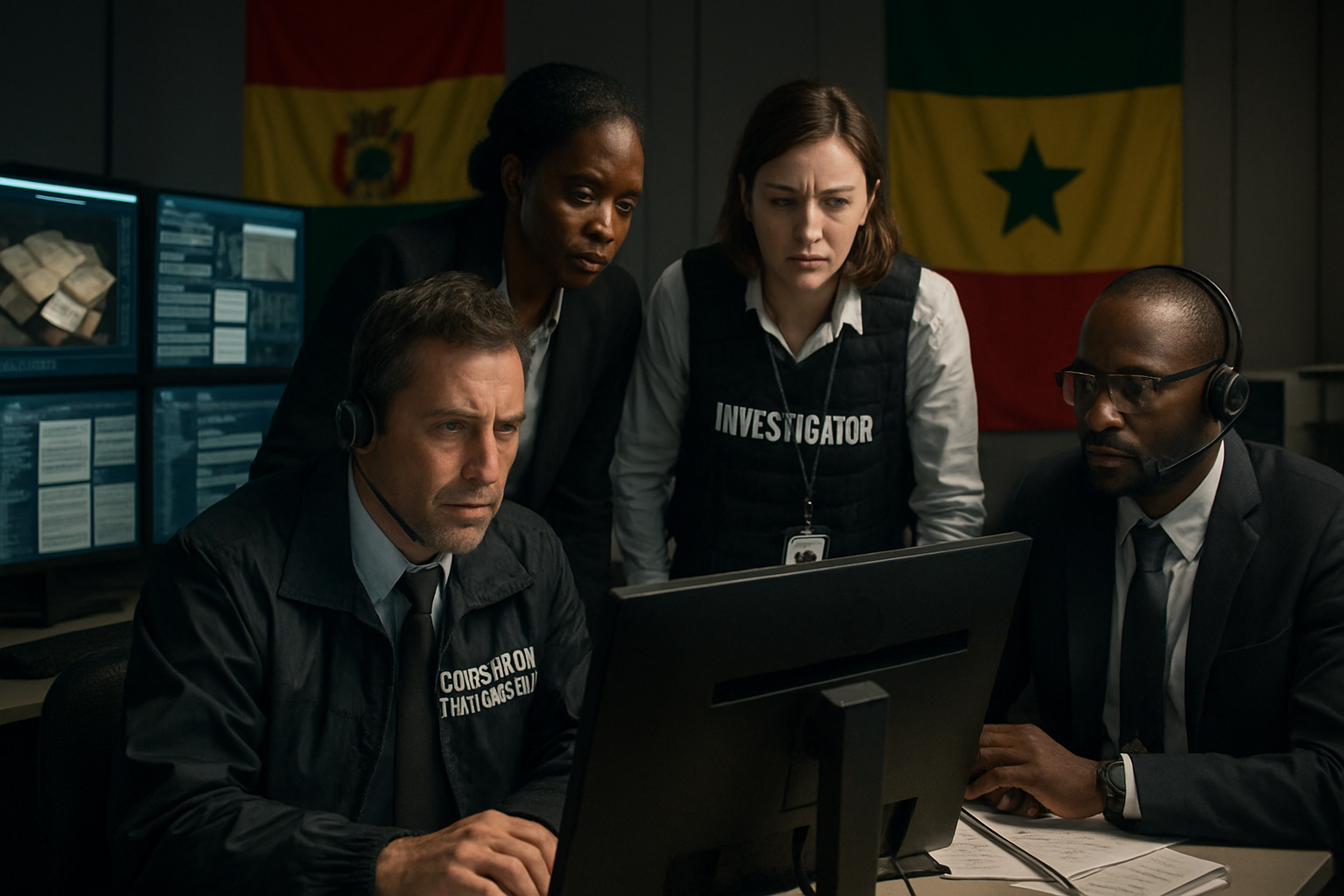
Anti-corruption efforts reached a dramatic crescendo this week as investigators in Bolivia and Senegal executed high-profile arrests of former government officials, exposing the deep-rooted networks of corruption that have plagued democratic institutions across multiple continents.
The coordinated investigations represent a significant escalation in global anti-corruption enforcement, with authorities demonstrating unprecedented willingness to target senior political figures despite potential diplomatic fallout and institutional resistance.
Bolivia: Former President Under Investigation
In a stunning development that has sent shockwaves through Bolivian politics, prosecutors conducted a dramatic raid on the La Paz apartment of former President Luis Arce Catacora, seizing over 100,000 bolivianos in cash and extensive documentation related to potential money laundering operations.
The operation, carried out by the Special Force for the Fight Against Crime (FELCC) in coordination with Santa Cruz prosecutors, represents the most significant anti-corruption action against a former head of state in Bolivia's recent history. The seized materials include property documents, financial records, and electronic devices that investigators believe contain evidence of systematic wealth accumulation through illegitimate means.
"The investigation centers on legitimation of illicit profits, with evidence suggesting a pattern of unexplained wealth accumulation during the defendant's tenure in office."
— FELCC Official Statement
Simultaneously, Bolivia's Ministry of Transparency reported receiving over 300 corruption complaints through its innovative QR code reporting system since implementation began. Vice Minister Yamil García explained that the anonymous reporting mechanism has significantly expanded citizen access to anti-corruption channels, creating "a daily flow of cases that makes the index unpredictable."
The timing of these developments is particularly significant, occurring during a period when President Rodrigo Paz's administration has positioned itself as a regional leader in transparency and anti-corruption efforts, contrasting sharply with the legacy of previous governments.
Senegal: Media and Officials Detained
In Senegal, authorities have placed three prominent media figures under preventive detention in connection with the ongoing Pape Cheikh Diallo affair, while separately arresting former tax official Mamadou Guèye on corruption charges.
The detention of journalist Ousmane Kadior Cissé, commentator Kader Dia, and Pape Gaye Tall has raised significant concerns about press freedom and the potential misuse of anti-corruption investigations to silence media criticism. The three were presented before the investigating judge at the Pikine-Guédiawaye High Court and subsequently placed under detention mandates.
More significantly, former Director General of Taxes Mamadou Guèye, who also serves as mayor of Djida Thiaroye Kao, was formally charged and imprisoned after being questioned by investigators. The charges appear to relate to his tenure overseeing the country's tax collection apparatus, where he allegedly accumulated significant unexplained wealth.
These arrests occur against the backdrop of Senegal's broader efforts to strengthen institutional transparency under President Bassirou Diomaye Faye's administration, which has made anti-corruption a cornerstone of its governance agenda.
Global Context: Democratic Institutions Under Pressure
The simultaneous anti-corruption operations in Bolivia and Senegal reflect a broader global pattern of intensified efforts to combat institutional corruption, even as democratic institutions face unprecedented strain worldwide.
According to Transparency International's 2025 Corruption Perceptions Index, released in February 2026, the global average corruption score reached its worst level in a decade, with traditional democratic strongholds experiencing significant declines. The United States recorded its lowest-ever historical score, falling to 29th position globally, while civil society restrictions and press freedom challenges have created additional obstacles to anti-corruption efforts.

Dr. Maria Rodriguez of the University of Miami, who has extensively studied transnational corruption networks, characterizes the current period as representing "a fundamental test of whether democratic institutions can prosecute sophisticated criminal networks that operate across borders while maintaining integrity under pressure."
Sophisticated Criminal Networks Challenge Traditional Enforcement
The investigations in both Bolivia and Senegal reveal the sophisticated nature of modern corruption networks, which exploit legitimate financial institutions, employ advanced technology, and operate with organizational capabilities that rival those of state institutions.
In Bolivia, the discovery of systematic documentation alongside significant cash holdings suggests a level of operational sophistication that extends beyond simple embezzlement to encompass comprehensive wealth management and asset concealment strategies. The involvement of the Santa Cruz prosecutors indicates potential interstate coordination of the alleged criminal enterprise.
Similarly, the Senegal cases demonstrate the intersection of media influence and financial corruption, with authorities apparently uncovering networks that span traditional corruption channels and modern information warfare tactics.
Enhanced international cooperation has become essential for addressing these transnational networks. The "Shield of the Americas" coalition, which includes 17 nations coordinating anti-corruption efforts, has provided templates for the kind of surgical enforcement operations now being seen in Bolivia and other regional democracies.
Press Freedom Concerns Amid Anti-Corruption Drives
The detention of journalists in Senegal has sparked particular concern among press freedom advocates, who worry that legitimate anti-corruption investigations may be weaponized to silence critical media voices.
The targeting of prominent media figures like Ousmane Kadior Cissé, known for their investigative reporting, raises questions about the balance between combating corruption and preserving the free press that serves as democracy's watchdog function.
"The challenge for democratic societies is maintaining aggressive anti-corruption enforcement while protecting the civil liberties and press freedom that are essential to democratic governance."
— Constitutional Law Professor Dr. James Martinez
International observers are closely monitoring whether Senegal's anti-corruption drive represents genuine institutional reform or potential democratic backsliding disguised as transparency initiatives.
Technology and Transparency: Double-Edged Tools
Bolivia's implementation of QR code technology for anonymous corruption reporting represents an innovative approach to citizen engagement in anti-corruption efforts. The system has generated over 300 complaints since implementation, demonstrating significant public demand for accountability mechanisms.
However, the same technological capabilities that enable citizen reporting also facilitate more sophisticated criminal operations. Modern corruption networks employ encrypted communications, digital financial instruments, and technological infrastructure that often exceeds the capabilities of traditional law enforcement agencies.
The arms race between criminal innovation and institutional adaptation has become a defining characteristic of 21st-century anti-corruption efforts, requiring sustained investment in both technology and human expertise.
Regional and International Implications
The anti-corruption operations in Bolivia and Senegal occur during a critical period for regional and international cooperation on governance issues. Both countries are positioning themselves as leaders in transparency initiatives within their respective regions.
Bolivia's emergence as a reliable security partner under President Paz has facilitated enhanced cooperation with international law enforcement agencies, contributing to major successes such as the March 2026 capture of international criminal Sebastian Marset.
Senegal's anti-corruption drive coincides with its broader democratic consolidation efforts under the new Faye administration, which has made institutional reform a priority while navigating complex regional relationships and international partnerships.
The success or failure of these investigations will significantly impact public confidence in democratic institutions, both domestically and internationally, while establishing precedents for how 21st-century democracies address sophisticated corruption networks.
Challenges and Opportunities Ahead
The current anti-corruption momentum faces several critical challenges that will determine its long-term effectiveness and democratic legitimacy.
Resource constraints continue to limit judicial capacity for processing complex financial crimes, while the sophistication of modern criminal networks requires specialized expertise that many developing democracies struggle to develop and maintain.
Political commitment beyond electoral cycles remains essential, as corruption investigations often require years to complete and can face significant resistance from entrenched interests with substantial resources and influence.
International cooperation frameworks, while improving, still face obstacles related to diplomatic immunity, jurisdictional complexity, and varying legal standards across different democratic systems.
Democratic Resilience in the Balance
The anti-corruption investigations unfolding in Bolivia and Senegal represent more than individual cases of law enforcement; they constitute fundamental tests of democratic institutional resilience in an era of increasing global challenges to governance and rule of law.
Success in these cases could establish crucial precedents for holding powerful figures accountable regardless of their political connections or social status, thereby strengthening public confidence in democratic institutions and rule of law.
Failure, conversely, could reinforce perceptions of elite impunity and institutional weakness, potentially undermining democratic legitimacy and encouraging further corruption and institutional degradation.
As these investigations proceed, the international community continues to monitor their outcomes as indicators of democratic governance health in an interconnected world where corruption networks operate without regard for traditional boundaries.
The coming months will reveal whether the current anti-corruption momentum represents a genuine turning point in the global fight against institutional corruption or merely another cycle in the ongoing struggle between democratic accountability and elite impunity.