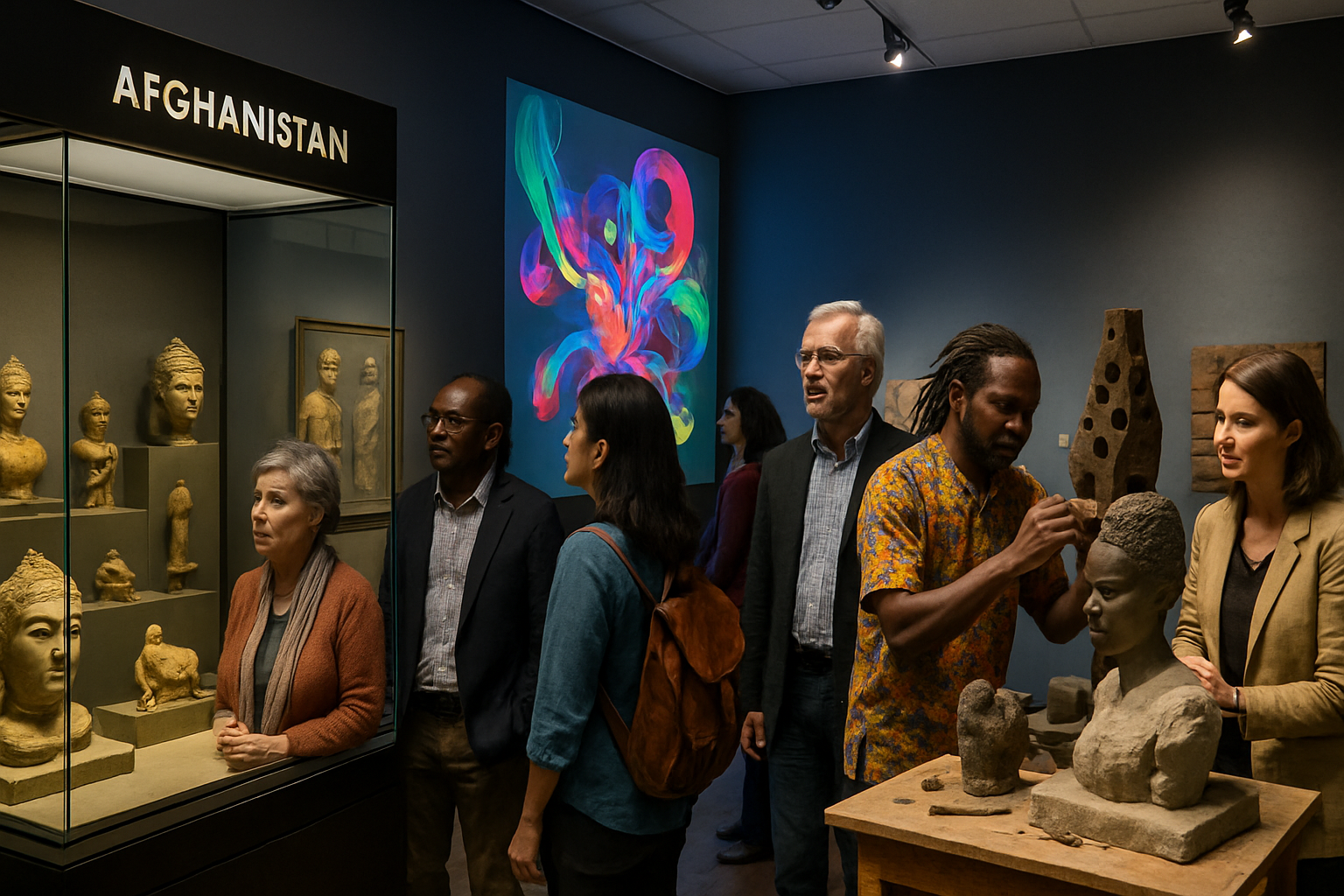
A remarkable convergence of cultural celebrations is sweeping across continents, as artists and institutions from Afghanistan to Costa Rica showcase both ancient heritage and cutting-edge creativity, while industry experts call for sustained investment in emerging talent to match growing global visibility.
The Museum of Islamic Art (MIA) in Qatar has inaugurated a groundbreaking exhibition titled "Empire of Light: Visions and Voices from Afghanistan," displaying nearly 100 historical and contemporary works that chronicle Afghanistan's five-thousand-year artistic legacy. This ambitious showcase represents one of the most comprehensive presentations of Afghan cultural heritage on the international stage, bringing together ancient artifacts and contemporary expressions that survived decades of conflict.
The exhibition arrives at a critical moment when cultural preservation efforts worldwide are gaining unprecedented momentum. From Nigeria's theatrical renaissance exploring ancient kingdoms to Australia's fusion of digital arts with classical orchestras, February 2026 has witnessed a global awakening of heritage consciousness.
Digital Innovation Meets Traditional Artistry
In Costa Rica, 3D artist Jean Leal from Alajuela exemplifies the new generation of creators bridging childhood dreams with professional artistry. His journey from sketching Disney characters in school notebooks to joining Stellar Creative Lab demonstrates how digital technology is democratizing creative expression. Leal's work recreating Marvel superheroes, Barbie characters, and Nickelodeon icons with his unique artistic style represents the growing Latin American presence in global entertainment.
"There are dreams that are sketched in school notebooks and, with time and an epic amount of work, materialize on the big screen," Leal's story illustrates. His achievement of modeling major entertainment characters while maintaining his distinctive Costa Rican perspective showcases how local artists can compete on global platforms while preserving their cultural identity.
This digital renaissance extends across Central America, where Costa Rica's recent political developments under newly elected President Laura Fernández may influence cultural policy directions. The country's technological infrastructure and educational investments have already produced artists like Leal who compete internationally while maintaining strong roots in local traditions.
Africa's Creative Industries at a Crossroads
Meanwhile, African cultural leaders are sounding a clarion call for sustained investment in creative talent development. Industry experts emphasize that Africa's growing global visibility in fashion, music, film, and other creative fields must be matched with long-term institutional support and funding mechanisms.
The continent's creative industries have achieved remarkable international recognition in recent years, from Afrobeats dominating global music charts to African fashion designers gaining prominence on international runways. However, experts warn that this visibility remains fragile without systematic investment in education, infrastructure, and talent development programs.
Rwanda, as a regional hub for creative innovation, exemplifies both the potential and challenges facing African artistic communities. The country's investment in creative economies has yielded significant results, but sustainability requires continent-wide coordination and international partnership.
"Africa's creative talent is undeniable, but we need institutional frameworks that can nurture and sustain this creativity over generations, not just individual success stories."
— Industry Expert, Creative Development Initiative
Historical Context and Global Patterns
These contemporary developments build upon a remarkable surge in cultural preservation initiatives documented throughout February 2026. Nigeria's premiere of "The Return," exploring ancient Oyo Empire traditions, and Armenia's academic efforts addressing genocide recognition through cultural scholarship demonstrate how art serves both preservation and advocacy functions.
The global nature of this cultural renaissance extends from Australia's Orchestra Victoria performing video game soundtracks to Zimbabwe's community radio stations preserving indigenous languages and traditional music. This diversity of approaches—theatrical, academic, digital, and broadcast—illustrates the multifaceted nature of contemporary cultural preservation.
Dominica's "Catharsis – The Blues" exhibition and St. Vincent's PRISPAF performing arts festival for young artists further demonstrate how small island nations are contributing to this global cultural dialogue, proving that geographical size does not limit cultural impact.
Economic and Social Implications
The economic dimensions of this cultural surge extend far beyond artistic expression. Qatar's hosting of the Afghanistan exhibition represents significant cultural diplomacy, while Costa Rica's digital arts sector contributes to the country's broader technology economy. Tourism connections are evident in Turkey's hamam baths contributing to Istanbul's economy and Malaysia's cultural tourism initiatives.
However, challenges remain significant. Cuba's tourism crisis demonstrates how economic instability can undermine cultural initiatives, while Cyprus's healthcare system strain shows how resource allocation affects cultural programming. The cancellation of 30+ cultural events in Portugal's Leiria due to Storm Kristin aftermath illustrates climate change's impact on cultural activities.
Investment Priorities and Future Directions
Industry analysts identify several key areas requiring sustained investment to capitalize on this cultural momentum:
- Educational infrastructure supporting both traditional arts and digital creativity
- International exchange programs connecting emerging artists with established markets
- Technology platforms enabling global distribution of cultural content
- Financial mechanisms supporting long-term creative projects
- Policy frameworks protecting cultural heritage while encouraging innovation
The convergence of ancient heritage preservation with cutting-edge digital creation suggests a future where cultural identity strengthens rather than weakens in the face of globalization. Afghanistan's 5,000-year artistic history finding new audiences through Qatari museum spaces, while Costa Rican digital artists achieve Hollywood-level recognition, demonstrates how tradition and innovation can reinforce each other.
Looking Forward: Sustainable Cultural Development
The February 2026 cultural surge occurs against a backdrop of significant global challenges, from severe weather disrupting programming to political changes affecting cultural policy. Yet the persistence of these initiatives—from Qatar's major exhibition investments to community-level festivals in St. Vincent—suggests deep institutional commitment to cultural development.
The success of these diverse initiatives will largely depend on sustaining momentum beyond individual projects. Africa's call for long-term investment reflects broader global needs for institutional frameworks that can nurture creativity across generations and cultural contexts.
As digital platforms continue expanding access to global audiences, artists like Costa Rica's Jean Leal represent a new generation capable of maintaining local identity while achieving international recognition. Similarly, exhibitions like "Empire of Light" demonstrate how cultural preservation can serve contemporary diplomatic and educational purposes.
This global creative renaissance of February 2026 may be remembered as a pivotal moment when cultural preservation and innovation found new synthesis, providing a template for sustainable cultural development that honors heritage while embracing technological possibilities.