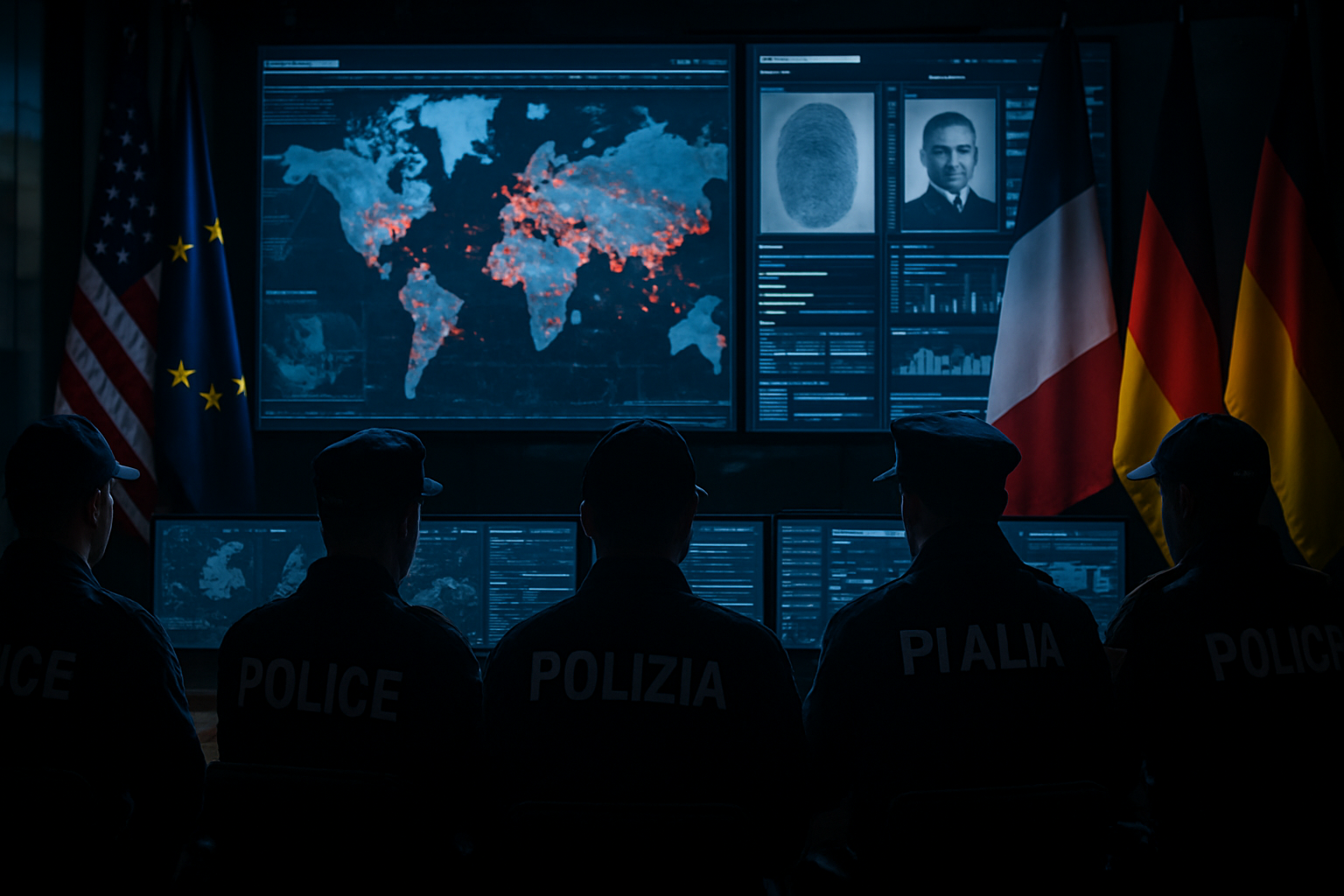
A sweeping investigation across eleven countries reveals criminal networks operating with unprecedented sophistication, challenging democratic institutions and traditional law enforcement approaches as courts worldwide process complex cases ranging from drug trafficking and violent crimes to cybercrime and corruption.
The global scope of criminal activity documented across Bolivia, Colombia, Greece, Ireland, Malta, and six other nations demonstrates how transnational organized crime has evolved to exploit jurisdictional boundaries while utilizing state-level technological capabilities that often surpass law enforcement resources.
Bolivia's Major Drug Network Disruption
Bolivia's law enforcement agencies delivered a significant blow to international drug trafficking operations with the arrest of 15 individuals connected to the criminal network of notorious Uruguayan drug lord Sebastián Marset. The coordinated operations in Portachuelo and Montero, Santa Cruz department, represent the culmination of investigations that began with the capture of seven suspects—five Colombians and two Ecuadorians—on February 18, 2026.
According to Inspector General David Valenzuela Peláez of the Bolivian Police, seized mobile phones provided crucial intelligence about the organization's structure, including communications, locations, and threats against police authorities and the Santa Cruz Departmental Command. This technological forensic breakthrough enabled investigators to identify additional network members and their operational methods.
"The investigations will continue with the tracking of economic resources and goods linked to drug trafficking,"
— Justiniano, Bolivian Official
The Marset network's dismantling showcases the sophisticated nature of modern drug trafficking organizations, which utilize encrypted communications, compartmentalized structures, and international coordination that challenges traditional law enforcement approaches.
Colombia's Violent Crime Escalation
Colombia continues to grapple with multiple violent incidents that underscore the country's ongoing security challenges. A particularly disturbing case emerged in Pereira, where forensic investigators revealed that an abandoned baby found in a landfill had been murdered after being born alive, prompting authorities to offer rewards for information leading to those responsible.
Meanwhile, a high-profile incident involving popular streamer MrStivenTc has drawn attention to the intersection of social media culture and criminal behavior. The content creator was involved in a high-speed pursuit and allegedly fired shots at a motorcyclist on Las Palmas Avenue in Medellín while livestreaming, prompting a Medellín councilman to call for investigation.
In Barranquilla, criminal tensions remain high following an attack that injured two individuals connected to 'los Costeños' criminal group. From prison, alias 'Castor' sent a letter promising not to return to violence while urging authorities to stop those seeking to destabilize the region, highlighting the complex dynamics between imprisoned criminal leaders and ongoing territorial disputes.
Greece Tackles Organized Crime and Violence
Greek authorities have made significant arrests across multiple criminal categories, demonstrating the country's comprehensive approach to law enforcement. In Veria, a 20-year-old was arrested and reportedly confessed to the brutal beating of a 24-year-old woman, according to ERT reports.
The Organized Crime Division (DAOE) arrested a well-known art dealer on charges of forgery and antiquities trafficking, discovering over 300 fake paintings in his warehouse. This case highlights the sophisticated nature of art fraud operations and their impact on cultural heritage protection.
In Thessaloniki, police arrested two foreign minors in connection with a series of robberies targeting businesses in the city's eastern districts. The coordinated police operation demonstrates enhanced coordination between local and national law enforcement units in addressing juvenile crime networks.
Ireland's High-Profile Prosecutions
Ireland's judicial system processed several significant cases that underscore the country's commitment to justice regardless of defendant profile. Michael Poole (65) was sentenced to 12 years in prison after being unanimously convicted by a jury on 14 counts of raping his niece Lisa Brown between 1980 and 1988, along with eight counts of indecent assault.
In a separate case highlighting digital-age crimes, University College Dublin archaeology lecturer was charged with hacking students' personal data and harassment. Gardaí have interviewed more than 100 individuals whose personal data was allegedly accessed, demonstrating the extensive nature of the investigation and the resources required for complex cybercrime cases.
Malta's Diverse Criminal Caseload
Malta's courts have processed a range of cases reflecting modern criminal complexity. A 19-year-old received probation after threatening his parents amid struggles with drug addiction and refusal to take medication, with the court hearing testimony about how his behavior left his parents scared and seeking intervention.
Additionally, authorities charged a man with importing and trafficking khat after customs officials seized approximately 20 kilograms of the suspected drug following airport screening, highlighting the ongoing challenges of detecting and preventing drug importation through legitimate travel channels.
Democratic Institutions Under Pressure
The breadth and sophistication of criminal activity documented across these eleven countries reveals unprecedented strain on democratic judicial institutions worldwide. Courts are experiencing extraordinary pressure from case backlogs, resource constraints, and evolving social expectations while maintaining their constitutional guardian roles.
Enhanced international cooperation has become critical for addressing transnational criminal networks that exploit jurisdictional boundaries. European law enforcement coordination is reaching new levels of sophistication, with specialized corruption and organized crime courts representing significant institutional innovations.
Technology and Criminal Evolution
Modern criminal organizations demonstrate state-like capabilities through advanced surveillance, encrypted communications, and compartmentalized international structures. This technological sophistication often exceeds traditional law enforcement resources, requiring fundamental adaptations in investigative approaches and international cooperation frameworks.
Digital case management, advanced forensic analysis, and sophisticated evidence-gathering have become critical components of contemporary criminal justice. However, the integration of these technologies must balance efficiency improvements with due process preservation and privacy protection.
International Cooperation Framework
The success in dismantling criminal networks like the Marset organization demonstrates the effectiveness of enhanced international cooperation. Information sharing protocols, coordinated training programs, and joint investigations are addressing transnational challenges with unprecedented coordination.
Professional accountability mechanisms are strengthening with expanded transparency requirements and specialized training becoming standard practice across jurisdictions. The template for international cooperation established through these cases is proving essential for combating sophisticated criminal networks while maintaining democratic principles.
Future Implications for Global Security
The cases documented across these eleven countries establish crucial precedents for democratic institutional responses to 21st-century criminal challenges. The balance between accountability demands and institutional stability remains a central challenge for legal systems worldwide.
Success in delivering justice while maintaining institutional integrity shapes global public confidence in democratic governance. The outcomes of these investigations will influence international approaches to institutional development, democratic accountability mechanisms, and rule of law preservation.
As criminal networks continue to evolve with technological advancement and international coordination, democratic institutions must adapt their approaches while preserving fundamental principles of civil liberties and constitutional protection. The ongoing investigations serve as a critical test of whether democratic governance can effectively address sophisticated transnational threats while maintaining the values designed to protect civil society.