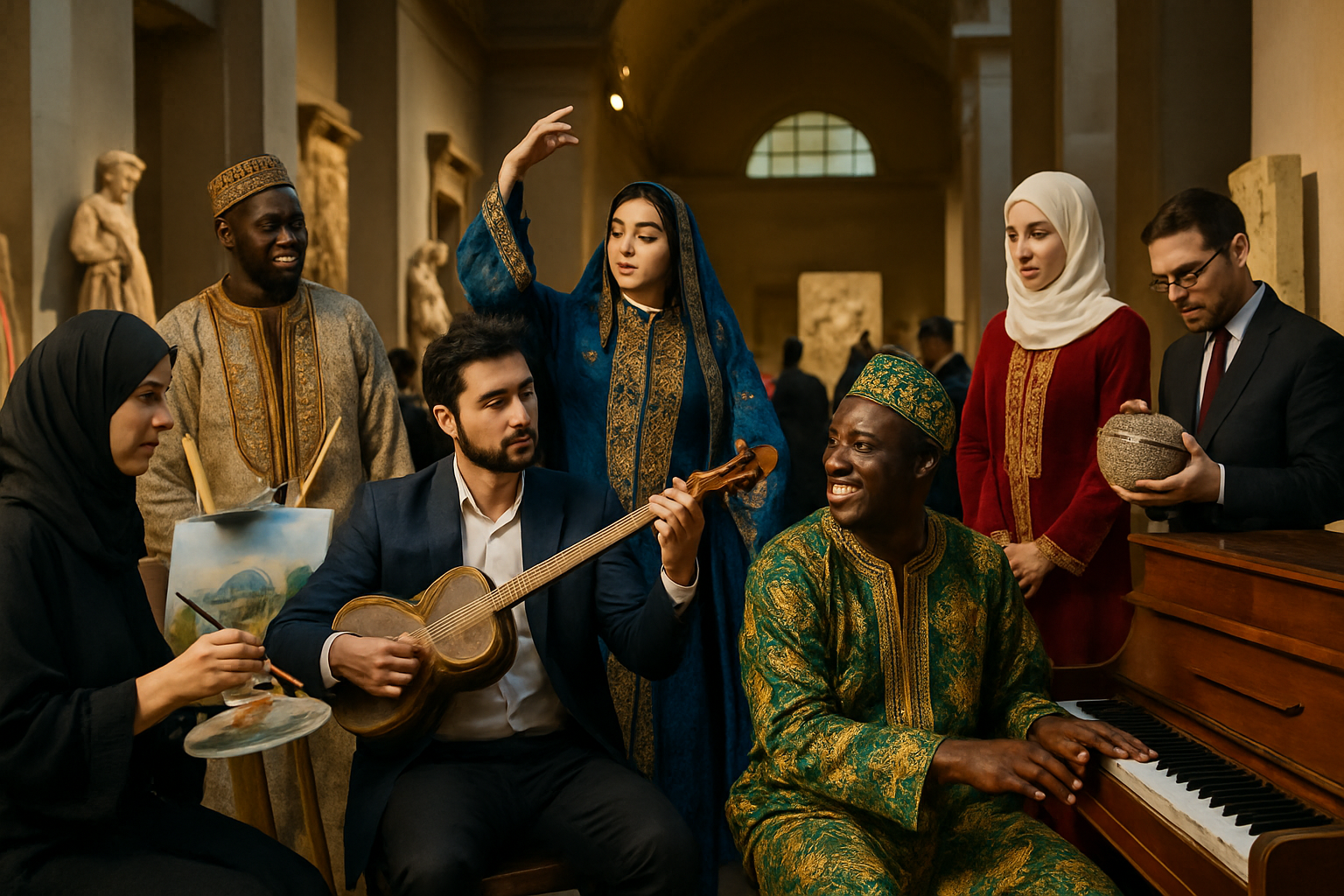
A sweeping cultural renaissance is transforming how nations approach heritage preservation and artistic innovation, with Azerbaijan, Saudi Arabia, and Burkina Faso emerging as leaders in a global movement that positions culture as essential infrastructure equivalent to transportation and healthcare systems.
Recent developments across these three nations reveal sophisticated approaches to balancing traditional preservation with contemporary innovation, creating templates that other countries worldwide are beginning to adopt. From Azerbaijan's strategic cultural diplomacy to Saudi Arabia's comprehensive national awards program and Burkina Faso's emerging slam poetry scene, the evidence points to a coordinated international recognition of culture's fundamental role in community resilience and economic development.
Azerbaijan's Cultural Bridge Building
Azerbaijan has positioned itself as a crucial cultural bridge between Eastern and Western traditions through an ambitious program of international artistic collaborations. The Gabala City Children's Art School recently hosted master classes in piano and tar, traditional Azerbaijani stringed instruments, organized by the Culture Ministry's Scientific-Methodological and Professional Development Center for Culture.
The initiative represents more than simple music education—it embodies Azerbaijan's broader strategy of using cultural programming to strengthen international relationships while preserving authentic national traditions. The country's theatres have played a leading role in this renaissance, with the National Drama Theatre forging new partnerships that explore creative opportunities while maintaining cultural heritage integrity.
"Azerbaijan's theatres play a leading role in preserving the country's cultural heritage while exploring new creative opportunities,"
— AzerNews Cultural Analysis
This approach builds on documented success from earlier international collaborations, including Egyptian-Azerbaijani poetry evenings that demonstrated how cultural exchange can strengthen diplomatic ties without compromising local authenticity. Azerbaijan's model has become particularly influential because it demonstrates how smaller nations can compete effectively in global cultural markets through creative programming and authentic artistic expression.
Saudi Arabia's Comprehensive Cultural Investment
Saudi Arabia has launched the sixth edition of its National Cultural Awards, representing one of the most comprehensive cultural recognition programs globally. The Ministry of Culture's initiative encompasses both Main Awards and Sectoral Awards, with nominations open until April 1st via the official awards website.
The program's scope reveals the kingdom's sophisticated understanding of culture as strategic infrastructure. Main Awards include the Cultural Personality of the Year Award, Youth Culture Award, Business Leaders Award, and separate categories for profit and non-profit cultural institutions. The Sectoral Awards feature twelve specialized honors covering literature, publishing, theater and performing arts, culinary arts, and other cultural domains.
This investment occurs within the broader context of Saudi Vision 2030, which positions cultural development as crucial for economic diversification and international engagement. The awards program serves multiple functions simultaneously: recognizing artistic excellence, encouraging cultural entrepreneurship, building international cultural relationships, and creating sustainable employment in creative industries.
The timing of these awards, following successful international cultural events during Ramadan 2026 that attracted over one million visitors to Jeddah's UNESCO World Heritage sites, demonstrates Saudi Arabia's commitment to systematic cultural infrastructure development rather than isolated programming efforts.
Burkina Faso's Emerging Literary Movement
Perhaps most remarkably, Burkina Faso's cultural scene demonstrates how grassroots artistic movements can achieve international significance through authentic expression and community engagement. Doriane Wendyam Sawadogo, known professionally as Wendyam, exemplifies this transformation of the West African nation's slam poetry landscape.
At just 21 years old, Wendyam combines her professional work as a customer service representative with a remarkable artistic trajectory that began during high school literature classes studying David Diop's "Coup de pilon." Her evolution from classroom inspiration to prominent slam poet illustrates how traditional literary education can fuel contemporary artistic innovation.
Wendyam's approach—combining "assumed aesthetics, dark tonalities, and feminist engagement"—represents a sophisticated artistic voice that addresses both local and universal themes. Her transformation of personal experience into artistic expression demonstrates how emerging cultural movements can maintain authentic local identity while developing international appeal.
The significance of Burkina Faso's cultural emergence extends beyond individual artistic success. The nation's investment in community cultural programming, including support for traditional festivals alongside contemporary artistic forms, creates an ecosystem where innovation builds upon rather than competes with established traditions.
Global Patterns and Success Factors
Analysis of these developments reveals consistent success factors across all three nations. Technology serves as enhancement rather than replacement for traditional practices, enabling global sharing while maintaining community ownership. International cooperation provides resources and expertise without overwhelming local authenticity. Economic viability through cultural tourism and educational partnerships creates sustainable funding models.
The February 2026 Cultural Renaissance, documented across multiple continents, demonstrates unprecedented coordination in cultural preservation activities. Countries implementing comprehensive cultural strategies report improved community resilience, enhanced international competitiveness, and better preparation for 21st-century challenges.
Economic Impact and Strategic Infrastructure
Cultural initiatives generate substantial economic multiplier effects beyond immediate programming costs. Azerbaijan's cultural diplomacy enhances international trade relationships and tourism development. Saudi Arabia's awards program positions the kingdom as a cultural investment destination while supporting creative industry employment. Burkina Faso's artistic emergence creates opportunities for cultural tourism and international artistic collaboration.
These economic benefits occur alongside less quantifiable but equally important social functions: heritage preservation, community bonding, intergenerational dialogue, and cultural confidence building. Success depends on treating culture as essential infrastructure requiring systematic investment rather than optional programming during favorable economic conditions.
Technological Integration and Preservation
All three nations demonstrate sophisticated approaches to technological integration that amplify rather than replace traditional cultural elements. Digital platforms enable global sharing of local celebrations while maintaining source community ownership. Advanced preservation techniques protect physical artifacts from environmental damage while making cultural resources accessible to international researchers and educators.
This mature approach to technology-tradition synthesis contrasts with earlier approaches that treated digitization and preservation as competing priorities. The current model uses innovation to build upon traditional foundations, creating hybrid approaches that serve both preservation and development objectives simultaneously.
International Cooperation Templates
The success of these cultural initiatives reflects broader international cooperation trends documented throughout the documented Cultural Renaissance period. Bilateral cultural exchanges, multilateral heritage programs, and international artistic collaborations create efficiency gains that allow smaller nations to compete with established cultural centers.
Academic partnerships enable resource sharing and expertise exchange. Coordinated marketing approaches reduce individual promotional costs while expanding audience reach. Digital platforms facilitate global exhibition and educational resource sharing while maintaining local community control over cultural content.
Challenges and Adaptive Strategies
Despite documented success, cultural preservation faces significant challenges including climate change threats to historical sites and outdoor practices, economic pressures affecting youth participation in traditional activities, and competition from digital entertainment for attention and resources. Additionally, the global memory crisis affecting semiconductor production has created infrastructure constraints limiting some technological implementations until 2027.
Successful initiatives demonstrate adaptive strategies addressing these challenges through community leadership, international resource sharing, and innovative programming approaches that respect traditions while embracing helpful technological innovations. The key lies in maintaining authentic community involvement rather than treating culture as elite consumption.
Future Implications and Global Templates
The developments across Azerbaijan, Saudi Arabia, and Burkina Faso establish precedents for 21st-century cultural stewardship that successfully balance innovation with tradition, local authenticity with international cooperation, and economic viability with cultural integrity.
These models provide practical templates adaptable to diverse cultural and economic contexts worldwide. The success across varied situations—Azerbaijan's cultural diplomacy, Saudi Arabia's comprehensive programming, Burkina Faso's grassroots emergence—suggests that effective cultural development depends more on community engagement and authentic expression than on specific economic or political circumstances.
Evidence suggests that nations positioning culture as strategic infrastructure gain competitive advantages in tourism, international relationships, creative industry development, and community resilience. The Cultural Renaissance represents humanity's recognition that artistic expression and heritage preservation serve essential social functions equivalent to other infrastructure systems.
Conclusion: Culture as Essential Infrastructure
The coordinated cultural developments across Azerbaijan, Saudi Arabia, and Burkina Faso represent more than isolated success stories—they demonstrate a fundamental shift toward recognizing culture as essential infrastructure requiring systematic investment, international cooperation, and adaptive management for contemporary challenges while maintaining historical authenticity.
This Cultural Renaissance provides practical evidence that communities worldwide can successfully navigate between preserving cultural heritage and embracing beneficial innovations. The success of these diverse approaches—from Azerbaijan's strategic diplomacy to Saudi Arabia's comprehensive awards to Burkina Faso's grassroots poetry movement—offers hope and practical guidance for cultural preservation and development efforts globally.
As nations continue to implement these models, the evidence suggests that the most successful approaches will be those that treat culture not as luxury programming during favorable economic conditions, but as fundamental infrastructure essential for community flourishing, international cooperation, and sustainable development in an interconnected world.