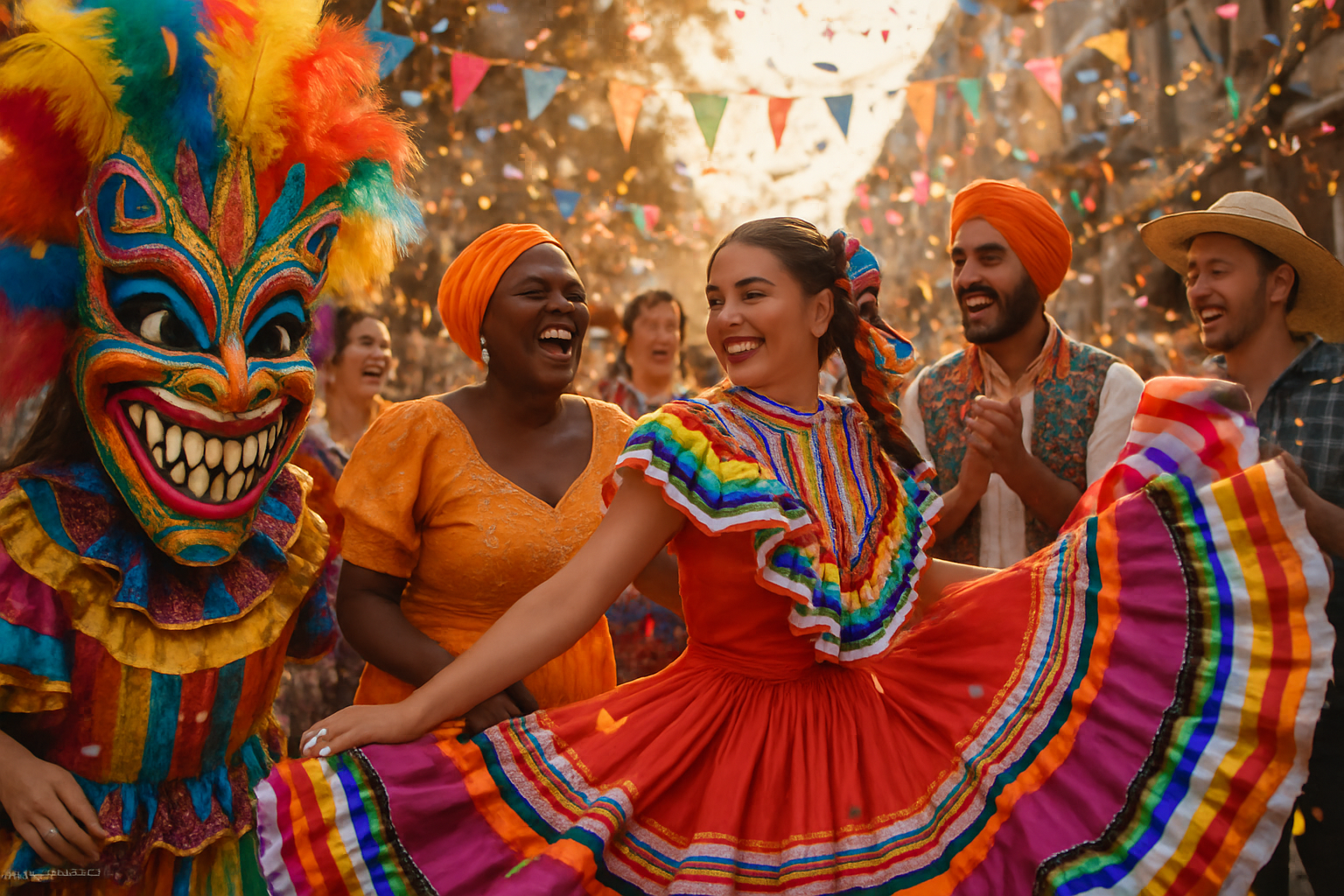
From the bustling streets of La Paz to the colorful skies of Lahore, February 2026 has witnessed an extraordinary surge of cultural celebrations that demonstrate the resilience and vibrancy of global communities committed to preserving their heritage while embracing contemporary expression.
La Paz: A Cultural Powerhouse in the Andes
Bolivia's capital city has emerged as a remarkable cultural hub, hosting an impressive average of 200 cultural activities per month throughout 2025, according to Isabel Navia Quiroga, founder of the cultural agenda platform Movida de Altura. This extraordinary volume of events encompasses music, cinema, theater, and dance, making La Paz one of the world's most culturally active cities relative to its size.
"We've calculated an average of 200 cultural activities per month, registered by the platform in 2025," Navia explained to La Razón. "This figure is approximate and, with certainty, many more take place in the city. Our intention is to cover an increasing number, as La Paz's artistic activity is tremendously dynamic, almost unstoppable, in any season and any circumstance."
The platform's documentation reveals a city where cultural expression thrives year-round, defying economic challenges and political uncertainties. This consistency places La Paz among the world's most culturally productive urban centers, demonstrating how indigenous and contemporary artistic traditions can coexist and flourish.
Guatemala's Sacred Journey: The Caravana del Zorro
Guatemala witnessed the spectacular launch of the 65th edition of the traditional Caravana del Zorro, a motorized pilgrimage that has become one of Central America's most significant cultural events. Organizers expected participation from at least 80,000 motorcyclists, making it one of the largest gathering of its kind in the region.
This unique celebration combines religious devotion with modern transportation, creating a contemporary expression of traditional pilgrimage. Participants don colorful attire and travel in organized formations, transforming highways into rivers of cultural expression. The event represents how traditional religious practices adapt to modern contexts while maintaining their spiritual significance.
The massive participation demonstrates the enduring power of community-based celebrations to unite people across social and economic divisions, creating shared experiences that strengthen cultural identity and social bonds.
Mexico's Carnival Innovation: Circo Carnaval Mérida
Mérida officially launched its highly anticipated Carnival 2026 celebrations under the innovative theme "Circo Carnaval Mérida," running from February 7 to 18. The festivities promise a creative fusion of traditional carnival elements with circus-inspired performances and contemporary entertainment.
The celebration's main hub shifts to "Carnival City" in Xmatkuil from February 13-17, creating a dedicated space for concentrated cultural activities. Organizers have emphasized the importance of blending tradition with modern entertainment, ensuring the Carnival remains culturally relevant while appealing to younger audiences.
Local authorities have implemented enhanced security measures and coordinated traffic management to guarantee safe celebrations. The economic impact is already significant, with hotels in Mérida and Progreso reporting near-full occupancy, demonstrating how cultural celebrations drive tourism and economic activity.
"The challenge is maintaining our cultural authenticity while creating experiences that resonate with new generations."
— Cultural Event Organizer, Mérida
Nicaragua's Literary Heritage: Celebrating Rubén Darío
In San Marcos, Nicaragua, families gathered to commemorate the eternal legacy of Rubén Darío, the nation's most celebrated poet and a foundational figure in Spanish-language literature. The celebration featured artistic presentations and recognition of Darío's contributions to both poetry and national sovereignty.
These commemorative events highlight how literary heritage becomes a focal point for community gathering and cultural education. Darío's work, which influenced generations of Latin American writers, continues to inspire contemporary cultural expression and serves as a bridge between historical achievement and current artistic endeavors.
The celebration demonstrates how intellectual and artistic legacies become living traditions through community engagement, ensuring that cultural knowledge passes between generations while remaining relevant to contemporary audiences.
Pakistan's Colorful Skies: Basant Festival Returns
In Lahore, former Prime Minister Mian Nawaz Sharif joined vibrant Basant celebrations at Mochi Gate, marking the return of one of Pakistan's most beloved cultural festivals. The Basant kite-flying festival represents a centuries-old tradition that brings communities together in joyous celebration of spring's arrival.
Sharif celebrated from the rooftop of a close friend's house, where he enjoyed traditional delicacies while participating in the festival atmosphere. Prominent party members including Hasan Dar, Khurram Butt, and Shazeb Dar joined the gathering, highlighting how cultural celebrations transcend political boundaries and unite communities in shared joy.
The festival involves elaborate kite competitions, traditional music, and communal feasting, creating an atmosphere of unity and celebration that has persisted despite periodic restrictions. The return of Basant celebrations signals a renewed commitment to preserving Pakistan's cultural traditions while fostering community cohesion.
Global Cultural Renaissance Context
These celebrations occur within a broader context of what experts are calling the "February 2026 Cultural Renaissance," a period of unprecedented global cultural activity. From Iceland's Winter Festival focusing on light and shadow to Tanzania's Sauti za Busara Festival emphasizing cultural investment, communities worldwide are demonstrating remarkable commitment to preserving and celebrating their heritage.
According to memory records, this period builds on successful cultural initiatives including Cyprus's amateur theatre renaissance, Latvia's Eurovision preparations, and Zimbabwe's cultural institutional reforms. The success factors remain consistent across cultures: community engagement, technology as enhancement rather than replacement, economic viability through tourism partnerships, and institutional support for sustainable development.
The economic impact extends beyond immediate event revenues. Cultural celebrations drive tourism, create employment opportunities, and strengthen community bonds that contribute to long-term social resilience. Countries positioning culture as strategic infrastructure gain competitive advantages in global tourism markets while maintaining authentic local expression.
Technology and Tradition Synthesis
Contemporary cultural celebrations increasingly demonstrate sophisticated integration of traditional practices with modern technology. Bolivia's Movida de Altura platform exemplifies how digital tools can amplify rather than replace traditional cultural programming, creating greater accessibility without compromising authenticity.
Social media documentation of events like Guatemala's Caravana del Zorro and Pakistan's Basant celebrations enables global sharing of local traditions, creating international awareness while maintaining community ownership of cultural practices. This technology-tradition synthesis represents a mature approach to cultural preservation in the digital age.
The challenge lies in ensuring that technological enhancement serves community needs rather than external commercial interests, maintaining the authentic community connections that make cultural celebrations meaningful for participants rather than mere spectacles for outside consumption.
Future of Global Cultural Celebrations
The February 2026 cultural events demonstrate several important trends shaping the future of global cultural celebrations. First, communities are successfully adapting traditional practices to contemporary contexts without losing essential cultural meaning. Second, international cooperation and knowledge sharing enable smaller communities to learn from successful models while maintaining local distinctiveness.
Third, cultural celebrations increasingly serve multiple purposes: preserving heritage, strengthening community bonds, driving economic development, and creating platforms for intergenerational dialogue. This multifunctionality makes cultural investments more sustainable and politically viable.
Finally, the global documentation and sharing of these events creates a worldwide network of cultural celebration knowledge that strengthens all participating communities. As challenges like climate change and economic uncertainty continue, cultural celebrations provide stability, meaning, and hope that transcend immediate difficulties.
The success of these diverse celebrations across Latin America, Central America, and South Asia demonstrates that cultural expression remains a fundamental human need that adapts to circumstances while maintaining its essential power to unite communities in shared joy and meaning.