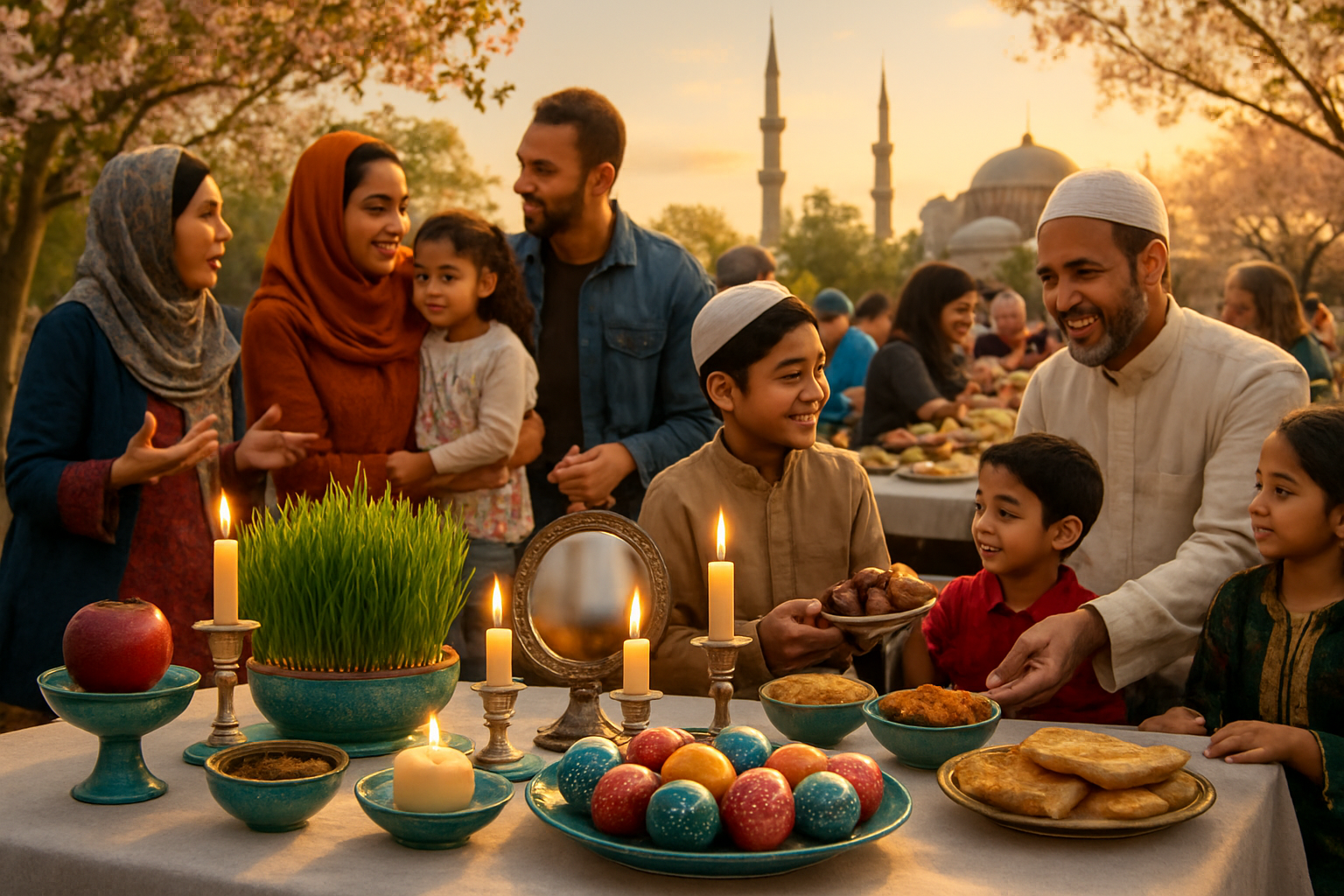
March 21, 2026 marked a significant moment in global cultural celebration as hundreds of millions of people worldwide observed both International Nowruz Day and Eid-ul-Fitr, creating a remarkable convergence of ancient Persian and Islamic traditions that transcended geographical and political boundaries.
The celebrations, spanning from Azerbaijan and Kazakhstan to Pakistan and the Philippines, demonstrated the enduring power of cultural festivals to unite diverse communities while maintaining their distinctive traditions. This year's observances gained particular significance as they occurred during a period of heightened international cooperation in cultural preservation and celebration.
Nowruz: Celebrating Renewal Across Nations
International Nowruz Day, marking the Persian New Year and arrival of spring, was celebrated with traditional enthusiasm despite global challenges. Azerbaijan led the commemorations, with AzerNEWS reporting that the holiday continues to serve as "a symbol of renewal and the arrival of spring" for millions across the globe.
In Kazakhstan, President Kassym-Jomart Tokayev extended official congratulations to citizens celebrating Navruz, reinforcing the festival's importance in Central Asian cultural identity. The celebrations in Astana and Almaty featured traditional music, dance performances, and the customary preparation of sumalak, a sweet paste made from wheat sprouts that symbolizes abundance and renewal.
"Nowruz represents more than just a calendar change—it embodies humanity's eternal hope for renewal and the triumph of light over darkness," noted Dr. Reza Mansouri, a Persian cultural historian at Tehran University.
— Dr. Reza Mansouri, Persian Cultural Historian
The festival's global reach was evident as celebrations extended far beyond traditional Persian territories, with communities in Europe, North America, and Australia organizing cultural events that introduced Nowruz traditions to broader populations through educational programming and public celebrations.
Eid-ul-Fitr: Marking Sacred Conclusion
Simultaneously, nearly two billion Muslims worldwide celebrated Eid-ul-Fitr, marking the end of Ramadan 2026—described by observers as "the most internationally coordinated Ramadan in modern Islamic history." The convergence with Nowruz created unique opportunities for interfaith understanding and cultural exchange.
In Pakistan, the celebrations took on particular significance as military leadership extended greetings to all citizens. Chief of Army Staff Field Marshal Asim Munir emphasized that "Eid reflects the enduring values of unity, compassion, and gratitude," while acknowledging the service of armed forces personnel who remain away from families to ensure national security.
Pakistani President Asif Ali Zardari and Prime Minister Shehbaz Sharif called for greater Muslim unity during these "testing times," with particular attention to ongoing humanitarian crises affecting Muslim communities in Gaza, Kashmir, and other regions. This message of solidarity resonated across the Islamic world, from the mosques of Mauritius to the prayer grounds of Qatar.
Philippine Celebrations Reflect Diversity
The Philippines provided a compelling example of cultural accommodation and religious diversity. President Ferdinand Marcos Jr. had declared Friday, March 20, as a regular holiday for Eid'l Fitr. However, when the crescent moon was not visible on the anticipated evening, Filipino Muslim communities demonstrated their commitment to traditional lunar observation by moving their celebrations to Saturday, March 21.
This adjustment showcased the flexibility and authenticity that characterize Islamic observance worldwide, where communities maintain connection to ancient astronomical traditions while adapting to local circumstances.
Singapore's Mindful Observance
Singapore's approach to the celebrations reflected the nation's sophisticated understanding of its multicultural fabric. Associate Professor Faishal Ibrahim, addressing the Muslim community, acknowledged the privilege of observing Ramadan "in peace" while remaining "mindful that the situation abroad is still uncertain."
His remarks highlighted the global Muslim community's awareness of ongoing conflicts affecting co-religionists worldwide, demonstrating how local celebrations can carry profound international consciousness and solidarity.
Cultural Diplomacy in Action
The simultaneous celebration of Nowruz and Eid-ul-Fitr created unprecedented opportunities for cultural diplomacy. Al Jazeera reported that approximately 300 million people celebrated Nowruz "under a cloud of war," referring to ongoing Middle Eastern conflicts. Yet these celebrations served as powerful reminders of cultural continuity and human resilience.
The festivals' convergence highlighted several key themes that resonated across cultural boundaries:
- Renewal and hope for the future
- Community solidarity and mutual support
- Gratitude for peace and prosperity
- Remembrance of those facing hardship
- Commitment to charitable giving and social responsibility
Technology Enhances Traditional Celebration
This year's celebrations demonstrated sophisticated integration of technology with traditional practices. Social media platforms enabled global participation through virtual gatherings, live-streamed religious services, and shared cultural content that connected diaspora communities with their homeland celebrations.
Mobile applications facilitated prayer time coordination, charitable giving platforms saw record usage, and digital cultural education programs helped non-Muslim and non-Persian communities understand the significance of these ancient festivals.
Economic and Social Impact
The economic impact of these celebrations extended far beyond immediate festival spending. In Pakistan, early disbursement of government salaries before Eid provided crucial economic stimulus for families preparing for the festival. Similar economic accommodations across Muslim-majority countries demonstrated governmental recognition of festivals' importance to social and economic well-being.
Cultural tourism also benefited significantly, with countries like Azerbaijan and Kazakhstan reporting increased international interest in their Nowruz celebrations, while traditional Islamic markets and cultural sites experienced heightened visitor activity during Eid observances.
"These festivals serve as bridges between communities, creating shared experiences that transcend religious and ethnic boundaries while maintaining authentic cultural significance."
— Prof. Amira Hassan, Cultural Anthropologist
Challenges and Resilience
Despite global challenges including ongoing conflicts, economic pressures, and political tensions, the 2026 celebrations demonstrated remarkable community resilience. From the villages of Mauritius to the cities of Singapore, people found ways to maintain traditional observances while adapting to contemporary realities.
The celebrations also served as platforms for addressing social concerns. Pakistani leaders used Eid messages to call for Muslim unity, while Nowruz celebrations in Central Asia emphasized themes of environmental renewal and sustainable development.
Educational and Interfaith Dimensions
The convergence of these festivals created valuable educational opportunities. Schools, universities, and cultural institutions worldwide organized programming that helped diverse audiences understand the historical significance and contemporary relevance of both Nowruz and Eid-ul-Fitr.
These educational initiatives contributed to broader interfaith understanding, demonstrating how cultural festivals can serve as vehicles for building bridges between different religious and ethnic communities while maintaining the authenticity and significance of traditional practices.
Looking Forward
The successful celebration of both Nowruz and Eid-ul-Fitr in 2026 provides a template for future cultural cooperation and understanding. The events demonstrated that authentic cultural expression can achieve global resonance while maintaining local significance, creating sustainable models for cultural celebration in an interconnected world.
As communities worldwide continue to navigate complex global challenges, the enduring appeal of these ancient festivals offers hope for humanity's capacity to preserve meaningful traditions while building bridges across cultural, religious, and national boundaries.
The March 2026 celebrations will be remembered as a testament to the power of culture to unite diverse communities around shared values of renewal, gratitude, and hope for a better future—values that transcend any single tradition or community while honoring the distinctive contributions of each.