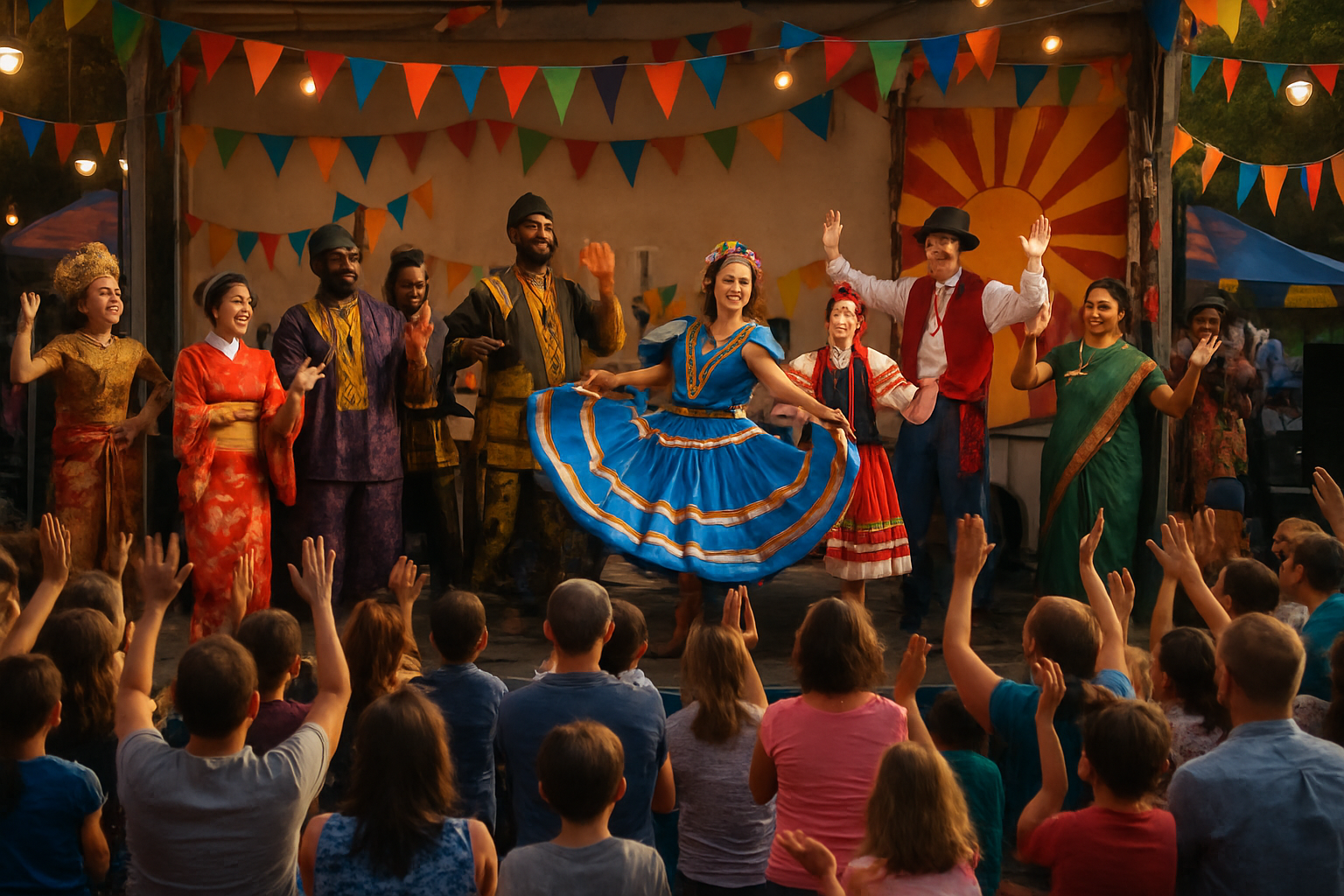
From the intimate Cambridge Public Library to the grand amphitheaters of Luxembourg, March 2026 has witnessed an extraordinary cultural renaissance that transcends borders and brings together diverse communities through shared celebration of heritage, art, and human creativity.
This remarkable period, which builds on the momentum of February 2026's global cultural awakening, demonstrates how traditional festivals and cultural events have evolved into sophisticated platforms for international cooperation, economic development, and community building while maintaining their authentic roots.
Armenian Cultural Diplomacy Takes Center Stage
The Cambridge-Yerevan Sister City Association (CYSCA) exemplifies this cultural renaissance with their "Dove of Peace" celebration on April 16, 2026. The event marks the official acceptance of CYSCA's records into the Cambridge Public Library's Archives and Special Collections, creating a permanent bridge between Massachusetts and Armenia.
"This represents a defining cultural moment in Armenian-American relations, preserving decades of cultural exchange for future generations."
— Gary Lind-Sinanian, Collections Curator, Armenian Museum of America
The evening's program, beginning at 7:00 p.m. with doors opening at 6:30 p.m., highlights the legacy of the Cambridge-Yerevan sister-city relationship and its contributions to Armenian cultural preservation. The event demonstrates how modern cultural programming can serve multiple functions: heritage preservation, community building, and educational outreach.
Philadelphia's Armenian Heritage Walk: Art Meets Memory
Meanwhile, Philadelphia prepares for the dedication of the Armenian Heritage Walk on April 24-25, 2026, adjacent to the world-renowned Philadelphia Museum of Art. This historic pathway celebrates Armenian art and culture while commemorating the Armenian Genocide and honoring Armenian American contributions.
The centerpiece is a restored 22-foot statue of Young Meher, the mythical Armenian figure first displayed during America's bicentennial in 1976. This restoration symbolizes not just artistic preservation but the enduring courage and faith of the Armenian diaspora community.
Azerbaijan's Environmental Cultural Bridge
In Baku, Azerbaijan, cultural expression takes on contemporary relevance as Baku State University's volunteer group joins the global Earth Hour campaign in partnership with IDEA Public Union and the World Wide Fund for Nature. This initiative demonstrates how traditional community organizing can address modern environmental challenges.
Separately, Azerbaijani students in Vienna celebrate Novruz through a collaborative event organized by multiple cultural organizations, showing how diaspora communities maintain traditions while building new international connections.
Africa's Youth-Led Cultural Renaissance
Burkina Faso showcases the power of youth-driven cultural innovation with the launch of "Faso Kuma 2026," a national oratory competition that transforms speech into what organizers call "an instrument of culture and resistance." The competition, launched at the Institut Supérieur de Génie Électrique in Ouagadougou, represents a new generation of African cultural programming that honors traditional forms while addressing contemporary challenges.
This initiative reflects a broader pattern across Africa where young people are reclaiming traditional art forms and adapting them for modern communication, social commentary, and community building.
Europe's Pop Culture Evolution
Luxembourg's inaugural Japan Day at Luxexpo draws nearly 15,000 fans, demonstrating how traditional cultural exchange has evolved to embrace contemporary global phenomena. The event's organizers embody what they call "the shonen spirit" — a Japanese concept emphasizing courage and growth that resonates with international audiences.
"We have the shonen spirit! This isn't just about manga and anime — it's about cultural connection and understanding across boundaries."
— Japan Day Organizer, Luxembourg
The overwhelming response, with queues stretching across Luxexpo's grounds, illustrates how authentic cultural programming can tap into genuine community interest and foster international understanding through shared interests.
The Economics of Cultural Renaissance
These cultural initiatives generate substantial economic benefits beyond their immediate programming costs. Tourism revenue, creative industry employment, and enhanced international recognition create lasting multiplier effects that strengthen communities year-round.
The success of events like Luxembourg's Japan Day, which drew 15,000 attendees in its inaugural year, demonstrates the economic potential of authentic cultural programming. Hotels, restaurants, and local businesses report significant revenue increases during cultural festivals, while the events themselves create employment across technical production, hospitality, and creative sectors.
Technology as Cultural Amplifier
A consistent pattern across these 2026 cultural initiatives is the sophisticated integration of technology with traditional practices. Digital platforms enable global sharing of local celebrations, social media creates virtual bridges between diaspora communities, and enhanced production capabilities support ambitious artistic projects without compromising authentic expression.
Rather than replacing traditional cultural forms, technology serves as an amplifier, extending reach while maintaining community ownership and spiritual significance. This represents a mature evolution from earlier fears that digitization would diminish cultural authenticity.
Community-Centered Programming: The Success Formula
The most successful cultural events of 2026 share several key characteristics: community leadership rather than top-down programming, authentic representation that honors traditional knowledge bearers, and economic sustainability through cultural tourism and educational partnerships.
These events also demonstrate sophisticated approaches to international cooperation. Rather than homogenizing cultural expression, successful programs share expertise, coordinate marketing efforts, and create joint educational initiatives while maintaining their distinctive local character.
Challenges and Adaptive Strategies
The 2026 cultural renaissance occurs amid significant challenges: climate change threatens outdoor programming and traditional construction materials, economic pressures affect youth participation in traditional arts, and digital entertainment competes with cultural forms requiring sustained attention and community engagement.
Successful communities are developing innovative solutions: contingency planning protects participants and cultural assets while maintaining essential community functions, international resource sharing enables smaller communities to access expertise while contributing innovations to global knowledge networks, and cultural preservation evolves from defensive conservation toward proactive community development.
Global Renaissance Patterns
The March 2026 cultural developments represent continuation of what scholars are calling the "February 2026 Cultural Renaissance" — an unprecedented period of coordinated international cultural activity. From Bolivia's geological heritage preservation to Paraguay's international classical music recognition, communities worldwide are simultaneously recognizing culture as strategic infrastructure equivalent to transportation, communication, and healthcare systems.
This organic convergence around shared principles — community engagement with authentic cultural expression, technology enhancement rather than replacement of traditional practices, economic sustainability through cultural tourism and educational partnerships, and international cooperation that respects local distinctiveness while fostering global understanding — suggests a fundamental shift in how societies value and invest in cultural life.
Future Implications
The success of diverse cultural initiatives across continents provides practical templates adaptable to specific cultural and economic circumstances worldwide. From Armenian heritage preservation in Massachusetts to Japanese cultural celebration in Luxembourg, these events demonstrate that authentic cultural expression can achieve global appeal while maintaining local significance.
More significantly, they establish precedents for 21st-century cultural stewardship that successfully balance innovation with tradition, local authenticity with international cooperation, and economic viability with cultural integrity. As communities face climate change, technological disruption, and economic uncertainty, the 2026 cultural renaissance offers evidence of humanity's remarkable capacity for cultural resilience and creative adaptation.
The Path Forward
As these cultural initiatives demonstrate, thoughtful investment in cultural preservation and celebration creates lasting positive impacts that honor the past while embracing future possibilities. The March 2026 developments suggest that culture serves fundamental infrastructure for community development, international cooperation, and human flourishing in an increasingly interconnected world.
The window for effective coordinated cultural action appears to be expanding rather than narrowing. Communities that invest in authentic cultural programming, embrace helpful technological innovations, and build meaningful international partnerships position themselves to thrive while contributing to a culturally rich and resilient global society.
From the intimate gatherings in Cambridge libraries to the massive celebrations in Luxembourg exhibition halls, the 2026 cultural renaissance demonstrates that festivals and cultural events have evolved far beyond entertainment. They have become essential tools for building bridges between communities, preserving invaluable heritage, and creating sustainable foundations for human flourishing in our shared global future.