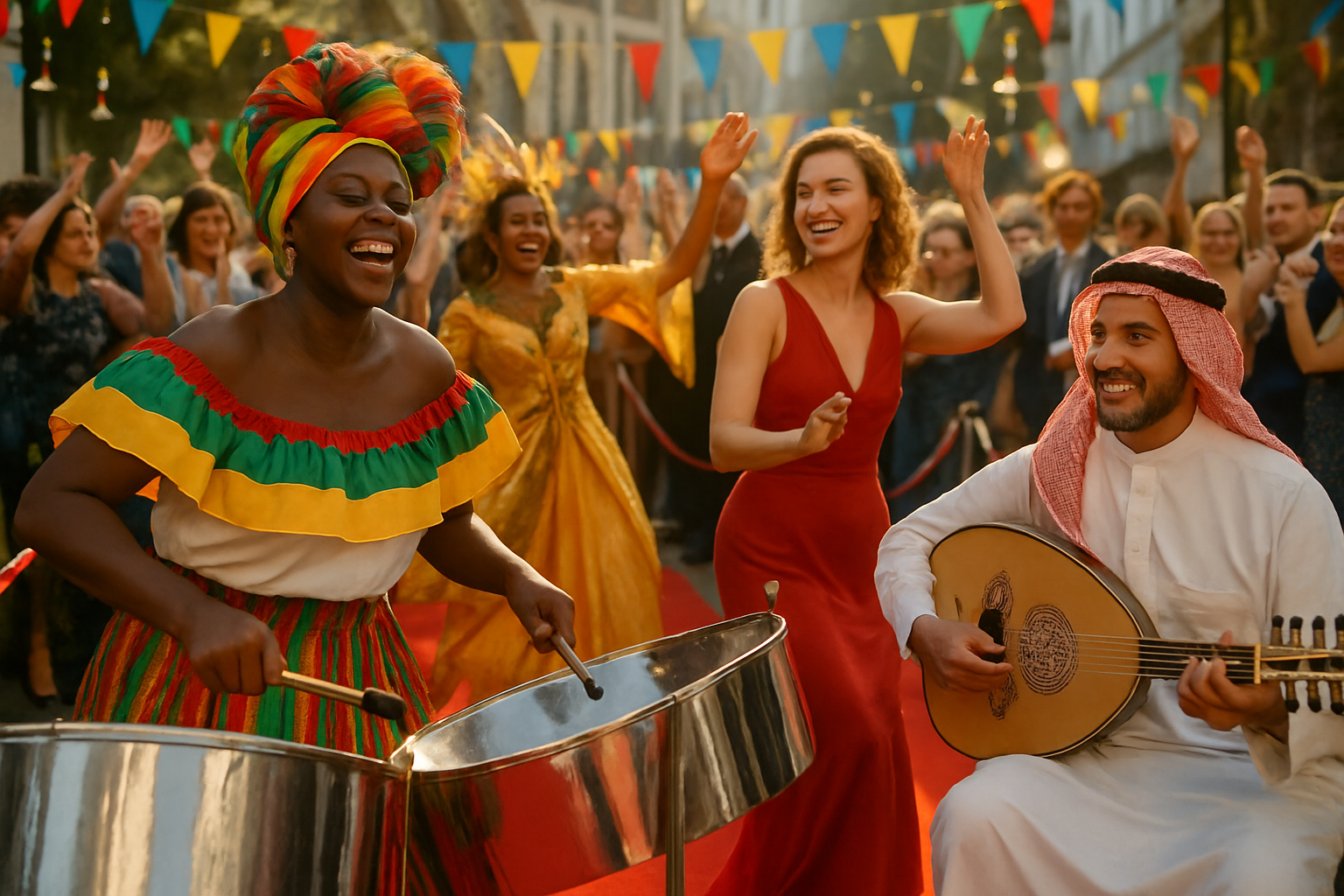
March 2026 has emerged as a defining moment in global cultural history, with major festivals and entertainment events spanning continents demonstrating an unprecedented renaissance in live cultural programming, from Eurovision selections to massive outdoor festivals.
Eurovision 2026: Germany's Sarah Engels Heads to Vienna
Germany's Eurovision journey took a decisive turn as Sarah Engels secured her place to represent the nation at Eurovision 2026 in Vienna. The 33-year-old singer was selected by both jury and public vote during the national selection process, though critics noted she must "significantly improve" to succeed in the grand finale.
The selection comes amid broader Eurovision developments across Europe, with the contest returning to Vienna, Austria, building on the successful 2015 hosting. This year's competition carries additional political weight, as several countries have announced boycotts due to Israel's continued participation, adding diplomatic complexity to what has traditionally been a celebration of European unity through song.
"The Eurovision Song Contest serves as more than entertainment—it's a platform for cultural identity and European cooperation beyond mere spectacle."
— European Broadcasting Union Statement
Italy's Sanremo Festival Concludes with Sal Da Vinci Victory
The 77th Festival di Sanremo reached its dramatic conclusion with Sal Da Vinci claiming victory in an emotional triumph he dedicated to Naples. The Neapolitan singer's win represented a victory for traditional Italian musical heritage, with Sayf finishing second and Ditonellapiaga taking third place.
The festival, which failed to match previous years' record ratings, nonetheless demonstrated its enduring cultural significance. In a historic first, the handover ceremony to incoming artistic director Stefano De Martino took place live during the finale, marking a new chapter for Italy's premier music competition.
Carlo Conti's tenure as artistic director concluded with this edition, having guided the festival through a period of significant cultural and social commentary. The presence of television journalist Giorgia Cardinaletti as co-host brought journalistic gravitas to the entertainment format, representing an evolution in the festival's approach to balancing entertainment with cultural significance.
New Zealand's Electric Ave: Australasia's Festival Giant
Christchurch witnessed history in the making as Electric Ave delivered what organizers called "Australasia's largest festival." The two-day celebration featured over 50 acts across five stages, with a production budget of $20 million and tickets selling out within 20 minutes of release.
The festival's rapid sellout and massive scale demonstrate the pent-up demand for live entertainment experiences in the post-pandemic era. The event's success positions New Zealand as a significant player in the Asia-Pacific festival circuit, potentially inspiring similar large-scale cultural programming across the region.
BRIT Awards 2026: Manchester's Musical Milestone
The BRIT Awards made history by relocating from London to Manchester for the first time, bringing fresh energy to the UK's biggest night in music. The ceremony celebrated both established and emerging talent, with stars including Olivia Dean, Lola Young, and Rosalía walking the red carpet.
Harry Styles made headlines not just for his attendance but for his distinctive fashion choices, contributing to what observers described as one of the most memorable red carpet presentations in recent years. The Manchester venue proved successful in capturing the city's rich musical heritage while maintaining the ceremony's national significance.
The geographic shift from London represents a broader decentralization trend in UK entertainment, recognizing regional cultural contributions and potentially inspiring future awards ceremonies to embrace geographic diversity.
Global Festival Economy and Cultural Impact
The collective success of these major cultural events demonstrates the robust recovery of the live entertainment sector and its evolving role in international cultural diplomacy. From Eurovision's political dimensions to Sanremo's cultural preservation, festivals increasingly serve multiple functions beyond entertainment.
Economic analysis reveals substantial multiplier effects, with events like Electric Ave requiring significant infrastructure investment while generating tourism revenue, employment opportunities, and international recognition for host cities. The $20 million production budget for Electric Ave alone created jobs across multiple sectors, from technical production to hospitality services.
"Cultural festivals have evolved into essential infrastructure for community identity and international dialogue. They're not just entertainment—they're economic engines and cultural diplomacy platforms."
— Cultural Economics Researcher
Technology Integration and Traditional Arts
Across all major festivals, sophisticated technology integration has enhanced rather than replaced traditional cultural elements. Eurovision's staging technology, Sanremo's broadcast innovations, and Electric Ave's production capabilities demonstrate how digital tools can amplify authentic cultural expression without diminishing its authenticity.
Social media platforms have become crucial for fan engagement and global reach, with festival content achieving viral status and extending cultural influence far beyond immediate audiences. The global sharing of festival moments creates international cultural dialogue while maintaining local community ownership of these celebrations.
Looking Forward: Cultural Renaissance Momentum
The success of March 2026's cultural events suggests sustained momentum for what cultural observers are calling the "February 2026 Cultural Renaissance." This period has seen unprecedented coordination of international cultural activity, community engagement with traditional and contemporary arts, and successful integration of technology with heritage preservation.
The diverse programming—from Eurovision's political complexity to Electric Ave's commercial innovation—demonstrates that audiences crave authentic cultural experiences that honor traditions while embracing contemporary presentation methods. This synthesis of old and new appears to be defining characteristic of the current cultural moment.
As these festivals conclude and planning begins for future editions, the template they've established suggests a sustainable model for cultural development that balances local authenticity with global appeal, traditional values with contemporary innovation, and artistic integrity with commercial viability.
The global cultural renaissance of 2026 appears positioned to influence international cultural programming for years to come, establishing precedents for community-centered, technologically enhanced, economically viable cultural celebrations that serve multiple societal functions simultaneously.