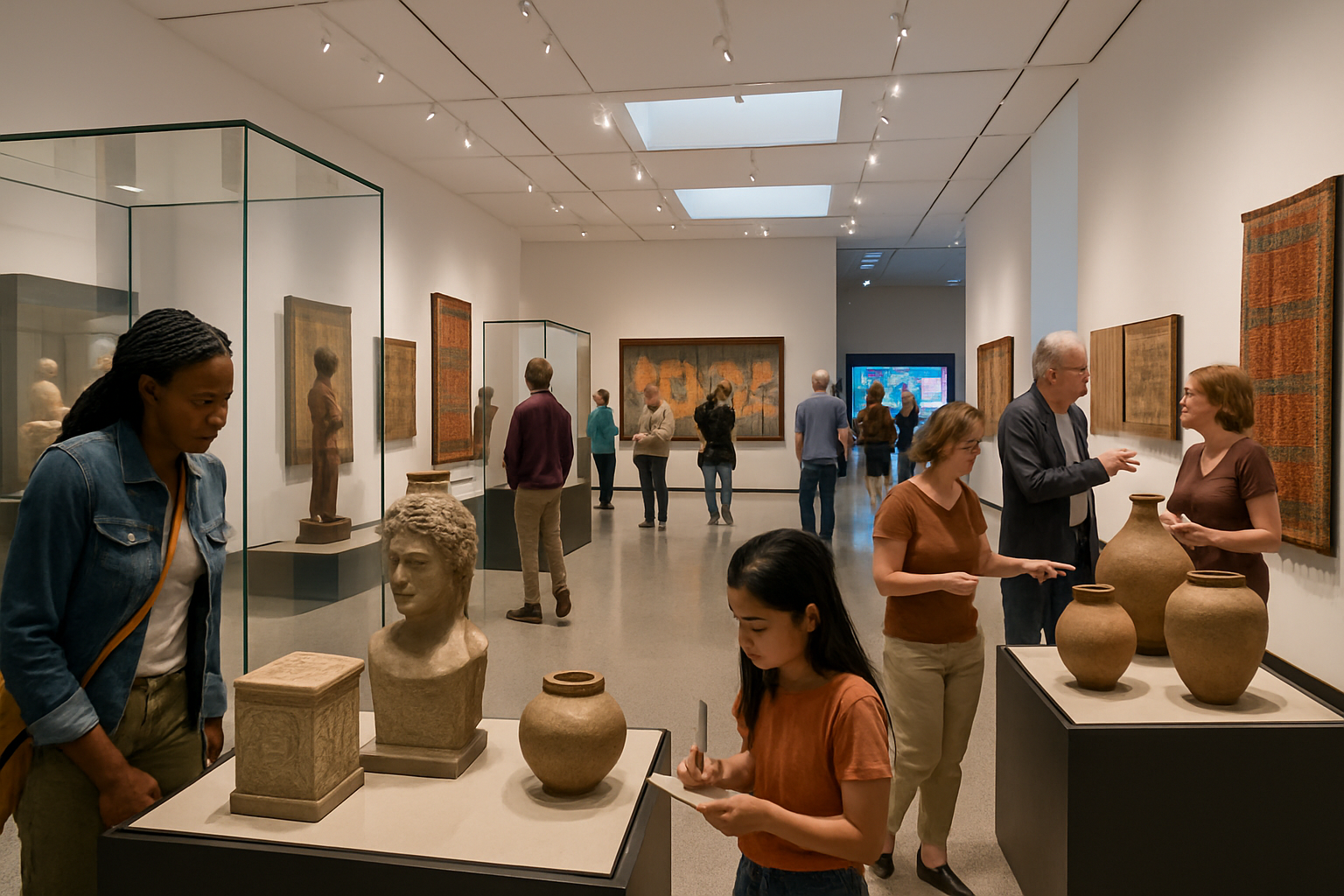
Museums and cultural institutions across four continents are experiencing an unprecedented renaissance, as major discoveries, international collaborations, and heritage celebrations demonstrate humanity's renewed commitment to preserving and showcasing artistic treasures for future generations.
From Amsterdam's authentication of a lost Rembrandt masterpiece to Zimbabwe's celebration of 40 years as a UNESCO World Heritage site, March 2026 has witnessed remarkable developments in cultural preservation that reflect both technological innovation and international cooperation on an unprecedented scale.
Rembrandt Discovery Captivates Art World
The Rijksmuseum in Amsterdam made headlines this week with the authentication of "Vision of Zechariah in the Temple," a 1633 Rembrandt painting that had been dismissed by scholars for over 65 years. Using advanced scientific analysis including X-ray fluorescence spectroscopy, infrared reflectography, and dendrochronological analysis, researchers confirmed the work's authenticity after decades of skepticism.
"This is like finding a needle in a haystack," said Taco Dibbits, the museum's director, emphasizing the rarity of such discoveries in the contemporary art world. The painting depicts the biblical priest Zechariah receiving a divine vision in the Temple of Jerusalem, showcasing Rembrandt's characteristic mastery of light and psychological depth during his peak Amsterdam period.
"Finding a new Rembrandt occurs only a few times in the art world's history. The combination of traditional connoisseurship with cutting-edge scientific analysis represents the future of art authentication."
— Taco Dibbits, Director, Rijksmuseum Amsterdam
The discovery exemplifies what experts are calling a "renaissance of rediscovery," where modern analytical techniques are being used to reexamine works dismissed by more conservative post-World War II attribution practices. The painting will be displayed publicly for the first time in 65 years, allowing audiences to experience this recovered Dutch Golden Age masterpiece.
Zimbabwe Celebrates Four Decades of Heritage Recognition
Meanwhile, in southern Africa, Zimbabwe is marking a significant milestone as both Khami Ruins and Great Zimbabwe celebrate 40 years as UNESCO World Heritage Sites. Tourism and Hospitality Industry Minister Barbara Rwodzi highlighted these achievements at ITB Berlin 2026, positioning Zimbabwe as a premier destination for cultural heritage tourism.
The celebrations underscore Zimbabwe's commitment to preserving its ancient civilizations while developing sustainable tourism that benefits local communities. Both sites represent remarkable achievements of pre-colonial African architecture and urban planning, with Great Zimbabwe serving as the namesake for the modern nation.
This anniversary comes as Zimbabwe implements broader cultural initiatives, including the licensing of community radio stations as part of a "leaving no one behind" policy that enables local communities to preserve languages, traditional music, and oral histories through indigenous broadcasting.
Andorran Artist Captures Aviation History
In the Pyrenees, Andorran artist Joan Mañé is gaining international recognition for his detailed color pencil drawings of military aircraft, including his recent work depicting the Dassault Mirage IV. The French-built supersonic strategic bomber, developed during the Cold War era, represents Mañé's commitment to documenting aviation history through traditional artistic techniques.
Mañé's work exemplifies how contemporary artists are preserving historical memory through classical drawing methods, creating lasting artistic documents that capture both technical precision and aesthetic beauty. His aviation series has attracted attention from collectors and aviation enthusiasts across Europe.
Digital Innovation Enhances Traditional Preservation
The current cultural renaissance is characterized by sophisticated integration of digital technology with traditional preservation methods. Museums worldwide are discovering that advanced analytical techniques can reveal hidden aspects of artworks while digital documentation creates permanent records accessible to global audiences.
The Rembrandt authentication exemplifies this hybrid approach, where scientific analysis confirmed what traditional connoisseurship had questioned. Similarly, heritage sites like those in Zimbabwe are using digital mapping and documentation to preserve archaeological knowledge while managing increasing visitor numbers sustainably.
International Cooperation Drives Cultural Diplomacy
These developments reflect a broader pattern of international cooperation in cultural preservation. Unlike previous eras of competitive nationalism, countries are increasingly viewing cultural heritage as shared human patrimony requiring collaborative stewardship.
Museums are establishing partnerships that transcend traditional boundaries, sharing expertise in conservation techniques, authentication methods, and visitor engagement strategies. This cooperation extends to voluntary repatriation efforts, where institutions are proactively researching and returning cultural artifacts to their communities of origin.
Economic Impact of Cultural Tourism
The renewed focus on cultural heritage is generating substantial economic benefits through cultural tourism. Zimbabwe's heritage celebrations are expected to attract increased international visitors, while the Rembrandt discovery has already generated significant media attention for Amsterdam's tourism sector.
Cultural institutions are discovering that authentic programming combining historical preservation with contemporary relevance creates sustainable economic models. Visitors increasingly seek meaningful experiences that connect them with authentic cultural traditions rather than superficial tourist attractions.
Technology Serves Preservation, Not Replacement
A key principle emerging from successful cultural initiatives is that technology should enhance rather than replace traditional preservation methods. Digital tools are proving most effective when they amplify human expertise and cultural understanding rather than attempting to substitute for authentic community engagement.
Advanced conservation techniques, digital documentation, and virtual reality experiences are creating new possibilities for global access to cultural treasures while respecting the rights and dignity of source communities. This balanced approach suggests a mature understanding of technology's role in cultural stewardship.
Community Engagement at the Center
Successful cultural preservation initiatives consistently prioritize community involvement over institutional control. Zimbabwe's community radio licensing, Andorra's support for local artists, and the Netherlands' collaborative approach to art authentication all demonstrate that sustainable cultural development requires authentic community participation.
Museums and cultural institutions are evolving from static repositories to dynamic community resources that serve multiple functions: heritage preservation, educational programming, economic development, and social gathering spaces that strengthen community bonds across generational and cultural boundaries.
Climate Change Creates Urgency
The current cultural renaissance is occurring against a backdrop of increasing environmental threats to heritage sites worldwide. Climate change is accelerating the deterioration of historic buildings, archaeological sites, and cultural artifacts, creating unprecedented urgency for comprehensive documentation and preservation efforts.
Institutions are investing in climate-resilient conservation methods, emergency response protocols, and international cooperation frameworks that can respond rapidly to environmental disasters threatening irreplaceable cultural resources.
Future of Cultural Preservation
The developments of March 2026 suggest that the future of cultural preservation lies in dynamic, living traditions that adapt to contemporary challenges while maintaining essential character and community meaning. Success requires balancing innovation with tradition, global accessibility with local authenticity, and economic viability with cultural integrity.
As institutions worldwide demonstrate, effective 21st-century cultural stewardship depends on recognizing culture as strategic infrastructure equivalent to transportation, communication, and healthcare systems. The investments being made in cultural preservation today will determine what treasures future generations inherit and how they understand their place in the continuous human story.
The global cultural heritage renaissance of 2026 represents more than institutional success stories—it reflects humanity's renewed commitment to preserving the artistic achievements, historical knowledge, and cultural wisdom that define our shared civilization. Through international cooperation, technological innovation, and authentic community engagement, these initiatives are creating templates for cultural stewardship that honor the past while building bridges to the future.