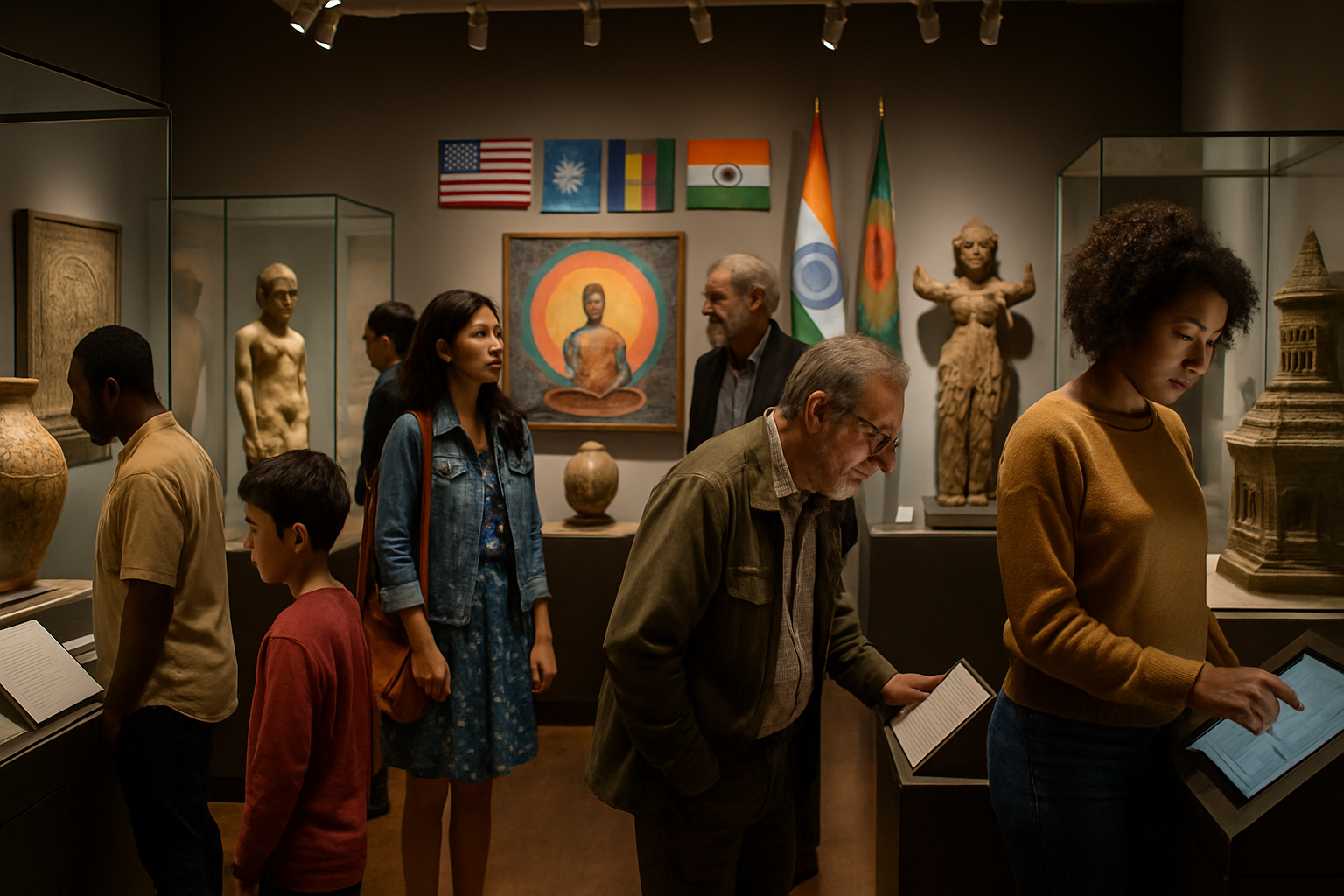
Museums, cultural institutions, and artists across six nations are simultaneously launching groundbreaking exhibitions and preservation projects, marking what cultural experts describe as the most coordinated international heritage renaissance since the post-war reconstruction era.
From Azerbaijan's innovative digital architecture initiatives to Romania's dramatic recovery of stolen ancient artifacts, the convergence of cultural activities spanning April 3-4, 2026, represents an unprecedented global commitment to preserving and celebrating human heritage through cutting-edge technology and international collaboration.
Azerbaijan Leads Digital Heritage Revolution
Azerbaijan's Cultural Ministry has positioned the nation at the forefront of the global renaissance through multiple simultaneous initiatives. The Scientific, Methodological and Qualification Center for Culture (MEMİM) continues its nationwide master class series, bringing professional musicians directly to regional communities in an effort to democratize cultural education.
Most significantly, the Jafar Jabbarli Republican Youth Library has launched an ambitious digital project documenting the country's architectural heritage as part of Azerbaijan's "Year of Urban Planning and Architecture" declaration. This innovative approach combines traditional preservation methods with cutting-edge digital documentation, creating accessible archives that serve both local communities and international scholars.
"Azerbaijan has placed increasing emphasis on culture as a strategic pillar of national development," according to official statements from the Cultural Ministry.
— Azerbaijan Ministry of Culture
The country's regional touring programs demonstrate a sophisticated understanding of culture as essential infrastructure, extending beyond elite urban centers to serve rural communities traditionally excluded from major cultural programming.
European Renaissance: Recovery and Innovation
Europe has emerged as a second major hub of activity, with Greece and Romania offering contrasting but complementary approaches to cultural preservation. Greek cultural institutions have focused on leveraging their classical heritage through modern presentation techniques, while Romania has achieved a dramatic breakthrough in heritage recovery.
The recovery of Romania's Coiful de la Coțofenești represents one of the most significant cultural heritage victories of 2026. The ancient helmet, dating from the 1st-4th centuries BCE and considered one of Romania's greatest treasures, was stolen from the Drents Museum in Assen, Netherlands, in January 2025.
The recovery operation, conducted in collaboration with a private detective known as the "Indiana Jones of the art world," demonstrates the growing sophistication of international heritage protection networks. The detective's philosophy—"I don't do this for money, but for stories"—embodies the passionate commitment driving the global preservation movement.
Portugal's Cinematic Innovation
Portugal has contributed to the renaissance through its innovative "Oneiric Cinema Cycle," exploring themes of identity construction through carefully curated film programming. The inaugural presentation of "Poor Things" represents a thoughtful approach to using contemporary media for cultural dialogue and philosophical exploration.
This initiative reflects the broader trend toward interdisciplinary cultural programming, where traditional boundaries between high art, popular culture, and educational content dissolve in favor of meaningful community engagement.
Technology as Cultural Bridge
The 2026 renaissance distinguishes itself through sophisticated technology integration that enhances rather than replaces human cultural connections. Azerbaijan's digital architecture documentation, Romania's international recovery networks, and Portugal's multimedia programming demonstrate how technological innovation can preserve authenticity while expanding global accessibility.
This approach contrasts sharply with earlier digitization efforts that often treated technology as a replacement for physical cultural experiences. Instead, 2026 initiatives use digital tools to amplify authentic cultural expression, create permanent documentation for future generations, and facilitate international cooperation among institutions that previously competed for resources and attention.
International Cooperation Networks
The coordination evident across these initiatives suggests the emergence of sophisticated international cooperation networks that transcend traditional diplomatic and economic relationships. The recovery of Romanian artifacts through Netherlands-based institutions, Azerbaijan's integration of European Union cultural programming, and Portugal's international film collaborations indicate a maturing understanding of culture as shared global patrimony requiring collective stewardship.
These networks have proven particularly effective in addressing contemporary challenges including climate change threats to historical sites, economic pressures affecting youth participation in traditional arts, and digital entertainment competition that diverts attention from cultural heritage.
Economic and Social Impact
The renaissance generates substantial economic multiplier effects beyond immediate tourism revenue. Cultural institutions report increased employment in creative industries, enhanced international media attention, and strengthened diplomatic relationships that facilitate broader economic cooperation.
More significantly, the initiatives demonstrate culture's role as essential infrastructure equivalent to transportation, communication, and healthcare systems. Communities investing in authentic cultural programming report competitive advantages in international relationships, enhanced social cohesion, and greater resilience during economic and social challenges.
Community-Centered Approach
Unlike previous cultural movements that emphasized elite consumption or institutional prestige, the 2026 renaissance prioritizes community engagement and authentic local expression. Azerbaijan's regional touring programs, Romania's emphasis on returning stolen heritage to its source communities, and Portugal's accessible cinema programming all reflect this fundamental shift toward democratic cultural participation.
This community-centered approach addresses one of the major criticisms of traditional cultural institutions: their tendency to serve narrow demographics while excluding the broader communities whose taxes support their operations. The 2026 model demonstrates how institutions can maintain artistic excellence while serving diverse community needs and fostering inclusive participation.
Global Significance and Future Implications
The simultaneous emergence of these initiatives across multiple continents suggests a coordinated international recognition of culture's fundamental importance for human flourishing and international cooperation. The success factors identified—technology enhancement rather than replacement, community engagement over institutional control, international cooperation respecting local authenticity—provide templates for future cultural development worldwide.
Climate change urgency has accelerated many preservation efforts, as institutions recognize that traditional outdoor practices and historic buildings face unprecedented environmental threats. The digital documentation emphasis ensures that cultural knowledge survives even if physical artifacts face damage or destruction.
The renaissance also represents a maturation in global cultural understanding, where authentic local expression gains international appreciation while maintaining distinctive characteristics. This balance between global connectivity and local authenticity offers hope for preserving cultural diversity in an increasingly interconnected world.
Looking Forward
The convergence of these cultural initiatives in early April 2026 appears to mark a watershed moment in international cultural cooperation. The combination of technological innovation, community engagement, international collaboration, and authentic artistic expression provides a sustainable model for cultural development that serves both local communities and global understanding.
As these initiatives continue to develop throughout 2026, they offer evidence that humanity's capacity for cultural resilience and creative adaptation can address contemporary challenges while honoring past achievements and building foundations for future possibilities. The success of this global renaissance may well determine how effectively human societies preserve and share their cultural treasures in the decades ahead.