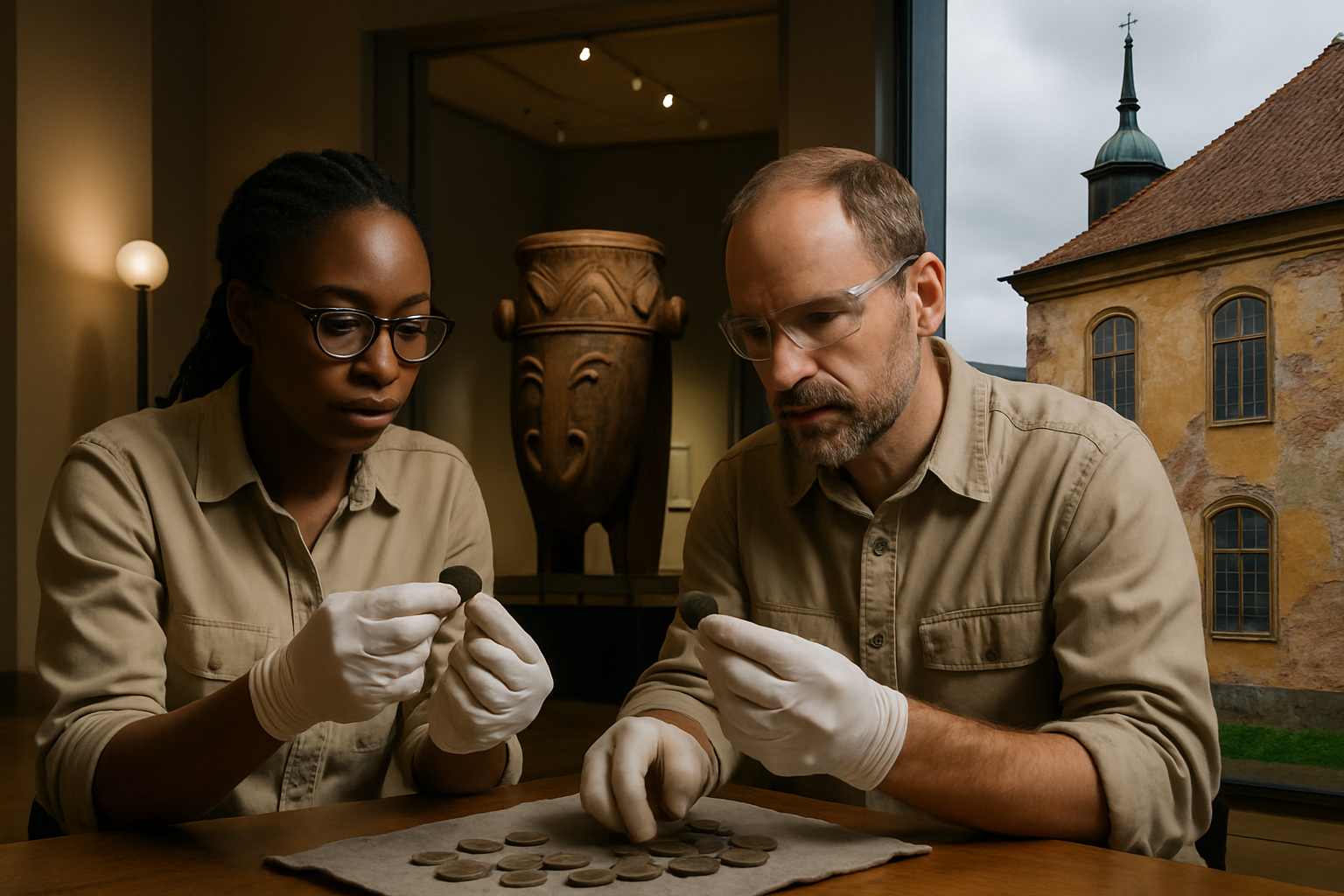
A remarkable week in cultural heritage preservation has seen both triumph and crisis, as authorities across three continents battle to protect humanity's shared cultural legacy from threats ranging from illicit trafficking to accelerating climate change.
From the recovery of priceless Roman coins in Algeria to the historic return of sacred artifacts to Ivory Coast, February 2026 has witnessed extraordinary efforts to safeguard cultural treasures. Yet these victories unfold against the sobering backdrop of Sweden's deteriorating world heritage sites, where climate change is literally washing away centuries of human achievement.
Algeria's Archaeological Breakthrough
The Algerian Ministry of Culture and Arts announced the discovery and seizure of a remarkable monetary treasure containing approximately 10,200 bronze coins dating to the Roman period, specifically the fourth century AD. The cache represents one of the most significant archaeological finds in North Africa in recent years.
According to the ministry's statement, preliminary analysis indicates these coins provide invaluable insights into the economic and cultural exchanges that characterized Roman Algeria during a pivotal period of imperial expansion. Three additional cultural artifacts were also recovered and are currently undergoing scientific analysis and identification.
This security operation reflects Algeria's comprehensive national policy aimed at protecting cultural property from all forms of trafficking and illegal commerce. The discovery demonstrates the country's vigilance in safeguarding its archaeological heritage while contributing to global understanding of Roman civilization in North Africa.
Historic Restitution in Paris
In a ceremony of profound cultural significance, France officially returned the Djidji Ayôkwé, the sacred talking drum of the Ébrié people, to Ivory Coast at the Musée du Quai Branly - Jacques Chirac on February 20, 2026. The drum had been confiscated during the colonial period and held in French collections for over a century.
The transfer document was signed by the French Minister of Culture, marking a major milestone in the ongoing global movement toward cultural restitution. The Djidji Ayôkwé holds immense spiritual and cultural importance for the Ébrié people, serving not merely as a musical instrument but as a vessel for ancestral communication and community identity.
This restitution represents part of a broader international effort to address the colonial-era seizure of African cultural artifacts. Museums worldwide are increasingly recognizing their responsibility to return objects taken without consent, acknowledging that true cultural preservation requires respecting the rights and dignity of source communities.
"These artifacts are not simply museum pieces—they are living connections to our ancestors and our cultural identity."
— Cultural Heritage Expert
Sweden's Climate Crisis
While celebrating these preservation successes, the international community faces sobering evidence of climate change's accelerating impact on cultural heritage. Swedish world heritage sites are experiencing unprecedented deterioration as extreme weather events intensify across Scandinavia.
Swedish authorities report that several UNESCO World Heritage sites are suffering from increased moisture, temperature fluctuations, and severe weather events that are causing irreversible damage to historic structures. Ancient buildings are experiencing accelerated decay, with traditional construction materials proving inadequate against increasingly extreme environmental conditions.
The crisis extends beyond individual monuments to encompass entire historic landscapes. Rising sea levels, increased precipitation, and temperature extremes are fundamentally altering the environmental conditions that have preserved these sites for centuries. Emergency conservation efforts are underway, but experts warn that current preservation methods may prove insufficient against the pace of climate change.
The Technology-Tradition Balance
Modern preservation efforts increasingly rely on sophisticated technology to document, analyze, and protect cultural heritage. Advanced chemical analysis enabled Algerian authorities to precisely date their Roman coin discovery, while digital documentation systems are being employed globally to create permanent records of artifacts at risk from climate change.
However, experts emphasize that technology must enhance rather than replace traditional preservation knowledge. Indigenous communities and local populations often possess centuries of accumulated wisdom about maintaining cultural sites and artifacts in their specific environmental contexts.

International Cooperation Framework
The week's developments underscore the critical importance of international cooperation in cultural heritage preservation. Algeria's success in recovering stolen artifacts demonstrates the effectiveness of coordinated law enforcement efforts, while France's restitution to Ivory Coast shows how diplomatic engagement can address historical injustices.
UNESCO and other international organizations are working to establish comprehensive frameworks for protecting cultural heritage from multiple threats. These efforts include developing rapid response protocols for heritage sites threatened by climate disasters, creating international databases to track stolen artifacts, and facilitating voluntary repatriation programs.
The global nature of these challenges requires collaborative solutions that transcend national boundaries. Climate change, illicit trafficking, and cultural preservation all demand coordinated international responses that respect local sovereignty while leveraging global expertise and resources.
Economic Dimensions
Cultural heritage preservation represents a significant economic sector, generating employment for archaeologists, conservators, museum professionals, and tourism workers. The recovery of Algeria's Roman coins will likely attract international scholarly attention and tourism interest, providing economic benefits alongside cultural value.
However, the costs of addressing climate threats to heritage sites are enormous. Sweden's efforts to protect its world heritage sites require substantial investment in new conservation technologies, climate-controlled storage facilities, and emergency response capabilities. The international community is grappling with how to finance adequate protection for the world's cultural treasures.
Cultural tourism, while providing crucial funding for preservation efforts, must be carefully managed to avoid contributing to site degradation. Sustainable tourism models that balance access with protection are becoming increasingly important as heritage sites face mounting pressures from both climate change and visitor impact.
Future Challenges
The contrasting fortunes of cultural heritage this week—successful recoveries alongside climate-driven deterioration—highlight the complex challenges facing preservation efforts in the 21st century. Success requires addressing multiple simultaneous threats while maintaining the authentic character and community connections that give cultural heritage its meaning.
Experts identify several critical priorities for future preservation efforts: developing climate-resilient conservation methods, strengthening international cooperation against trafficking, ensuring community involvement in preservation decisions, and creating sustainable financing mechanisms that support long-term stewardship rather than short-term interventions.
The integration of traditional knowledge with modern technology offers promising pathways for more effective preservation. Communities that have maintained cultural practices for generations often possess insights that complement scientific analysis, creating more comprehensive and culturally appropriate preservation strategies.
A Call for Urgent Action
As February 2026 draws to a close, the week's events serve as both inspiration and warning for the global cultural heritage community. The successful recovery of artifacts in Algeria and the dignified restitution to Ivory Coast demonstrate humanity's capacity for protecting and honoring cultural treasures.
Yet Sweden's deteriorating heritage sites provide stark evidence that current preservation efforts may be insufficient against accelerating environmental threats. The international community faces an urgent choice: dramatically increase investment in cultural heritage protection or risk losing irreplaceable elements of human civilization to climate change and human destruction.
The stakes extend far beyond individual artifacts or monuments. Cultural heritage provides communities with identity, continuity, and meaning across generations. Its loss impoverishes not just specific populations but all humanity, reducing the diversity and richness of human experience available to future generations.
The preservation of cultural heritage represents one of the defining challenges of our time, requiring unprecedented cooperation, innovation, and commitment from the global community. The events of this week demonstrate both the urgency of this challenge and the remarkable human capacity to rise to meet it when communities, nations, and international organizations work together with shared purpose and mutual respect.