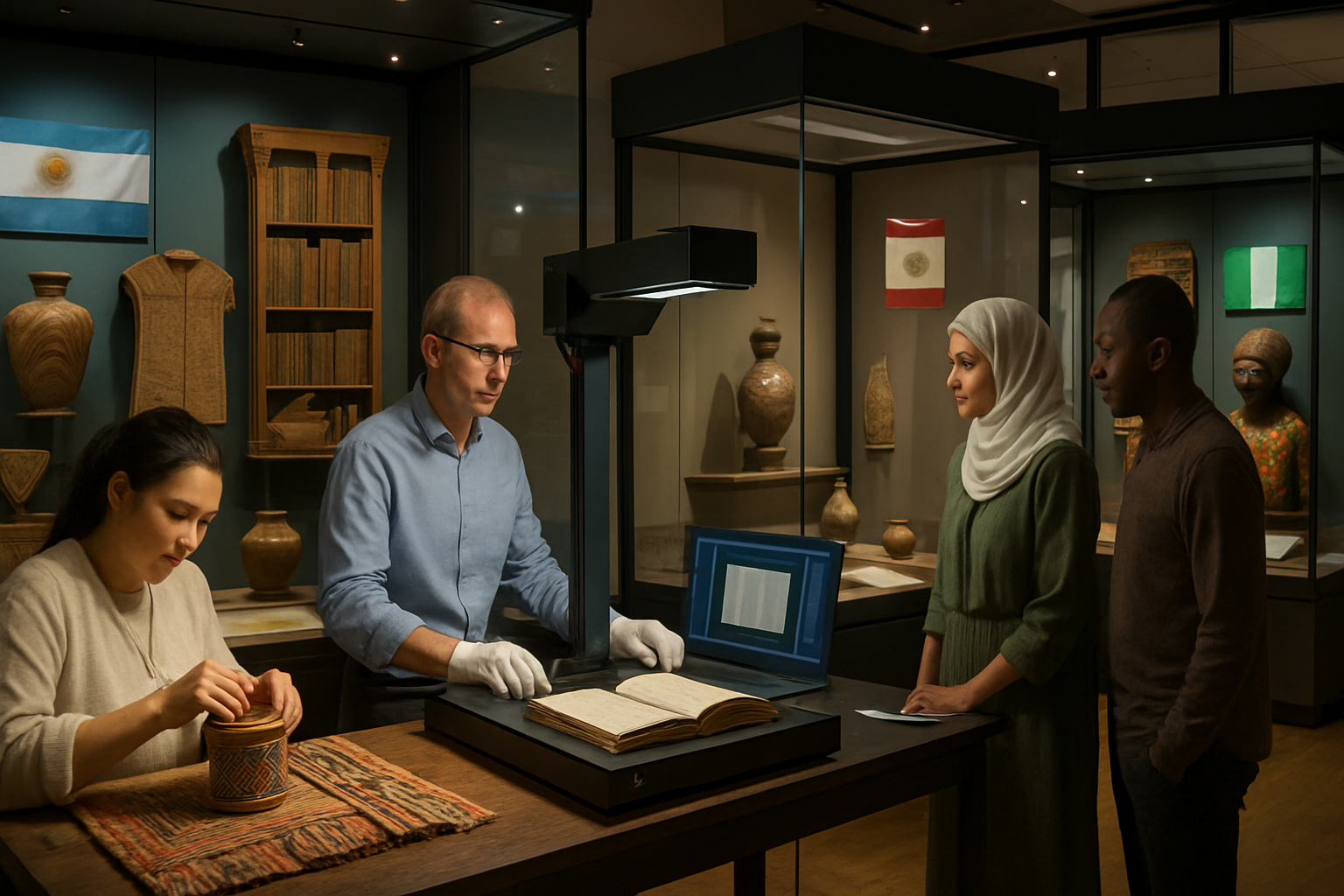
Cultural heritage preservation efforts are experiencing an unprecedented global renaissance in February 2026, with initiatives spanning from Argentina's controversial San Martín saber relocation to Nigeria's push for heritage site recognition, reflecting a coordinated international commitment to safeguarding cultural identity while adapting to contemporary challenges.
The latest developments across four continents demonstrate how nations are reimagining cultural preservation strategies, balancing traditional stewardship with innovative approaches to ensure heritage accessibility and protection for future generations. These initiatives, occurring simultaneously across Argentina, Finland, Lebanon, and Nigeria, reveal both the universal importance of cultural identity and the diverse methods countries employ to preserve their heritage.
Argentina's Cultural Heritage Controversy
Argentina's approach to cultural preservation has sparked significant debate following the government's decision to relocate General José de San Martín's historic curved saber from public museum display to military custody. The emblematic weapon of El Libertador has returned to public exhibition in Buenos Aires with free admission, but the transfer has raised questions about democratic oversight of cultural patrimony.
The saber, acquired by San Martín in London before his independence campaigns and donated to the state in 1897, now resides at the Grenadiers Regiment headquarters in Palermo following Decree 81/2026. While government officials cite enhanced preservation and security under direct military guard, critics argue this removes public access and questions the balance between historical significance and political symbolism.
"The transfer reflects tensions over cultural heritage management versus political symbolism under current reform policies."
— La Nación Editorial Board
This controversy exemplifies broader global challenges in cultural preservation: how to maintain accessibility while ensuring security, and how to balance historical stewardship with contemporary political considerations. Argentina's experience provides insights into the complex negotiations required when cultural artifacts hold both historical and symbolic value.
Finland's Revolutionary Library Activism
In stark contrast to Argentina's institutional approach, Finland has witnessed an innovative grassroots movement combining art, activism, and cultural preservation. Artist Riiko Sakkinen executed a unique public intervention by hiding 1,000 euros in cash throughout Oulu's Saari Library, creating what he terms a "wake-up call" for libraries and books.
Sakkinen's unconventional approach highlights the critical role libraries play in cultural preservation and community education. By literally investing money in library spaces, the artist drew attention to funding challenges facing cultural institutions while demonstrating creative ways to engage public support for traditional knowledge preservation.
This intervention reflects broader Nordic approaches to cultural preservation that emphasize community engagement and innovative programming. Finland's cultural policy increasingly embraces technology-tradition synthesis, as evidenced by previous initiatives including the €90 million Fuuga hall project in Turku, which allocates 50% of programming to non-classical content while maintaining cultural authenticity.
Lebanon's Living Heritage Traditions
Lebanon's contribution to global cultural preservation focuses on the living traditions of the Maronite community, described as "guardians of unique traditions anchored in faith." This approach represents a crucial aspect of heritage preservation: maintaining cultural practices as living, evolving traditions rather than static museum pieces.
The Maronites' preservation efforts demonstrate how religious and cultural communities can serve as stewards of intangible heritage. Their traditions encompass language, ritual practices, architectural styles, and community organization methods that have been maintained for centuries while adapting to contemporary contexts.
Lebanon's model illustrates the importance of community-based preservation, where cultural heritage is maintained through daily practice and intergenerational transmission rather than solely through institutional protection. This living heritage approach has proven particularly resilient during periods of political instability and economic challenge.
Nigeria's Heritage Site Recognition Campaign
Nigeria's cultural preservation efforts have gained significant momentum through former President Olusegun Obasanjo's advocacy for recognizing key historical sites, particularly the Iwe Iroyin House, as official heritage sites. This campaign represents a strategic approach to heritage preservation that combines tourism development with historical education.
Obasanjo's initiative emphasizes the economic potential of heritage preservation, arguing that official recognition would boost tourism while preserving crucial aspects of Nigerian history. The Iwe Iroyin House, representing the birthplace of Yoruba journalism, exemplifies how specific historical sites can serve as focal points for broader cultural preservation efforts.
This approach reflects Nigeria's broader strategy of positioning cultural heritage as economic infrastructure. By linking preservation to tourism revenue and educational opportunities, Nigeria demonstrates how heritage conservation can generate sustainable funding while serving community development objectives.
Global Context and Coordination
These four initiatives occur within a documented "February 2026 Cultural Renaissance" that includes coordinated preservation efforts across multiple continents. Recent memory analysis reveals similar initiatives spanning Qatar's Afghan heritage exhibition, Rwanda's creative innovation hub, and comprehensive European programs integrating traditional and digital preservation methods.
The coordination suggests an emerging global framework for cultural preservation that emphasizes several key principles: technology enhancement rather than replacement of traditional methods, international cooperation for resource sharing, community engagement with traditional knowledge bearers, and economic viability through cultural tourism and education.
Successful preservation efforts demonstrate synthesis between institutional support, technological innovation, international collaboration, and authentic local expression. Countries positioning culture as strategic infrastructure gain competitive advantages while maintaining cultural authenticity and community ownership.
Challenges and Innovations
Contemporary cultural preservation faces multiple challenges including climate change threats to physical artifacts and outdoor practices, economic pressures making traditions less viable for youth participation, and digital competition for attention. However, innovative solutions are emerging across all four regions examined.
Technology serves as an amplification tool rather than replacement, enabling global sharing while preserving community ownership. Digital documentation, virtual reality access, and social media engagement create new pathways for cultural transmission without compromising traditional practices.
International cooperation provides crucial resources for smaller cultural communities while maintaining local authenticity. The exchange of preservation methodologies, funding mechanisms, and educational approaches strengthens global cultural resilience without homogenization.
Economic and Social Impact
Cultural preservation initiatives demonstrate significant economic multiplier effects through tourism development, employment creation, and international cooperation revenue. Countries successfully integrating heritage preservation with economic development report improved community resilience and enhanced international standing.
Social benefits include strengthened community identity, intergenerational knowledge transmission, and enhanced educational opportunities. Cultural preservation serves as a foundation for community cohesion during periods of rapid social change and economic uncertainty.
The successful integration of traditional and contemporary approaches creates sustainable models that serve both preservation and development objectives, providing templates for other regions facing similar challenges.
Future Implications
The February 2026 cultural preservation renaissance establishes important precedents for 21st-century heritage stewardship. Success factors identified across all four regions include sustained political commitment, adequate resource allocation, community engagement strategies, international cooperation, and balanced approaches between preservation and accessibility.
These initiatives suggest that effective cultural preservation requires adaptive strategies that respect traditional practices while embracing technological and methodological innovations. The coordination between diverse global efforts indicates emerging international consensus on heritage preservation principles and best practices.
As climate change, urbanization, and globalization continue to challenge traditional cultural practices, the models demonstrated by Argentina, Finland, Lebanon, and Nigeria provide valuable frameworks for sustainable heritage preservation that serves both historical stewardship and contemporary community needs.