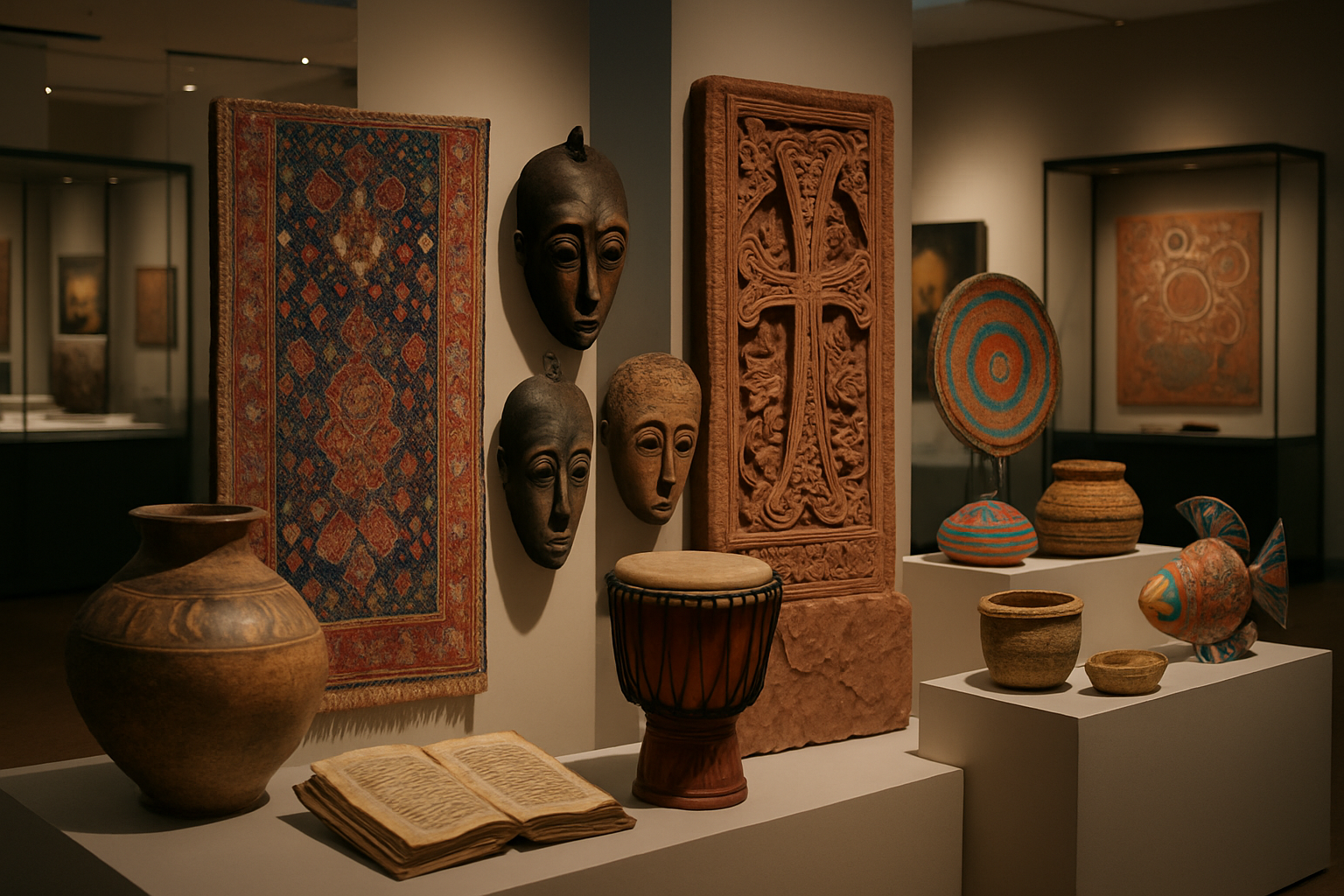
A remarkable surge of cultural heritage preservation initiatives has emerged across six continents in early February 2026, demonstrating an unprecedented global commitment to safeguarding traditional arts, historical memory, and community identity through innovative platforms and collaborative efforts.
From the ancient kingdoms of Nigeria to the contemporary art galleries of Dominica, communities worldwide are actively engaged in preserving, celebrating, and transmitting their cultural legacies to new generations through theater, academic research, digital media, and artistic expression.
Nigeria's Theatrical Renaissance: Reviving Ancient Oyo Empire
In Nigeria, playwright Dotun Olufokunbi's new production "The Return" represents a significant contribution to African cultural preservation through dramatic arts. The play explores the ancient Oyo Empire traditions surrounding kingship, succession, and political ambition, offering contemporary audiences insight into pre-colonial African governance systems and cultural values.
The Oyo Empire, which flourished from the 15th to the 19th centuries, was one of West Africa's most powerful kingdoms, known for its sophisticated political structure, military prowess, and rich cultural traditions. Olufokunbi's work serves as both entertainment and education, ensuring that younger generations understand their ancestral heritage through accessible theatrical performance.
"Theater becomes a living archive when it brings historical narratives to contemporary stages, allowing communities to engage with their past in meaningful ways."
— Cultural Heritage Specialist, analyzing African dramatic traditions
Armenia's Academic Commitment to Historical Memory
The Armenian Genocide Museum-Institute (AGMI) has released Volume 10, Issue 2 of the International Journal of Armenian Genocide Studies (IJAGS), a special issue titled "Law, Activism and the International Recognition of the Armenian Genocide." Guest-edited by Julien Zarifian from the University of Poitiers and Edita Gzoyan, the publication addresses the intersection of international law, memory politics, activism, and education.
Despite overwhelming historical and archival evidence, the journal examines why international recognition of the Armenian Genocide remains uneven globally. The academic initiative represents a crucial effort in preserving historical memory and combating state-sponsored denial through rigorous scholarship and documentation.
This publication comes at a critical time when historical truth and cultural memory face increasing challenges from political revisionism. The journal's work ensures that Armenian heritage and the lessons of the genocide remain accessible to scholars, policymakers, and educators worldwide.
Australia: Digital Arts Meet Traditional Culture
Australia showcases cultural preservation through multiple innovative approaches. Orchestra Victoria will perform the Hollow Knight: Silksong video game soundtrack live at the Australian Centre for the Moving Image (ACMI) in February, representing a unique fusion of contemporary digital art and traditional orchestral performance.
This groundbreaking event demonstrates how modern cultural expressions, including video game music, can achieve artistic legitimacy through classical interpretation. The performance highlights Australia's commitment to recognizing diverse forms of cultural creativity while maintaining traditional musical institutions.
Meanwhile, Melbourne's Southbank district welcomed Tatik's Delights, potentially the city's first Armenian bakery, transitioning from online orders to a physical establishment. This development represents the tangible preservation of Armenian culinary traditions within Australia's multicultural landscape, allowing immigrant communities to maintain their cultural identity while contributing to the broader Australian food culture.
Caribbean Artistic Renaissance: Dominica and St. Vincent
The Caribbean region demonstrates remarkable cultural vitality through both established and emerging artistic platforms. In Dominica, the Fort Young Hotel Art Gallery launched "Catharsis – The Blues," a powerful exhibition by Dominican artist Pauline Marcelle, running from February 5 to April 30, 2026.
Marcelle's work explores blue as both an emotional and elemental force, creating a visual meditation on mourning, renewal, and the relationship between humanity, memory, and environmental healing. The exhibition at the Old Oven Art Gallery represents Dominica's growing recognition as a Caribbean cultural hub, providing local artists with professional platforms to explore complex themes of identity and place.
In St. Vincent and the Grenadines, the Ju-C Primary Schools Performing Arts Festival (PRISPAF) 2026 was officially launched at the Peace Memorial Hall in Kingstown. This initiative, supported by the Department of Culture, highlights Vincentian cultural traditions while providing young talent across the nation with performance opportunities.
PRISPAF represents a crucial investment in cultural continuity, ensuring that traditional Vincentian performing arts, music, and storytelling traditions transfer to younger generations through structured educational programming.
Zimbabwe's Community Radio Revolution
Zimbabwe's approach to cultural preservation emphasizes grassroots media accessibility through community radio stations. According to government officials, the licensing of community radio represents the Second Republic's policy of "leaving no one and no place behind," ensuring that local communities can preserve and share their cultural traditions through indigenous broadcasting.
Community radio stations serve as vital cultural preservation tools, allowing local languages, traditional music, oral histories, and community knowledge to reach audiences who might otherwise lose connection to their heritage. This initiative recognizes radio's unique power to maintain cultural identity in rural and underserved areas where other media may be inaccessible.
"Community radio becomes the voice of local culture, preserving languages and traditions that might otherwise disappear in an increasingly globalized world."
— Zimbabwe Information Ministry Official
Global Trends in Cultural Preservation
These diverse initiatives reveal several significant trends in contemporary cultural heritage preservation. First, communities are increasingly recognizing the importance of multiple preservation methods – from traditional theater and academic research to digital media and culinary traditions.
Second, there's a growing emphasis on making cultural heritage accessible to younger generations through educational programming, whether through school-based performing arts festivals or interactive museum exhibitions.
Third, immigrant and diaspora communities are playing crucial roles in preserving their cultural traditions in new geographic contexts, as demonstrated by Armenian cultural initiatives in both Armenia and Australia.
Challenges and Opportunities Ahead
While these initiatives demonstrate remarkable global commitment to cultural preservation, they also highlight ongoing challenges. Political obstacles to historical recognition, limited funding for arts programming, and the need for sustainable institutional support remain significant concerns.
However, the diversity of approaches – from government-supported radio licensing in Zimbabwe to private gallery exhibitions in Dominica – suggests that cultural preservation can succeed through various models when communities commit to maintaining their heritage.
The integration of traditional and contemporary forms, such as Australia's video game orchestral performance, indicates promising future directions for cultural preservation that embrace innovation while respecting tradition.
Looking Forward: A Global Cultural Renaissance
As February 2026 unfolds, these initiatives collectively suggest an emerging global cultural renaissance driven by community commitment rather than institutional mandate. From Nigerian theater exploring pre-colonial governance to Armenian scholars documenting genocide history, from Dominican artists interpreting environmental themes to Vincentian children learning traditional performance, the world's communities are actively shaping their cultural futures.
This grassroots cultural activism, supported by various institutional frameworks, demonstrates that heritage preservation thrives when communities take ownership of their cultural narratives. The success of these diverse initiatives provides a hopeful model for cultural sustainability in an increasingly interconnected world where local identity and global awareness can coexist productively.