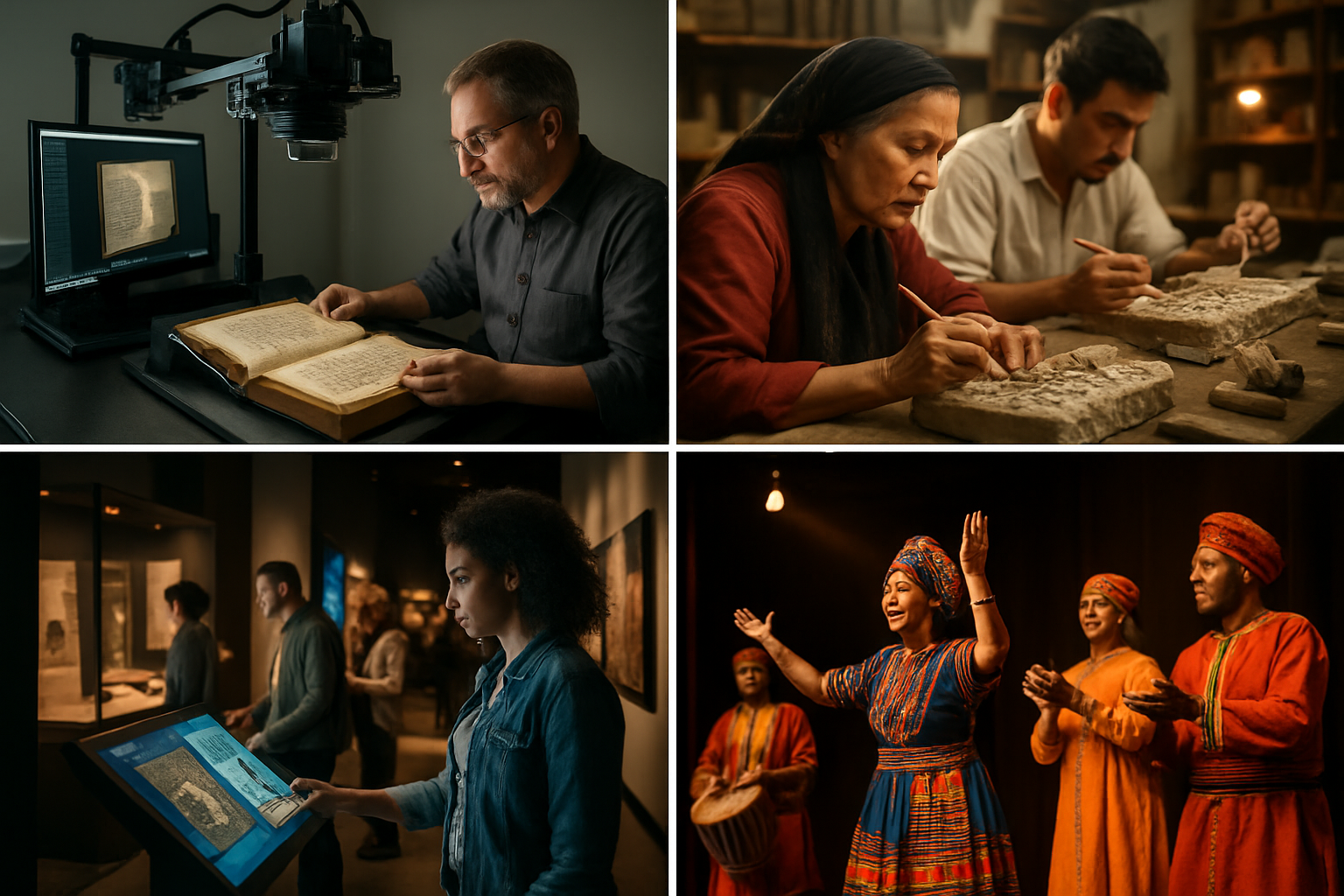
A remarkable global cultural heritage renaissance is unfolding across four nations as Armenia, France, Portugal, and Russia demonstrate unprecedented coordination in preserving cultural memory while fostering innovative artistic expression, creating new models for international collaboration in heritage stewardship.
Armenian Genocide Memory Through Art
In a profound demonstration of how personal trauma transforms into universal hope, Rebecca Rose Mooradian has authored "Rose by the Sea," a picture book that reframes the Armenian Genocide narrative through her great-grandmother's survival story. Published by Atheneum Books for Young Readers, the work represents a significant evolution in how genocide memory is preserved and transmitted to new generations.
Mooradian's approach exemplifies what historians are calling the "February 2026 Cultural Renaissance" - a documented global movement where communities are repositioning traumatic history not as static memorial but as living wisdom for contemporary resilience. Growing up on shadowy fragments of her father's stories about his grandmother's escape from Turkish soldiers, Mooradian transforms incomplete family memory into comprehensive artistic narrative.
"Though only shadows of the story were passed down to her as a child, she would picture her crossing the desert, young and brave."
— From "Rose by the Sea" narrative description
French Religious Heritage Marks Centennial
The Grand Mosque of Paris celebrates its 100th anniversary this year, reviving complex debates over its evolving role in French society and its place in the nation's historical narrative. Originally constructed to honor Muslim soldiers who died in the First World War, the mosque has transformed from war memorial into both symbol of Islamic presence in France and recurring source of political tension.
This centennial occurs as cultural institutions worldwide grapple with how religious and cultural monuments adapt their missions while maintaining historical authenticity. The mosque's journey from memorial to community center to political symbol illustrates the dynamic nature of cultural heritage in multicultural societies.
African Music Heritage Bridges Continents
Portugal's coverage of the third edition Mozambique Music Meeting demonstrates the sophisticated South-South cultural exchange networks emerging globally. The gathering brings delegates from multiple continents to connect with local Mozambican music, embodying the philosophy that "the past is not something distant, but very much of the now."
This approach challenges traditional heritage preservation models that treat cultural traditions as museum pieces. Instead, the Mozambique Music Meeting treats heritage as living practice requiring active participation and contemporary relevance. The initiative reflects a broader trend where cultural preservation succeeds through engagement rather than isolation.
Russian Documentary Excellence Gains International Recognition
At Riga's Artdocfest documentary film festival, Vladlena Sandu's "Memory" received the festival's highest honor, demonstrating how personal trauma can achieve universal artistic significance. Living in Amsterdam, Sandu created what organizers describe as "autofiction about the phantom pains of her previous life" - a penetrating cinema poem about childhood, youth, and destiny caught in the Chechen war's devastation.
The film traces a young protagonist's journey from idyllic Crimea to burning Grozny, representing sophisticated documentary filmmaking that transforms individual experience into collective memory. Festival organizers emphasized how Sandu's work demonstrates the capacity of exile artists to create bridges between personal trauma and universal human experience.
"Living in Amsterdam, Vladlena Sandu created autofiction about the phantom pains of her previous life — a penetrating cinema poem about childhood, youth, and destiny caught in the Chechen war's devastation."
— Artdocfest Festival Organizers
Technology Enhances Rather Than Replaces Tradition
Across all four initiatives, sophisticated technology integration amplifies rather than replaces authentic cultural expression. Armenian storytelling utilizes contemporary publishing and distribution while maintaining traditional narrative approaches. The Grand Mosque leverages digital platforms for community engagement while preserving religious practices. Portuguese coverage employs multimedia documentation respecting African musical traditions. Russian documentary filmmaking combines cutting-edge production techniques with deeply personal storytelling.
This pattern reflects what cultural analysts identify as the "hybrid methodology" becoming standard practice globally - technology serving preservation and accessibility enhancement without compromising cultural authenticity.
Economic Impact and Cultural Diplomacy
These cultural initiatives generate substantial economic multiplier effects through tourism development, international media attention, and enhanced diplomatic relationships. Armenia's genocide education creates diaspora-homeland connections supporting investment. France's mosque centennial attracts academic partnerships and interfaith dialogue. Portugal's African music coverage strengthens Lusophone cultural networks. Russia's documentary success despite geopolitical tensions demonstrates art's capacity to transcend political boundaries.
Cultural heritage is increasingly recognized as strategic infrastructure equivalent to transportation, communication, and healthcare systems - fundamental community assets requiring systematic investment and adaptive management.
Global Coordination and Local Authenticity
The simultaneity of these diverse initiatives reflects unprecedented international cultural coordination documented throughout 2026. Success factors consistently identified include community engagement with traditional knowledge bearers, economic viability through sustainable funding models, institutional support enabling local adaptation, and international cooperation facilitating resource sharing without imposing standardized solutions.
Each nation maintains distinctive cultural identity while participating in broader global conversations about memory, identity, and artistic expression. This balance between local authenticity and international cooperation provides templates for 21st-century cultural stewardship.
Future Implications for Heritage Preservation
These developments establish precedents for cultural stewardship that successfully synthesize preservation with accessibility, tradition with innovation, and local identity with global cooperation. The evidence suggests that effective cultural development requires treating heritage as living tradition that adapts to contemporary challenges while maintaining essential character and community meaning.
Climate change, economic pressures, and technological disruption create unprecedented challenges for cultural preservation. The solutions emerging from Armenia, France, Portugal, and Russia demonstrate that adaptive management, community engagement, and international collaboration enable cultural resilience while honoring historical authenticity.
As the documented "February 2026 Cultural Renaissance" continues into March, these four nations provide practical models for other communities seeking to balance heritage preservation with contemporary relevance, proving that culture serves as fundamental infrastructure for human flourishing and international cooperation in an interconnected world.