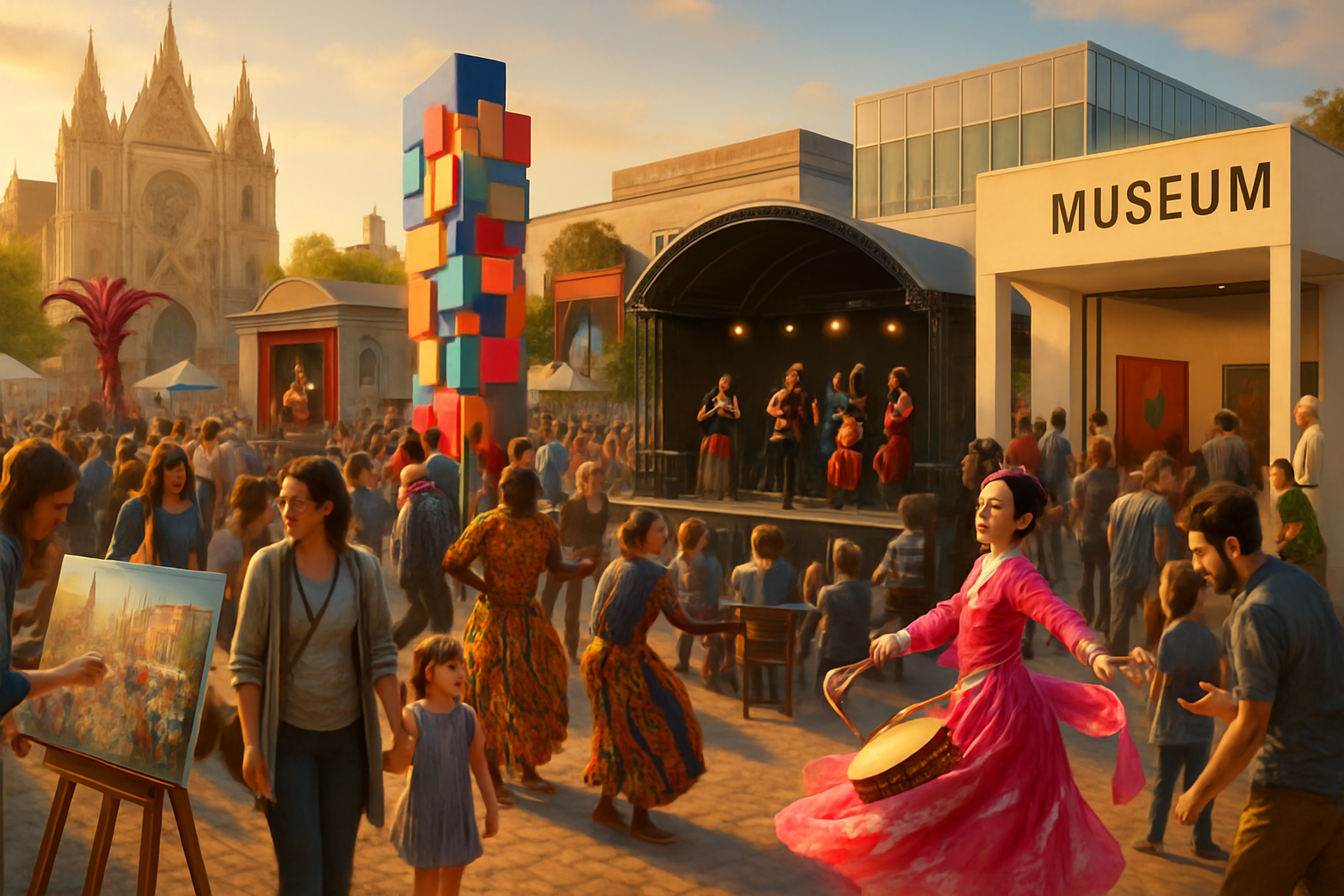
A remarkable convergence of cultural celebrations across four continents demonstrates the continuing momentum of the 2026 global cultural renaissance, with Finland marking a poetry milestone, France undergoing institutional transformation, São Tomé witnessing a musical triumph, and Sweden grappling with heritage preservation challenges.
Finland's Poetic Milestone
The Kajaani Poetry Week (Kajaanin Runoviikko) celebrates its 50th anniversary this year, marking a significant milestone in Nordic cultural heritage. The festival, which has been a cornerstone of Finnish literary life since its inception, represents the enduring power of poetry to unite communities across generations.
In a symbolic transition, acclaimed actress Kati Outinen is stepping down from her role as artistic director to return to the audience, embodying the democratic spirit that has characterized the festival's evolution. This change reflects the broader transformation occurring in cultural institutions worldwide, where traditional hierarchies give way to more inclusive, community-centered approaches.
The festival's programming for this landmark year combines traditional events with innovative new formats, demonstrating how cultural institutions successfully adapt to contemporary challenges while preserving their essential character. This balance has become a hallmark of the 2026 cultural renaissance, where technology enhances rather than replaces authentic artistic expression.
France's Cultural Institutional Revolution
At La Villette in Paris, a profound transformation is underway under the leadership of Claire Landais, who has taken the helm of this cultural institution with an ambitious vision. Landais, formerly of the Prime Minister's office at Matignon, brings a clear mandate to "open wide the doors of a park in full ecological and social transformation."
Her appointment represents a broader trend in European cultural policy, where institutions are reimagining their role as essential community infrastructure rather than elite cultural consumption centers. "To overcome crises, culture is indispensable, nature is also," Landais stated, articulating a philosophy that positions culture as fundamental to societal resilience.
This approach aligns with successful cultural initiatives documented across Europe throughout 2026, where communities have recognized culture as strategic infrastructure equivalent to transportation, healthcare, and communication systems. The economic multiplier effects of such programming extend far beyond immediate attendance figures, generating tourism revenue, creative industry employment, and enhanced international relationships.
Musical Triumph at Stade de France
Fally Ipupa's celebration of 20 years in solo career reaches its pinnacle with a historic two-day performance at the Stade de France on May 2 and 3. The Congolese artist's achievement in securing one of Europe's most prestigious venues represents a breakthrough for African music on the global stage.
"This is a historic moment for African music and for everyone who believes in the power of authentic cultural expression to transcend boundaries."
— Cultural Industry Observer
The release of his eighth studio album "XX" coincides with these milestone performances, demonstrating the strategic integration of recording industry milestones with live cultural celebration. This approach has become characteristic of successful artists in 2026, who leverage major career moments to create lasting cultural impact rather than purely commercial gain.
The Stade de France performances represent more than individual artistic achievement; they symbolize the growing recognition of African cultural contributions to the global artistic landscape. This cultural diplomacy through music has proven particularly effective in building bridges between communities and nations.
Sweden's Heritage Preservation Challenge
Sweden faces a critical debate over cultural heritage preservation as government plans to sell cultural properties spark intense public discussion. Debaters argue that "control over cultural heritage is a cornerstone of sustainable social development and cannot be recreated if destroyed."
The controversy highlights fundamental questions about the relationship between economic pressures and cultural preservation that countries worldwide are addressing. The Swedish case has become emblematic of broader challenges facing cultural institutions in balancing financial sustainability with heritage stewardship responsibilities.
Cultural preservation advocates argue that short-term economic gains from property sales pale in comparison to the long-term value of maintaining cultural infrastructure. This debate reflects similar discussions occurring globally as communities grapple with the competing demands of immediate economic pressures and long-term cultural investment.
Global Patterns of Cultural Renaissance
These four developments exemplify key characteristics of the 2026 global cultural renaissance: community engagement taking priority over elite consumption, technology serving as an enhancement tool rather than replacement for authentic experience, international cooperation enabling resource sharing while maintaining local distinctiveness, and economic viability achieved through sustainable cultural tourism and educational partnerships.
The success factors identified across these initiatives include authentic representation, community leadership, strategic technology integration, and climate adaptation strategies. Nations investing in such comprehensive cultural programming consistently report competitive advantages in international relationships, community development, and economic resilience.

Economic and Diplomatic Impact
The economic significance of these cultural initiatives extends far beyond immediate programming costs. Finland's Poetry Week generates substantial tourism revenue for Kajaani while positioning the nation as a literary destination. France's La Villette transformation creates lasting infrastructure supporting year-round cultural and educational programming. São Tomé's connection to Fally Ipupa's success enhances the nation's cultural profile internationally.
Cultural diplomacy has emerged as a sophisticated tool for international relationship building. These initiatives create lasting partnerships through shared programming, coordinated marketing, joint educational initiatives, and collaborative funding that enables impact impossible through isolated efforts.
Technology and Tradition Synthesis
A sophisticated pattern has emerged across 2026 cultural initiatives where digital tools amplify rather than replace traditional cultural forms. Advanced documentation and communication technologies enable global sharing of local celebrations while maintaining community ownership and authentic spiritual significance.
This synthesis represents a mature evolution from earlier concerns that digitization would diminish cultural authenticity. Instead, thoughtful technology integration has proven to extend cultural reach while preserving essential human connections and community significance.
Future Implications
These April 2026 developments establish precedents for 21st-century cultural stewardship that successfully balance heritage preservation with contemporary innovation, local authenticity with global cooperation, and economic viability with cultural integrity.
The template emerging from these diverse contexts provides practical models adaptable to specific cultural and economic circumstances worldwide. Evidence suggests that authentic cultural expression can achieve global appeal while maintaining local significance, creating sustainable models that serve community needs while achieving international recognition.
As communities worldwide continue to recognize culture as essential infrastructure for human flourishing, international understanding, and sustainable development, the lessons from Finland, France, São Tomé, and Sweden offer valuable guidance for thoughtful cultural investment that honors the past while embracing future possibilities.