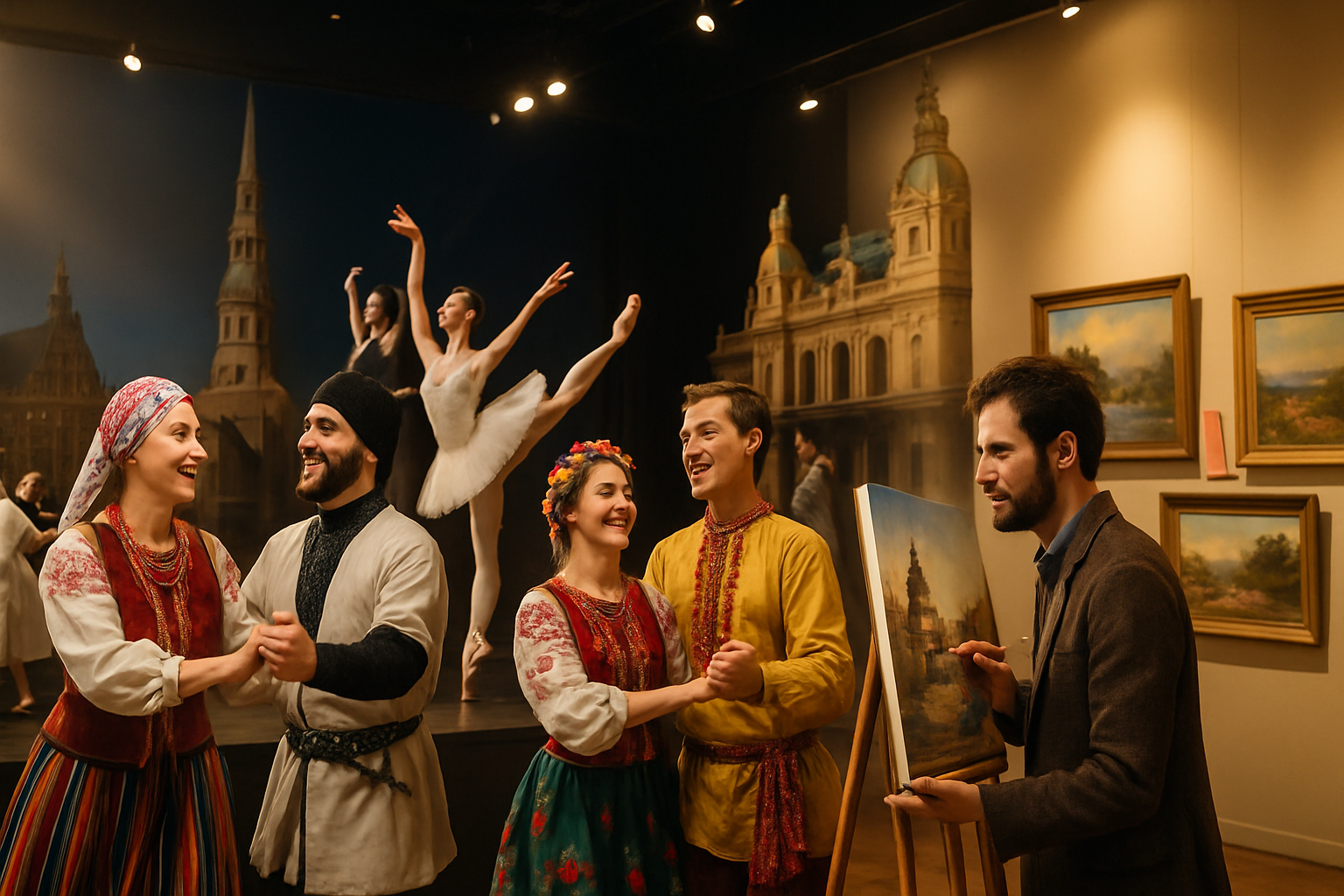
A remarkable convergence of cultural celebrations, museum exhibitions, and artistic performances across six nations has demonstrated the continuing momentum of what historians are now calling the "February 2026 Cultural Renaissance," establishing new precedents for international cooperation in arts and heritage preservation.
Azerbaijan's Cinematic Milestone
The unveiling of Azerbaijan's first comprehensive encyclopaedia of cinema, supported by bp sponsorship, represents a watershed moment for the nation's cultural documentation efforts. This four-volume work, announced simultaneously across multiple Azerbaijani media outlets, chronicles the rich history of Azerbaijani cinematography from its earliest days through contemporary productions.
The project positions Azerbaijan as a significant cultural bridge between Eastern and Western cinematic traditions, building upon the country's strategic location and diverse cultural heritage. Industry experts view this initiative as part of Azerbaijan's broader cultural diplomacy strategy, which has included successful poetry exchanges with Egypt and international artistic collaborations throughout 2026.
"This encyclopaedia represents not just documentation, but a celebration of our cinematic identity and its contribution to world cinema."
— Cultural Ministry Representative, Azerbaijan
France's Medieval Mysteries at the Musée de Cluny
The National Museum of the Middle Ages in Paris has launched an extraordinary exhibition exploring representations of unicorns across cultures and historical periods. "Les licornes de tout poil affluent" presents nearly a century of scholarly research into this mythological creature, drawing from European, Asian, and Middle Eastern traditions.
The exhibition demonstrates France's commitment to making medieval heritage accessible to contemporary audiences while maintaining rigorous academic standards. Visitors can explore how unicorn imagery evolved across different civilizations, from ancient tapestries to modern interpretations, revealing the creature's enduring symbolic power across cultures and centuries.
This initiative continues France's leadership in innovative museum programming, combining traditional scholarship with contemporary presentation techniques to engage diverse audiences with medieval cultural heritage.
Cyprus at Sofia International Film Festival
Cypriot cinema achieved significant international recognition with Myrsini Aristidou's film "Krata Me" (Hold Me) selected for the International Competition section of the 30th Sofia International Film Festival, running from March 12-31, 2026.
The selection represents a major milestone for Cyprus's emerging film industry and demonstrates the island nation's growing cultural influence within European cinema circles. The Sofia Festival, one of Eastern Europe's most prestigious film events, provides an important platform for Cypriot filmmakers to reach international audiences and establish valuable industry connections.
This achievement reflects Cyprus's strategic positioning as a cultural bridge between Mediterranean and European traditions, leveraging its unique historical perspective and contemporary artistic vision to create compelling cinematic narratives that resonate across cultural boundaries.
Monaco's Heritage Innovation Initiatives
Two significant developments in Monaco highlight the principality's sophisticated approach to balancing heritage preservation with contemporary innovation. The Oceanographic Museum hosted a groundbreaking conference exploring the intersection of heritage, environmental awareness, and sporting innovation, organized by the Offroad Club Monaco.
The event brought together experts, athletes, and institutional representatives to examine how traditional heritage values can inform modern approaches to environmental stewardship and athletic excellence. This reflects Monaco's broader strategy of positioning itself as a forward-thinking destination that honors its past while embracing innovative solutions to contemporary challenges.
Simultaneously, the revival of the Espresso Riviera vintage night train service, connecting Marseille to Rome with stops in Monaco, achieved remarkable success with a 92% occupancy rate and over 3,000 passengers during its inaugural season. The expansion to three times as many trips in 2026 demonstrates the strong market demand for cultural tourism experiences that combine luxury travel with heritage appreciation.
Economic and Diplomatic Significance
These cultural initiatives generate substantial economic multiplier effects through tourism development, creative industry employment, and enhanced international recognition. Countries investing in authentic cultural programming are experiencing competitive advantages through improved diplomatic relationships, increased cultural tourism revenue, and strengthened soft power influence.
The success of these diverse initiatives—from academic encyclopaedias to film festivals to heritage transportation—demonstrates that culture serves as essential infrastructure equivalent to transportation, communication, and healthcare systems. Nations are increasingly recognizing cultural investment as fundamental to community development and international competitiveness.
Technology-Tradition Synthesis
A consistent pattern across all March 2026 cultural developments is the sophisticated integration of technology with traditional cultural forms. Digital documentation enables global accessibility while preserving community ownership, social media platforms facilitate international sharing without compromising authenticity, and modern transportation systems revive historical travel experiences with contemporary comfort standards.
This approach represents a mature evolution from earlier debates about technology versus tradition, demonstrating that innovation can enhance rather than replace authentic cultural expression when implemented thoughtfully with community engagement and cultural sensitivity.
International Cooperation Models
The coordination evident across these March initiatives continues the unprecedented international cultural cooperation documented throughout the "February 2026 Cultural Renaissance." Smaller nations are achieving significant global impact through strategic programming, international partnerships, and authentic cultural representation that honors local traditions while engaging global audiences.
Success factors include community leadership in cultural programming, institutional support for sustainable development, economic viability through cultural tourism and educational partnerships, and international cooperation that respects distinctive local identities while fostering global understanding.
Future Implications
March 2026 is establishing precedents for 21st-century cultural stewardship that successfully balance heritage preservation with contemporary innovation, local authenticity with global cooperation, and economic viability with cultural integrity. These developments provide practical templates adaptable to diverse cultural and economic circumstances worldwide.
The evidence suggests that communities investing in authentic cultural programming, supported by thoughtful technology integration and international cooperation, can achieve sustainable development that serves local needs while gaining global recognition. This represents a fundamental shift toward viewing culture as strategic infrastructure rather than optional enhancement.
As the global cultural renaissance continues, March 2026 may be remembered as the moment when international cultural cooperation reached a new level of sophistication, demonstrating humanity's capacity for preserving and sharing cultural treasures while building bridges between communities, nations, and traditions in an increasingly interconnected world.