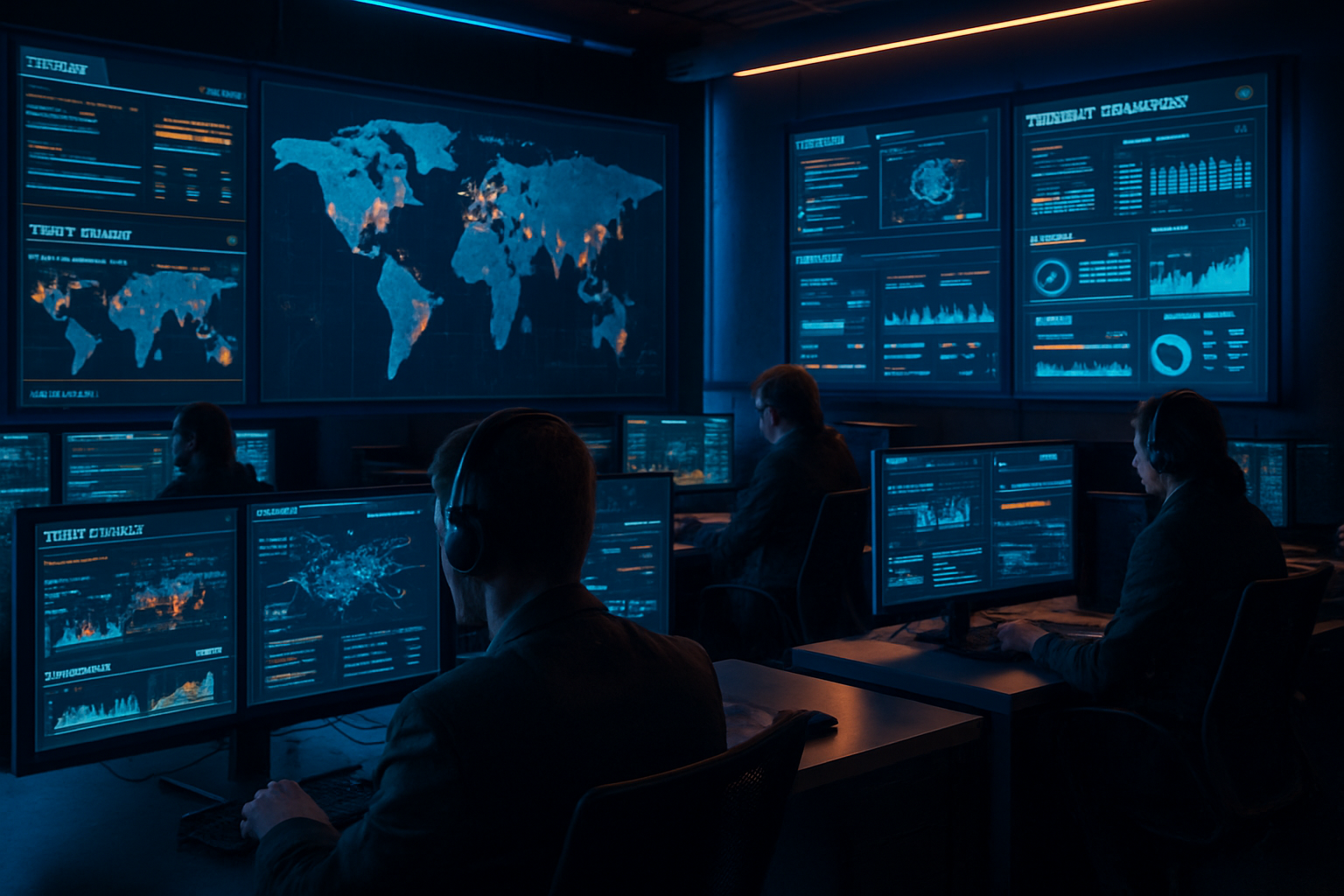
As cybersecurity threats continue to evolve at an unprecedented pace, two new incidents from the Democratic Republic of Congo and Russia highlight the complex challenges facing global digital security efforts in April 2026.
The Democratic Republic of Congo's Collective 24 organized a digital security awareness workshop from April 9-10 in Kinshasa, targeting journalists, experts, and civil society activists. This educational initiative represents part of the broader "Strengthening Transparency and Access for Accountability" project, conducted in hybrid format to enhance capabilities against growing digital risks facing vulnerable communities.
Meanwhile, reports from Russia indicate serious privacy violations involving a Moscow resident who allegedly hacked his mother-in-law's webcam and recorded intimate videos over several years, according to Lenta.ru investigations. This incident underscores the personal dimension of cybersecurity threats that extend beyond organizational attacks to individual privacy violations.
The Global Cybersecurity Crisis Context
These developments occur within an unprecedented global cybersecurity crisis that has been escalating throughout 2026. Historical analysis reveals a systematic pattern of threats that began intensifying in early 2026, with multiple nations reporting dramatic increases in cyber incidents.
Jordan's National Cybersecurity Center documented a 20.6% surge in cyber incidents during Q4 2025, with 1,012 total attacks and 1.8% classified as serious threats to national infrastructure. This surge has continued into 2026, with countries across continents reporting similar escalations.
The Netherlands experienced one of Europe's most significant telecommunications breaches, with the Odido company suffering a cyberattack that exposed personal data of 6.2 million customers—nearly one-third of the Netherlands' population. Cybersecurity experts described the stolen information as a "gold mine" for criminals, including location data, communication patterns, and personal identification details.
Artificial Intelligence Weaponization
Security researchers have documented a fundamental shift in criminal operations, with organized crime networks increasingly leveraging artificial intelligence. Criminals are now instructing AI chatbots to function as "elite hackers," enabling automated vulnerability detection, sophisticated script writing, and coordinated data theft operations.
The European cybersecurity firm ESET discovered "PromptSpy" malware that uses AI algorithms for real-time user behavior analysis, creating customized attack vectors for maximum effectiveness. This represents what experts are calling the "total industrialization of cyber threats," with traditional barriers to entry virtually eliminated through AI assistance.
"Personal data has become the currency of the digital age."
— Maria Christofidou, Cyprus Data Protection Commissioner
Bosnia and Herzegovina faced a staggering 27 million cyber attack attempts in January 2026 alone, according to cybersecurity analyst Iso Zuhrić. These attacks targeted critical infrastructure including power grids, water treatment facilities, and transportation networks, demonstrating the evolution from individual targeting to systematic infrastructure assault.
Infrastructure Vulnerability Window
The global semiconductor shortage has created what experts term a "critical vulnerability window" that extends until 2027. Memory chip prices have increased sixfold, affecting major manufacturers including Samsung, SK Hynix, and Micron, severely constraining the deployment of advanced security systems precisely when threats are escalating.
This shortage forces organizations to choose between comprehensive cybersecurity protection and maintaining essential digital services. Consumer electronics costs have risen 20-30%, impacting both individual and institutional cybersecurity capabilities.
International Cooperation Challenges
While there have been notable successes in international law enforcement cooperation, traditional mechanisms remain inadequate against digitally native criminal organizations capable of instant cross-border relocation.
The takedown of LeakBase, one of the world's largest stolen data trading platforms, required coordination between Dutch police, Europol, the FBI, and authorities from 13 countries. Similarly, the elimination of the Tycoon2FA phishing service involved 330 domains across multiple jurisdictions.
However, criminal networks continue to exploit jurisdictional limitations, operating with relative impunity across borders while possessing state-level technological resources. The Estonia-Ukraine law enforcement collaboration, which continues despite ongoing wartime conditions, demonstrates the potential for sustained cooperation but requires extensive resources that many nations lack.
Regulatory Revolution
European nations are implementing unprecedented regulatory coordination to prevent "jurisdictional shopping" by technology companies. Spain leads with the world's first criminal executive liability framework, creating personal imprisonment risks for tech executives who enable systematic privacy breaches.
This approach contrasts sharply with alternative strategies employed by Malaysia and Oman, which emphasize parental responsibility and digital education over regulatory enforcement. Malaysian officials advocate for "parents controlling device access versus using platforms as digital babysitters," while Oman's "Smart tech, safe choices" initiative focuses on conscious digital awareness.
Economic and Social Impact
The economic consequences of the cybersecurity crisis extend far beyond immediate financial losses. The "SaaSpocalypse" of February 2026 eliminated hundreds of billions in tech market capitalization amid regulatory uncertainty and cybersecurity concerns.
Consumer trust erosion is measurable across digital platforms, with companies like Coupang experiencing a 3.2% user decline following data breaches. This trust degradation threatens the digital transformation that has become essential for modern economic and social life.
Looking Ahead: Critical Choices
The Congo's educational approach to cybersecurity awareness contrasts sharply with the surveillance and privacy violations exemplified by the Russian incident. This dichotomy reflects broader global tensions between empowerment through education and control through surveillance.
As criminal capabilities advance faster than defensive measures, the window for effective coordinated international action continues to narrow. The success or failure of current efforts will establish precedents for 21st-century technology governance that will affect billions of people globally.
The stakes extend beyond individual privacy to the preservation of democratic society itself. Whether digital technologies ultimately serve human flourishing or become surveillance and control tools beyond democratic accountability depends on the choices made in the coming months.
Protection Strategies
For individuals and organizations, cybersecurity experts recommend immediate implementation of comprehensive protection measures:
- Enable two-factor authentication on all critical accounts
- Conduct regular audits of location tracking and app permissions
- Implement network segmentation for smart home devices
- Use privacy-focused browsers and encrypted messaging platforms
- Maintain skeptical attitudes toward unsolicited communications
- Keep all software and security systems updated
- Report suspicious activities to relevant authorities immediately
Organizations require more sophisticated approaches, including AI-powered threat detection, comprehensive employee education programs, and incident response protocols specifically designed to address state-sponsored attacks and AI-enhanced criminal operations.
The cybersecurity crisis of 2026 represents a defining moment for global digital governance. The choices made by democratic institutions, technology companies, and individuals in addressing these unprecedented challenges will determine whether the digital age serves to enhance human freedom and prosperity or becomes a tool for surveillance and control. The time for coordinated, decisive action is rapidly running out.