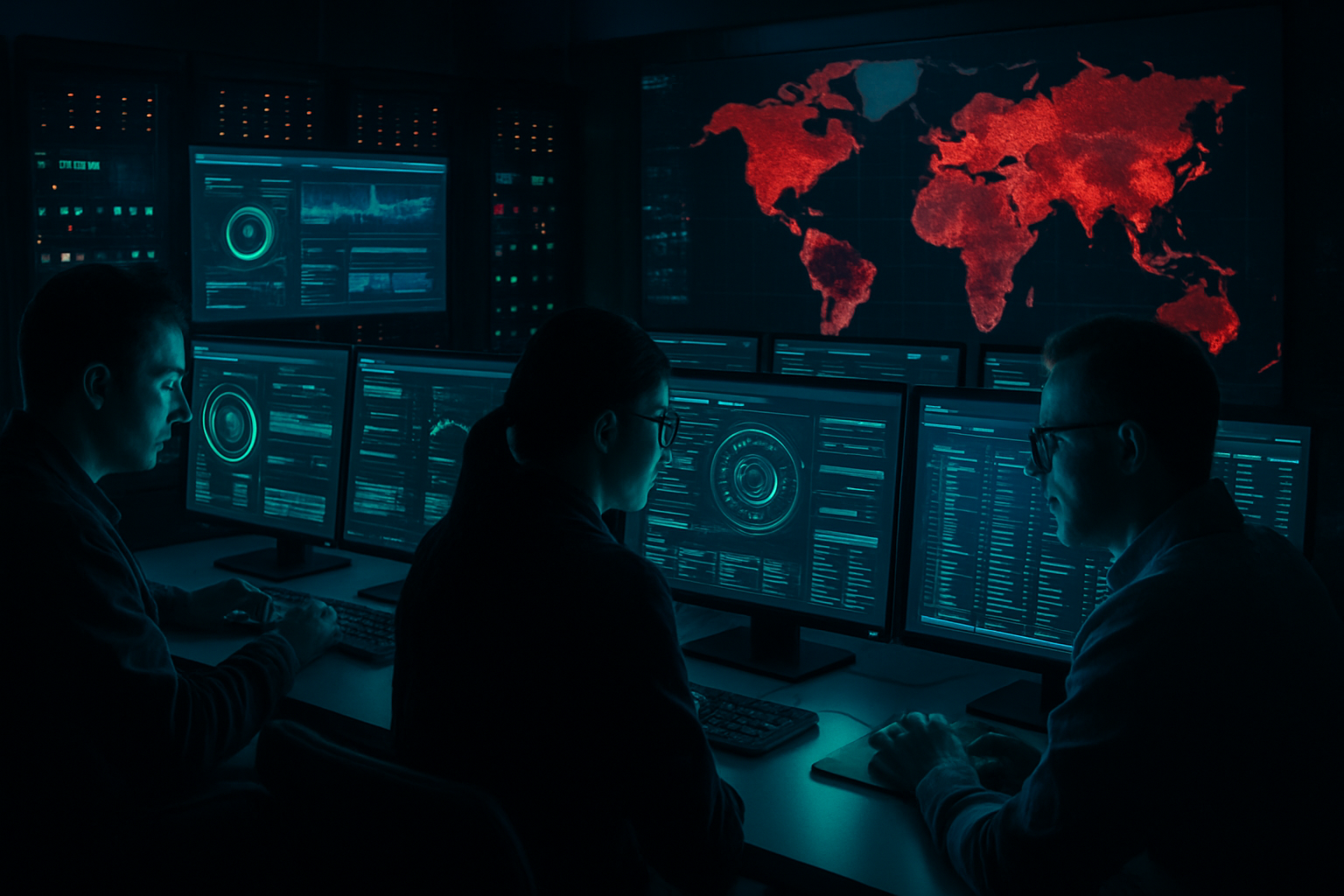
A comprehensive investigation across four European nations has revealed the most severe cybersecurity crisis in recent memory, with sophisticated criminal networks exploiting artificial intelligence and cross-border vulnerabilities to target critical infrastructure, vulnerable populations, and democratic institutions at an unprecedented scale.
The March 2026 crisis encompasses multiple coordinated threats: Italian data showing one in four small and medium enterprises suffered cyber attacks in 2025, Dutch legal challenges over AI-powered deepfake technology, a massive Romanian-led international operation that dismantled criminal networks spanning 102 countries, and Polish authorities blocking sophisticated cyber attacks on nuclear facilities potentially linked to Iranian state actors.
Italian Businesses Under Siege
According to the Cyber Index SME 2025 report published by Confindustria and Generali, 70% of Italian small and medium enterprises remain at intermediate cybersecurity levels while threats evolve faster than defensive capabilities. The report, analyzing 1,500 companies, reveals that one in three businesses cannot manage even routine cybersecurity activities.
"The risk is growing faster than our capacity to defend against it," the report states, highlighting a fundamental imbalance in the cybersecurity landscape. Italian SMEs, which form the backbone of Europe's fourth-largest economy, are increasingly vulnerable to attacks that could cripple supply chains and economic stability.
Dutch Legal Battle Over AI Deepfakes
In the Netherlands, organizations Offlimits and Slachtofferhulp Fonds argued in court to ban "nudify" tools on Grok, Elon Musk's AI chatbot platform. The legal challenge represents growing concerns over AI's potential for creating non-consensual intimate imagery and harassment.
The case highlights the broader challenge of regulating AI technology while preserving innovation. Legal experts warn that completely preventing abuse may be impossible, but argue that platforms must implement stronger safeguards to protect vulnerable individuals from digital harassment and exploitation.
Romania Leads International Criminal Network Takedown
Romanian prosecutors from DIICOT (Directorate for Investigating Organized Crime and Terrorism) participated in a major international operation coordinated by Europol and Eurojust targeting a proxy platform used by cybercriminals from 102 countries. The operation successfully disabled dozens of servers across seven countries and compromised over 369,000 routers.
The scale of this operation demonstrates the truly global nature of modern cybercrime. Criminal organizations are increasingly sophisticated, using legitimate technology infrastructure to facilitate illegal activities while exploiting jurisdictional limitations that hamper law enforcement cooperation.
Nuclear Infrastructure Under Attack
Polish authorities successfully blocked a cyber attack on the National Nuclear Research Center, with investigators examining potential links to Iranian state actors. This incident represents a concerning escalation in cyber threats targeting critical infrastructure that could have catastrophic consequences if successful.
The targeting of nuclear facilities underscores how cybersecurity has evolved from a primarily economic concern to a matter of national security and public safety. Such attacks could potentially disrupt power grids, compromise safety systems, or create environmental disasters.
Global Context of Escalating Threats
These incidents occur against a backdrop of rapidly evolving cyber threats worldwide. Historical analysis shows a 20.6% surge in cyber incidents during Q4 2025, with Jordan reporting 1,012 attacks, including 1.8% classified as serious threats to national infrastructure.
The convergence of artificial intelligence with criminal activities has created what security experts call "elite hacker" capabilities, allowing criminals to automate vulnerability detection, customize attack vectors, and evade traditional security measures. This AI-enhanced approach has fundamentally altered the threat landscape.
Infrastructure Vulnerabilities
A critical factor exacerbating the crisis is the global semiconductor shortage, which has created what experts term a "critical vulnerability window" lasting until 2027. Memory chip prices have increased sixfold, affecting companies like Samsung, SK Hynix, and Micron, constraining the deployment of advanced security systems precisely when they are most needed.
This shortage forces organizations to choose between maintaining digital services and implementing comprehensive security protections, creating opportunities for criminals to exploit infrastructure weaknesses.
International Cooperation Challenges
While successful operations like the Romanian-led takedown demonstrate the potential for effective international cooperation, traditional law enforcement mechanisms remain inadequate against digitally native criminal organizations that can instantly relocate operations across borders.
The case involving Estonia and Ukraine collaboration despite wartime conditions shows that cooperation is possible even under challenging circumstances. However, such coordination requires extensive resources and sophisticated planning that many nations lack.
Economic and Democratic Implications
The cybersecurity crisis extends beyond immediate security concerns to fundamental questions about democratic governance and economic stability. Cyprus Data Protection Commissioner Maria Christofidou has observed that "personal data has become the currency of the digital age," highlighting how cybersecurity threats directly impact individual privacy and democratic freedoms.
Consumer trust erosion is already evident, with companies like Coupang experiencing a 3.2% user decline following data breaches. The February 2026 "SaaSpocalypse" eliminated hundreds of billions in technology market capitalization amid regulatory uncertainty and cybersecurity concerns.
Regulatory Response and Alternative Approaches
European nations are implementing increasingly stringent regulations, with Spain leading the way through criminal liability frameworks that hold technology executives personally accountable for platform security failures. This represents a dramatic shift from treating platforms as neutral intermediaries to holding them responsible for the consequences of their technology design.
Alternative approaches are emerging in other regions. Malaysia emphasizes parental responsibility through digital safety campaigns, while Oman focuses on educational initiatives teaching "smart tech, safe choices." These different philosophies represent a fundamental divide between government intervention and individual agency in digital governance.
The Path Forward
March 2026 represents a critical inflection point for global cybersecurity. Success in addressing these challenges requires unprecedented international cooperation, robust legal frameworks, platform accountability, and public education—all while balancing security needs with privacy protection and democratic values.
The window for effective coordinated action is narrowing as criminal capabilities advance faster than defensive measures. The stakes extend beyond individual privacy to include democratic society preservation amid technological change and criminal sophistication that threatens the foundations of modern digital infrastructure.
The four-nation investigation reveals that cybersecurity is no longer a technical issue but a fundamental challenge to democratic governance in the digital age. Whether democratic institutions can effectively regulate digital infrastructure while preserving beneficial connectivity will determine the trajectory of global governance for decades to come.
Immediate Protection Measures
Security experts recommend immediate implementation of multi-factor authentication, regular software updates, network segmentation, and comprehensive incident response protocols. Organizations must also invest in employee training and establish clear procedures for reporting suspicious activity.
For individuals, protection involves maintaining updated security software, using unique passwords, enabling two-factor authentication, and exercising caution with suspicious communications—particularly SMS and email messages requesting personal information or urging immediate action.
The crisis demands both technological solutions and human expertise, combining proactive prevention with responsive enforcement, local adaptation with global coordination. The success or failure of the current response will establish precedents affecting billions of people worldwide and determining whether digital technologies serve human flourishing or become tools of control beyond democratic accountability.