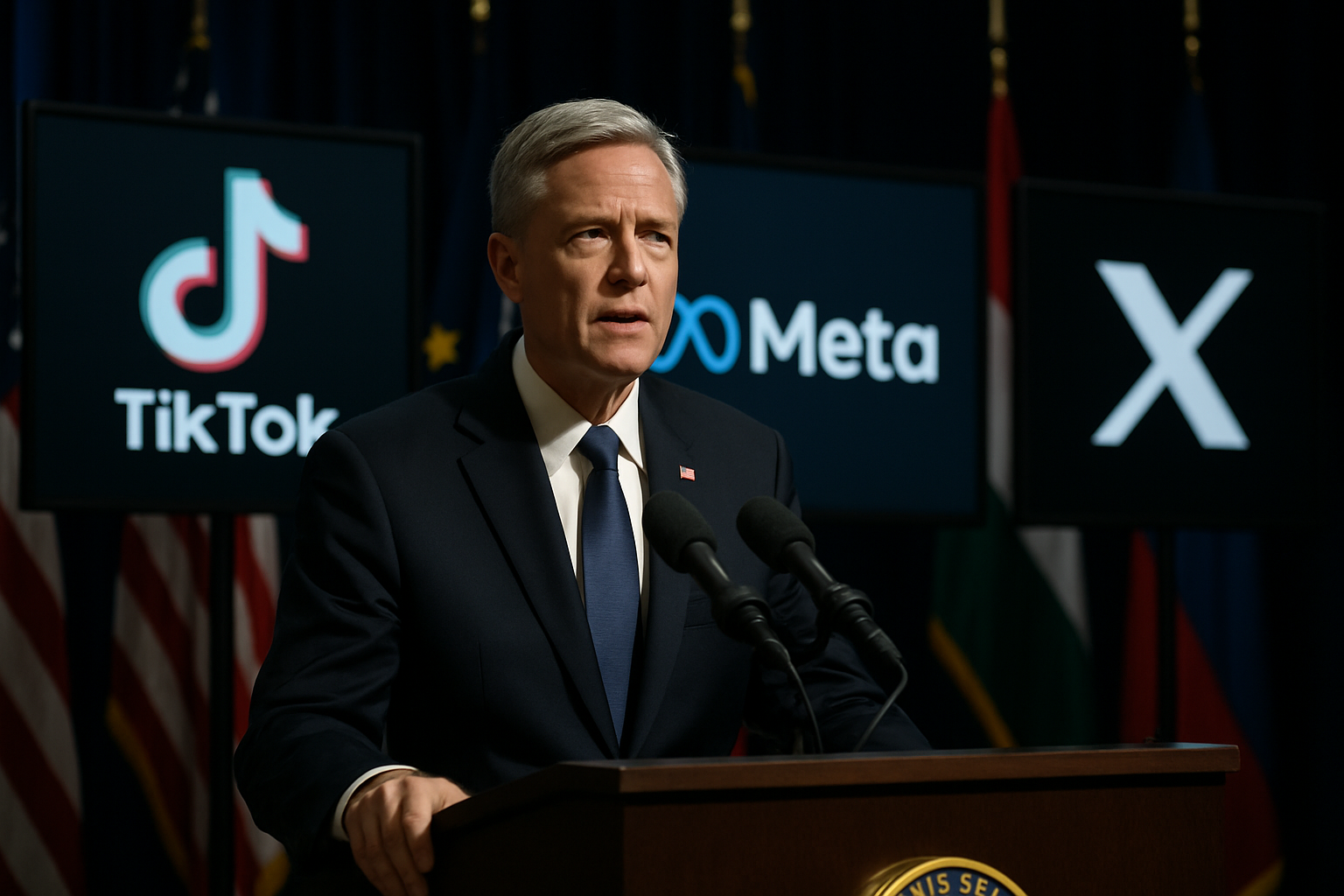
A wave of digital platform controversies across three continents is highlighting the intensifying global battle between governments seeking to regulate social media companies and tech giants resisting oversight, with February 2026 emerging as a critical inflection point for online safety and platform accountability.
The latest developments span from the United States, where TikTok's transition to majority American ownership has sparked concerns about increased surveillance and content restrictions, to the United Kingdom, where a prominent internet safety charity has been accused of censoring teenagers' warnings about social media addiction.
TikTok's Troubling American Transition
Despite promises that TikTok's shift to majority U.S. ownership would enhance security and freedom for its 170 million American users, early evidence suggests the opposite may be occurring. Users who accepted new terms of service and privacy policies under the new ownership structure have reported immediate changes to their online environment, with news reports documenting altered content moderation practices and user experience modifications.
The transition has exposed fundamental questions about whether changing ownership nationality actually improves platform governance or simply shifts the locus of potential control and surveillance. Critics argue that the focus on Chinese versus American ownership obscures more pressing issues about platform design, data collection practices, and user autonomy regardless of corporate nationality.
"If American users of TikTok think its transition to majority US ownership would make it more secure and freer, they are sorely mistaken. Rather, they should expect the opposite."
— Analysis from South China Morning Post
UK Charity Accused of Silencing Teen Voices
In a striking example of how tech industry funding may influence supposedly independent safety advocacy, Childnet, a UK charity partially funded by major U.S. technology companies including Snap, Roblox, and Meta, has been accused of censoring critical remarks by teenage speakers at its own events.
According to records reviewed by The Guardian, the organization edited out warnings from young speakers Lewis Swire and Saamya Ghai that social media addiction represented an "imminent threat to our future" and that obsessive scrolling was making people "sick." The censorship occurred at Childnet's 2024 Safer Internet Day event, raising serious questions about the independence of safety organizations that receive funding from the very platforms they are meant to scrutinize.
The revelations have sparked broader concerns about the influence of tech industry funding on child safety advocacy. Organizations that position themselves as independent voices for online safety while accepting substantial funding from major platforms face inherent conflicts of interest that may compromise their ability to deliver frank assessments of digital harms.
The Broader Global Regulatory Context
These developments occur within a much larger international movement toward stricter platform regulation. European governments are leading an unprecedented coordinated response, with Spain implementing the world's first criminal executive liability framework for social media platforms, while countries including Greece, France, Denmark, Austria, and the UK pursue their own age-based restrictions and content moderation requirements.
The European approach represents a fundamental shift from industry self-regulation to government enforcement with meaningful legal consequences. Spain's framework, announced at the World Government Summit in Dubai, includes complete social media prohibition for under-16s, mandatory robust age verification systems, and direct criminal liability for platform executives - marking the first time anywhere in the world that tech company leaders face potential imprisonment for platform-related violations.
Industry Resistance and Platform Fragmentation
Technology companies have mounted increasingly aggressive resistance to these regulatory efforts. Elon Musk has characterized Spanish Prime Minister Pedro Sánchez as a "fascist totalitarian," while Telegram's Pavel Durov sent mass alerts to Spanish users warning of a potential "surveillance state." This coordinated opposition has been cited by government officials as evidence supporting the need for stronger regulation.
Meanwhile, platform fragmentation is accelerating as users migrate away from established services amid changing ownership structures, content policies, and regulatory pressures. Thousands of content creators have abandoned TikTok following its U.S. ownership transition, with many migrating to alternative platforms that offer different approaches to content moderation and creator autonomy.
The Technology Industry's Credibility Crisis
The current controversies underscore a deeper credibility crisis facing the technology industry. The TikTok ownership change, promoted as enhancing user security and freedom, appears to have achieved neither objective. Similarly, the revelation that a prominent child safety charity censored teenagers' own warnings about social media harms demonstrates how industry influence can compromise even supposedly independent advocacy organizations.
These developments suggest that the fundamental challenges with social media platforms - including addictive design features, inadequate content moderation, and insufficient user control - transcend questions of corporate nationality or ownership structure. Technical and policy solutions must address platform design and business model incentives rather than simply shifting control between different corporate or national entities.
Implications for Democratic Governance
The February 2026 developments represent a critical test of democratic governments' ability to regulate multinational technology platforms effectively. The contrast between industry promises and actual outcomes in cases like TikTok's ownership transition highlights the limitations of voluntary corporate reforms and industry self-regulation.
European governments' move toward criminal executive liability represents perhaps the most significant challenge to tech industry impunity in the sector's history. Success or failure of these initiatives will likely determine whether other jurisdictions adopt similar approaches or whether the industry successfully resists meaningful oversight through coordinated opposition and jurisdictional arbitrage.
The Path Forward
The global nature of current regulatory initiatives suggests that 2026 may mark a turning point in technology governance. Rather than isolated national responses, the coordinated European approach aims to prevent platform shopping and create unified standards that multinational companies cannot easily circumvent.
However, significant implementation challenges remain. Age verification systems raise privacy concerns about government surveillance capabilities. Cross-border enforcement requires unprecedented international cooperation. And the economic implications of strict platform regulation must be balanced against child protection and democratic governance objectives.
The resolution of these competing pressures will shape the digital rights and online safety landscape for years to come, affecting millions of users worldwide and determining whether democratic institutions can effectively govern the most powerful technology companies in history.