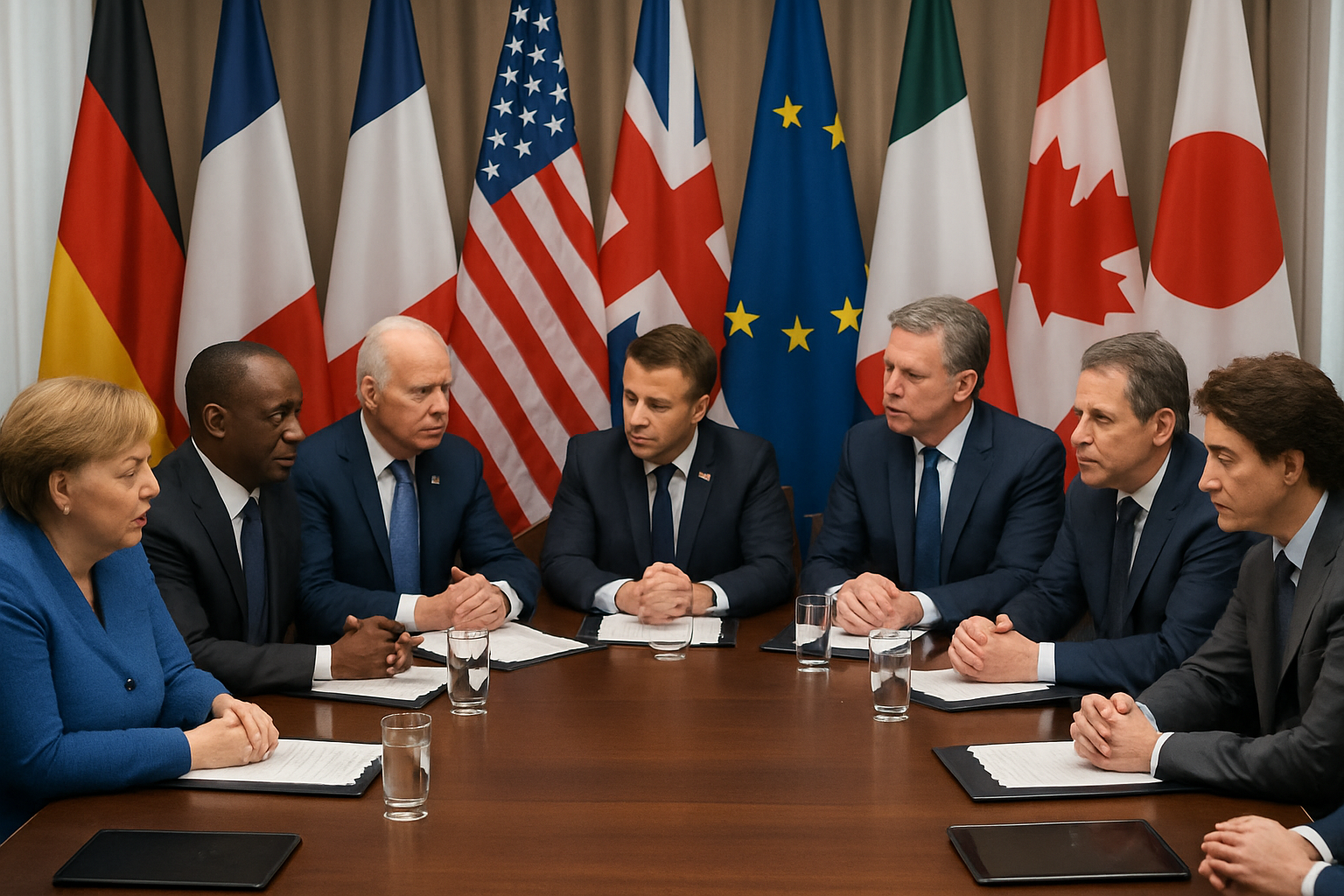
International diplomacy is experiencing a remarkable renaissance as nations worldwide engage in unprecedented levels of cooperation and dialogue, with seven distinct diplomatic initiatives spanning from the Caucasus to the Pacific demonstrating innovative approaches to bilateral relations and regional partnerships.
The wave of diplomatic activities unfolding across Azerbaijan, Canada, Finland, Micronesia, Russia, Singapore, and Ukraine reflects a broader transformation in international relations, where traditional frameworks are being supplemented by pragmatic, bilateral cooperation mechanisms designed to address the complex realities of the multipolar era.
Diversified Diplomatic Approaches
The current diplomatic landscape showcases remarkable diversity in approaches to international cooperation. From Azerbaijan's regional unity initiatives to Ukraine's expanded Latin American engagement, nations are demonstrating increased sophistication in managing multiple bilateral relationships simultaneously while maintaining strategic autonomy.
In Azerbaijan, calls for regional responsibility and unity are being coupled with strategic positioning as an energy coordinator, building on recent U.S. Chamber of Commerce recognition and substantial infrastructure investments. This positions the country as a crucial diplomatic bridge connecting Europe, Asia, and the South Caucasus.
North American Trade Tensions and Responses
Canadian-American relations continue to face significant challenges, with congressional Republicans targeting Canada's streaming service regulations through new legislation. A Republican-sponsored bill specifically challenges Canada's requirements for foreign streaming companies like Netflix and Disney+ to contribute to domestic content production funds.
"A new Republican-sponsored bill in the U.S. Congress takes aim at Canada's attempts to force foreign streaming companies such as Netflix and Disney+ to pay into Canadian funds for domestic content production."
— CBC News Report
This development comes amid broader tensions over trade policies and reflects the ongoing recalibration of North American economic relationships. The legislation represents part of a broader pattern where congressional Republicans are increasingly asserting oversight over international trade and regulatory matters.
Nordic Security Cooperation Intensifies
Finland's involvement in major NATO Arctic exercises demonstrates the alliance's commitment to northern security in an era of heightened geopolitical tensions. The Cold Response exercise in Lapland involves multiple allied nations, with French forces participating in Arctic training that will inform future cooperation frameworks.
The exercise serves dual purposes: enhancing interoperability among NATO forces and demonstrating the alliance's Arctic capabilities. Finland's NATO membership has significantly strengthened the alliance's northern flank, providing strategic depth and additional defensive capabilities in a region of increasing importance.
Pacific Island Diplomacy Expansion
The Federated States of Micronesia's diplomatic engagement reflects the increasing importance of Pacific Island nations in global affairs. President Wesley W. Simina's reception of newly appointed UNICEF Representative Hamish Drummond Young demonstrates the country's commitment to international cooperation frameworks.
The meeting focused on critical areas including child welfare, development cooperation, and humanitarian assistance, highlighting how smaller nations are leveraging international organizations to expand their diplomatic influence and access to development resources.
Middle East Mediation Efforts
Russia's diplomatic initiative regarding Iran conflict resolution represents a significant development in Middle Eastern geopolitics. The Russian Ministry of Foreign Affairs announcement that Moscow, Beijing, and Ankara are prepared to help resolve regional conflicts reflects a coordinated approach by major non-Western powers to conflict mediation.
This trilateral mediation framework represents an alternative to traditional Western-led diplomatic initiatives, potentially offering new pathways for conflict resolution based on "respect for the interests of all regional countries." The approach could serve as a template for future regional stability efforts.
Strategic Realignments in Asia-Pacific
Singapore's analysis of changing global dynamics highlights Canada's efforts to engineer new diplomatic frameworks amid shifting alliance structures. The observation that traditional partnerships are being supplemented by pragmatic bilateral relationships reflects broader trends in international relations.
Commentary from Singapore-based analysts suggests that middle powers like Canada are increasingly pursuing diversified diplomatic portfolios, seeking to maintain strategic autonomy while navigating between major power competition. This approach represents a sophisticated adaptation to multipolar realities.
Ukraine's Latin American Diplomatic Expansion
Perhaps most significantly, Ukraine's intensified cooperation with Latin America represents a major strategic diplomatic initiative. President Volodymyr Zelensky's announcement of Foreign Minister Andrii Sybiha's extensive meetings throughout the region signals Ukraine's commitment to global diplomatic engagement beyond its immediate European neighborhood.
The expansion of Ukrainian diplomatic missions in Latin America demonstrates recognition that sustained international support requires global engagement. This initiative reflects understanding that contemporary conflicts require worldwide diplomatic coalitions rather than regional partnerships alone.
"President Volodymyr Zelensky stated that Foreign Minister Andrii Sybiha held a series of meetings in Latin America and is preparing to intensify the work of Ukrainian diplomatic missions in the region."
— Ukrinform
Institutional Innovation in Diplomacy
The current wave of diplomatic activities demonstrates significant institutional innovation. Rather than relying solely on traditional multilateral frameworks, countries are developing bilateral partnerships, regional cooperation mechanisms, and issue-specific cooperation agreements tailored to their specific needs and circumstances.
This approach reflects lessons learned from recent international crises, where rigid institutional frameworks sometimes proved inadequate for rapid response to emerging challenges. The new diplomatic approaches emphasize flexibility, pragmatism, and mutual benefit over ideological alignment or historical precedent.
Economic Diplomacy Integration
Economic considerations are increasingly integrated into diplomatic strategies across all observed initiatives. Whether through energy cooperation frameworks, trade dispute resolution mechanisms, or development assistance partnerships, economic and diplomatic objectives are being pursued simultaneously.
This integration reflects recognition that sustainable diplomatic relationships require mutually beneficial economic foundations. Countries are no longer separating political and economic relationships but instead pursuing comprehensive partnerships that address both strategic and commercial interests.
Regional Stability Through Bilateral Cooperation
The emphasis on bilateral cooperation mechanisms reflects a broader understanding that regional stability often emerges from multiple overlapping partnerships rather than single comprehensive frameworks. Countries are building networks of bilateral relationships that collectively contribute to regional security and prosperity.
This approach allows for greater flexibility in addressing specific challenges while maintaining broader strategic relationships. It represents an evolution from the rigid alliance structures of the Cold War era toward more nuanced and adaptable partnership networks.
Future Implications for International Relations
The current diplomatic renaissance suggests that international relations are entering a new phase characterized by greater sophistication, flexibility, and pragmatism. Traditional great power competition is being supplemented by middle power diplomacy, regional cooperation initiatives, and innovative partnership frameworks.
The success of these diverse diplomatic approaches could influence the evolution of international institutions, potentially leading to more flexible and responsive mechanisms for addressing global challenges. The emphasis on bilateral cooperation and practical problem-solving may provide templates for future diplomatic innovation.
As nations navigate an increasingly complex international environment, the current wave of diplomatic activities demonstrates that effective international cooperation remains possible through innovative approaches that respect sovereignty while building practical partnerships for mutual benefit. The sustainability of these efforts will depend on continued political commitment and the ability to deliver tangible results for participating nations.