International diplomacy is experiencing a remarkable renaissance as nations across four continents demonstrate sophisticated approaches to bilateral cooperation and regional mediation, marking a significant departure from traditional multilateral frameworks toward more agile, results-oriented partnerships.
Bolivia's Strategic Diplomatic Positioning
Bolivia's Foreign Ministry issued a carefully calibrated statement regarding recent declarations by a United Kingdom representative concerning Bolivian authorities' participation in an Argentine-organized event about the Malvinas Islands. The Bolivian Chancellery emphasized its commitment to maintaining "respectful dialogue" while reaffirming that its foreign policy operates within the framework of international law and mutual respect between states.
The statement represents Bolivia's sophisticated diplomatic balancing act, noting the UK's public expressions while reiterating that "Bolivia's foreign policy is governed by the principles and purposes enshrined in the Charter of the United Nations." This approach demonstrates how smaller nations can maintain principled positions while preserving diplomatic channels with major powers.
"Bolivia reaffirms that its foreign policy is governed by the principles and purposes enshrined in the Charter of the United Nations."
— Bolivian Foreign Ministry Statement
The careful language reflects lessons learned from the extensive diplomatic transformation witnessed throughout 2026, where nations have successfully navigated complex international tensions through sustained engagement and strategic patience.
China-Pakistan Strategic Consultation on Regional Crisis
Chinese Foreign Minister Wang Yi conducted high-level talks with Pakistani Deputy Prime Minister and Foreign Minister Mohammad Ishaq Dar in Beijing, focusing specifically on the evolving Iran situation. The meeting represents China's growing role as a regional mediator and its commitment to providing alternative diplomatic frameworks during international crises.
Wang Yi, also a member of the Political Bureau of the Communist Party of China Central Committee, praised Pakistan's mediation efforts regarding Middle East tensions as serving "the common interests of all parties." This endorsement carries particular significance given Pakistan's emergence as a key intermediary in US-Iran talks throughout 2026, demonstrating how middle powers can effectively bridge divides between major adversaries.
The Beijing consultations occurred against the backdrop of unprecedented global tensions, including the month-long Iran-US crisis that has disrupted global energy markets and aviation networks. China's support for Pakistan's diplomatic initiatives reflects broader patterns of South-South cooperation that have gained momentum throughout 2026.
Egypt-Russia Research Cooperation Framework
Egyptian Foreign Minister Dr. Badr Abdel Aty met with leaders of Russian research centers and think tanks on April 2, discussing enhanced cooperation between Egyptian and Russian research institutions. This meeting represents the practical implementation of diplomatic relationships through academic and intellectual exchange programs.
The initiative demonstrates how nations are building sustainable partnerships through multiple channels beyond traditional government-to-government engagement. By fostering research cooperation, Egypt and Russia are creating institutional frameworks that can withstand political fluctuations while advancing mutual understanding and knowledge sharing.
This approach reflects broader trends observed throughout 2026, where countries have successfully combined high-level political dialogue with practical cooperation in specific sectors, creating more resilient bilateral relationships.
Ukraine-Netherlands Partnership Deepening
Ukrainian Deputy Prime Minister for European and Euro-Atlantic Integration Taras Kachka announced that important agreements between Ukraine and the Netherlands were reached during this year's Lviv Conference, held in the Dutch city of Breda. According to Kachka, cooperation between Ukraine and the Netherlands is becoming "more systematic, regular, and deeper."
This development represents Ukraine's continued success in building European partnerships despite ongoing challenges. The Lviv Conference format demonstrates innovative diplomatic approaches that combine formal governmental meetings with broader stakeholder engagement, creating more comprehensive cooperation frameworks.
The Netherlands' commitment to deeper partnership with Ukraine reflects European nations' strategic approach to supporting democratic institutions and Euro-Atlantic integration, even during periods of global uncertainty.
Historical Context: The Diplomatic Renaissance of 2026
These four diplomatic developments must be understood within the broader context of 2026's remarkable transformation in international relations. Throughout the year, nations have demonstrated unprecedented flexibility in adapting diplomatic approaches to contemporary challenges.
Previous months witnessed historic breakthroughs including the Greece-Turkey comprehensive cooperation agreements in February, the US-Venezuela diplomatic restoration following decades of tension, and Pakistan's successful mediation role in multiple regional conflicts. These precedents have created an environment where innovative diplomatic solutions are not just possible but expected.
The pattern emerging across these engagements suggests that 21st-century diplomacy increasingly emphasizes practical results over ideological alignment. Countries are developing "issue-specific partnerships" that focus on concrete cooperation areas while managing broader disagreements through sustained dialogue.
Template for Modern International Relations
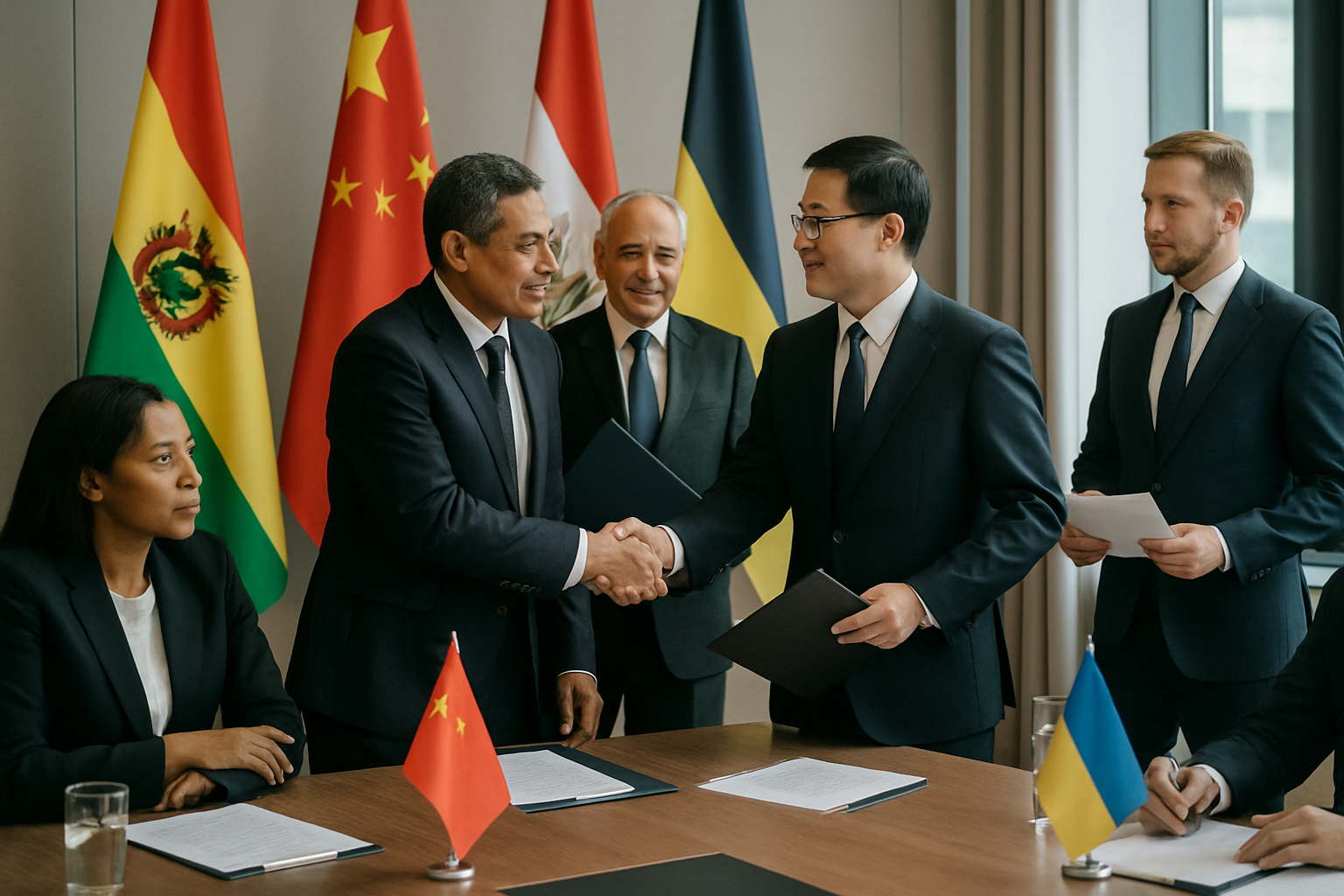
The sophisticated approaches demonstrated by Bolivia, China, Egypt, and Ukraine provide valuable templates for contemporary diplomatic engagement. Each nation has successfully balanced principled positions with pragmatic engagement, creating sustainable frameworks for international cooperation.
Bolivia's approach to the UK demonstrates how smaller nations can maintain sovereignty while preserving diplomatic relationships. China's mediation efforts show how major powers can provide constructive alternatives to Western-led initiatives. Egypt's research cooperation illustrates the importance of building institutional relationships beyond political dialogue. Ukraine's partnership deepening reveals how nations under pressure can still strengthen international ties.
Implications for Global Governance
These developments collectively suggest that international relations are entering a more sophisticated phase characterized by greater flexibility, pragmatism, and innovation. Traditional great power competition is being supplemented by middle power diplomacy, regional cooperation mechanisms, and innovative partnership frameworks that may influence the evolution of international institutions.
The success of these diverse diplomatic initiatives demonstrates that sustainable international cooperation requires multiple channels of engagement, from high-level political dialogue to academic and cultural exchange. Nations are learning to build redundancy into their international relationships, reducing dependence on single partnerships or institutional frameworks.
Future Prospects and Challenges
While these diplomatic successes are encouraging, they also highlight ongoing challenges in international cooperation. The effectiveness of bilateral partnerships must ultimately contribute to broader regional stability and global governance improvements. The test will be whether these innovative approaches can address fundamental disagreements rather than simply managing them.
The coming months will be crucial for determining whether the diplomatic renaissance of 2026 represents a temporary adaptation to crisis conditions or a more permanent evolution toward sophisticated, flexible international relations. The stakes extend beyond bilateral relationships to fundamental questions about international cooperation, conflict resolution, and global governance in an increasingly multipolar world.
As nations continue to experiment with new diplomatic approaches, the examples provided by Bolivia, China, Egypt, and Ukraine offer valuable lessons for building sustainable international partnerships that can address 21st-century challenges while preserving national sovereignty and democratic values.