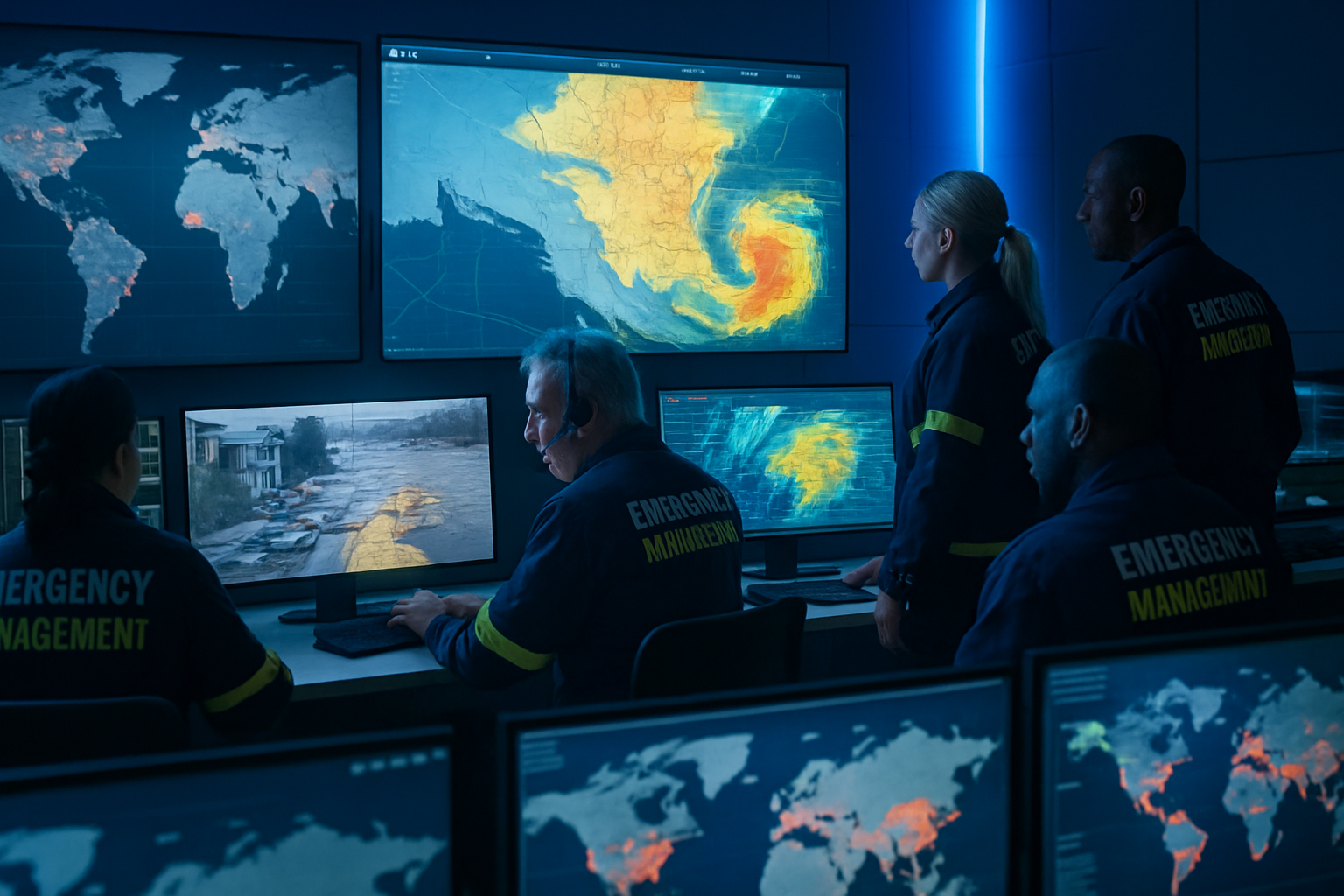
Emergency response systems across multiple continents are facing unprecedented strain as simultaneous natural disasters test the limits of international preparedness frameworks, with a magnitude 6.8 earthquake striking Southeast Asia, catastrophic flooding devastating Peru, and historic blizzards paralyzing the Northeastern United States within a 48-hour period.
The latest crisis began early Sunday morning when a powerful earthquake struck the waters off Sabah, Malaysia at 12:57 AM local time. The Malaysian Meteorological Department confirmed the magnitude 6.8 quake occurred approximately 49 kilometers west of Kudat at a significant depth of 678 kilometers, with tremors felt across Sabah, Sarawak, Peninsular Malaysia, and neighboring Brunei and Singapore.
While no tsunami threat was issued for Malaysia, the deep-sea earthquake prompted immediate emergency protocols across Southeast Asia. Social media erupted with reports from residents describing 10-second tremors strong enough to wake them from sleep, highlighting the broad regional impact of the seismic event.
Cascading Climate Disasters Overwhelm Response Capabilities
The earthquake struck as Peru battles catastrophic flooding in Arequipa, where torrential rains have caused rivers to overflow their banks, inundating residential areas and threatening critical infrastructure. Local authorities report widespread evacuations as flash flooding creates dangerous conditions throughout the city.
Simultaneously, the Northeastern United States is experiencing what New York City Mayor Eric Adams describes as a storm "the city hasn't seen in a decade." The National Weather Service has issued blizzard warnings from New Jersey through Massachusetts, with forecasts predicting up to 2 feet of snow accumulation in some areas.
This convergence of disasters across multiple continents occurs during what meteorologists confirm as an unprecedented period of global climate volatility. January 2026 marked the 18th consecutive month of global temperatures exceeding 1.5°C above pre-industrial levels—a threshold that climate scientists warn enables increasingly extreme and simultaneous weather events worldwide.
Emergency Response Systems Reach Critical Limits
The simultaneous nature of these disasters is exposing critical vulnerabilities in traditional mutual aid mechanisms that assume regional emergencies can be supported by neighboring jurisdictions. With multiple continents experiencing severe emergencies simultaneously, the conventional approach of resource sharing between unaffected areas is proving inadequate.
"We're seeing a fundamental shift in disaster patterns where multiple regions face major emergencies at the same time, preventing the traditional model of regional assistance that emergency management has relied upon for decades."
— Emergency Management Expert
Historical context from our analysis reveals this crisis builds upon devastating weather patterns that have overwhelmed European emergency systems throughout February 2026. The Atlantic storm succession of Kristin, Leonardo, Marta, Nils, and Pedro has claimed over 30 lives across Portugal, Spain, and France, requiring Portugal's largest peacetime rescue operation involving 26,500 personnel.
Infrastructure Vulnerabilities Exposed
The current multi-hazard scenario is revealing infrastructure designed for historical rather than current climate conditions. Transportation networks, power grids, and communication systems are operating beyond their design parameters as extreme weather events exceed the assumptions upon which critical infrastructure was built.
In Malaysia, the earthquake's impact on regional infrastructure is being assessed as authorities coordinate with neighboring countries to monitor potential secondary effects. The depth of the earthquake—678 kilometers below the surface—while reducing immediate surface damage, created widespread ground motion across a vast geographical area.
Peru's flooding crisis demonstrates the cascading effects of extreme weather on urban infrastructure, with drainage systems overwhelmed by rainfall intensities that exceed historical design standards. The flooding in Arequipa represents a pattern of urban vulnerability to extreme precipitation events that are becoming more frequent and severe.
International Cooperation Under Pressure
The simultaneous disasters are testing international cooperation frameworks at a scale never before experienced. Traditional disaster response assumes that while one region faces crisis, others remain available to provide assistance. However, the current pattern of global simultaneous emergencies is challenging this fundamental assumption.
European experience from recent months illustrates both the necessity and limitations of international cooperation during widespread disasters. The EU Civil Protection Mechanism has been activated repeatedly, with assistance packages including Sweden-Denmark's €246 million support representing the largest coordinated European weather response on record.
Yet even these unprecedented cooperation efforts are being strained as the frequency and intensity of extreme events outpace the capacity of mutual aid systems to respond effectively.
Climate Science Warnings Realized
The current crisis represents the realization of warnings from climate scientists about the compound effects of sustained global warming. The 18th consecutive month of temperatures exceeding 1.5°C above pre-industrial levels is creating what experts describe as a "climate volatility paradox"—where global warming enables both extreme heat records and devastating regional weather events through disrupted atmospheric patterns.
This volatility is enabling the kind of simultaneous extreme events currently overwhelming emergency systems. The polar vortex disruption that allows frigid air to reach southern latitudes while other regions experience unprecedented heat creates the conditions for multiple extreme events to occur simultaneously across different climate zones.
Economic and Social Cascades
The economic implications of simultaneous disasters extend far beyond immediate response costs. Supply chains face disruption from multiple directions as transportation networks in different regions experience weather-related closures. Agricultural sectors face compound pressures from flooding, extreme cold, and seismic activity affecting different crops and livestock operations simultaneously.
Insurance systems, designed around the principle that major disasters occur sequentially rather than simultaneously, are facing unprecedented claim volumes across multiple territories and hazard types within compressed timeframes.
Adaptation Imperatives
The current crisis highlights the urgent need for what disaster experts call "transformative adaptation"—moving beyond reactive emergency response to proactive infrastructure design that anticipates rather than simply responds to extreme conditions.
This transformation requires fundamental changes in how societies prepare for natural hazards:
- Enhanced emergency response capabilities that assume simultaneous rather than sequential disasters
- Infrastructure hardening designed for future rather than historical climate conditions
- International cooperation frameworks scaled for global rather than regional emergencies
- Economic systems that account for compound disaster risks across multiple sectors
Looking Forward: Building Resilience for Climate Volatility
As emergency responders continue managing the immediate crisis across Malaysia, Peru, and the Northeastern United States, the broader implications for global disaster preparedness are becoming clear. The window for adapting emergency systems to climate volatility is narrowing as extreme events outpace adaptive capacity.
The choice facing the international community is increasingly urgent: continue with reactive crisis management that responds to each disaster as it occurs, or invest in transformative adaptation that builds resilience for permanent climate volatility.
Success in this transformation will determine whether incidents like the current multi-hazard crisis become manageable challenges for well-prepared societies or catastrophic failures that overwhelm inadequately adapted systems.
"We're at a watershed moment where we must choose between building back better with climate-resilient infrastructure or continuing to rebuild the same vulnerable systems that fail with each successive extreme event."
— Climate Adaptation Specialist
The current crisis across Malaysia, Peru, and the United States serves as both a warning and an opportunity—demonstrating the urgency of comprehensive disaster preparedness while providing real-world experience in managing complex, simultaneous emergencies that will likely become increasingly common in the climate volatility era ahead.