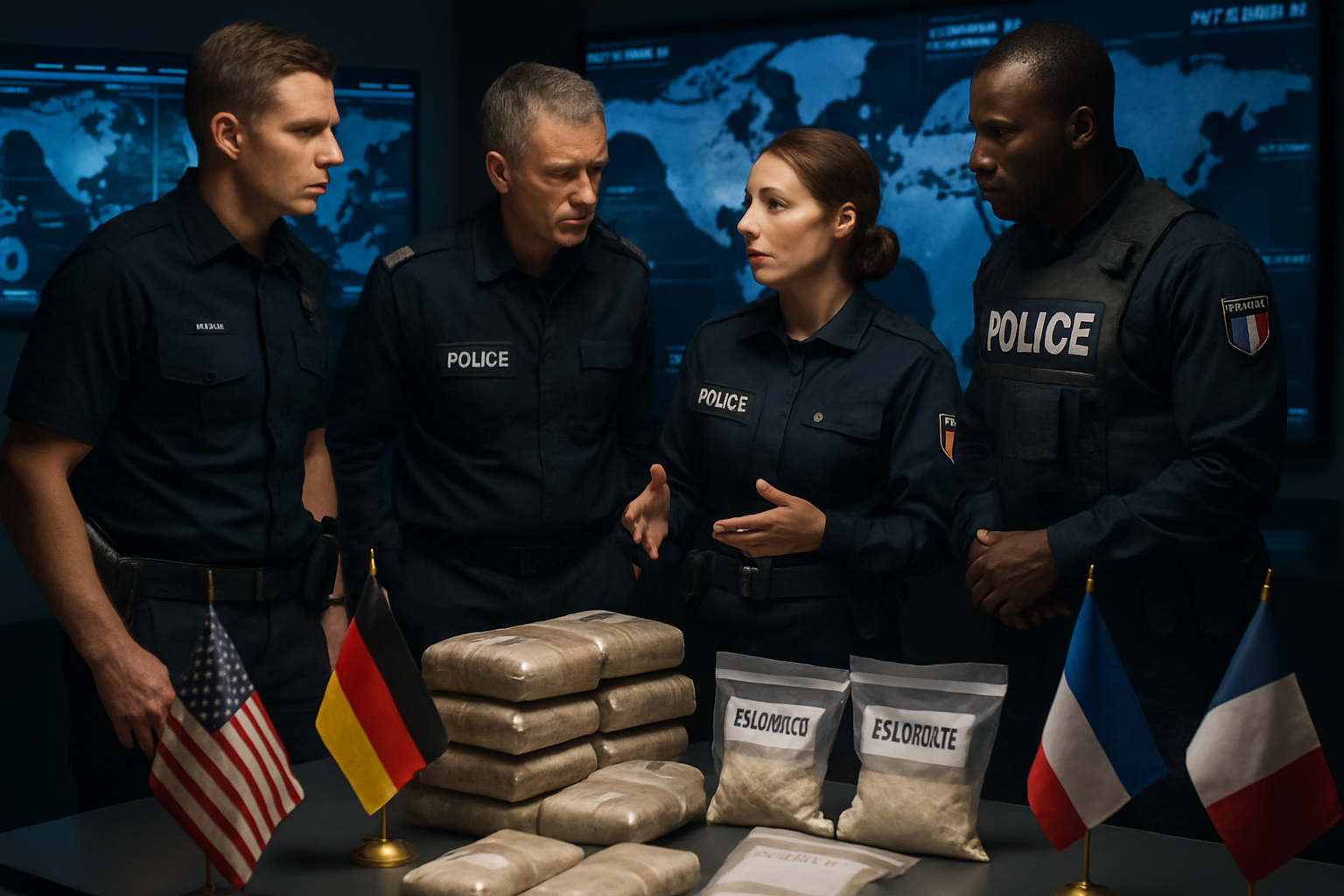
Law enforcement agencies across multiple continents have delivered a devastating blow to international drug trafficking networks in a coordinated operation spanning from North Africa to the Caribbean, resulting in significant arrests and drug seizures worth hundreds of millions of dollars.
The sweeping operation, conducted between March 30 and April 2, 2026, demonstrates the evolving sophistication of international law enforcement cooperation against criminal organizations that possess state-like capabilities and advanced technological resources.
Major Seizures Across North Africa
Spanish authorities revealed the discovery of a sophisticated underground tunnel system in Ceuta that connected Morocco to Spain's mainland territory. The multi-level facility, equipped with rail tracks and mining carts, was designed to transport large quantities of hashish from Morocco's Rif Mountains to European markets.
The tunnel, described by investigators as a "labyrinth resembling a mine," represented a major infrastructure investment by criminal organizations capable of supplying Spain and potentially all of Europe with narcotics. The discovery required over a year of investigation and demonstrates the evolution of criminal networks into operations with advanced engineering capabilities.
"This discovery eliminates a specific trafficking route while providing valuable intelligence for further enforcement actions."
— Spanish National Police spokesperson
In Algeria, coordinated operations by the National People's Army and specialized anti-narcotics units seized 15 tonnes of hashish concealed within a potato shipment arriving from the Moroccan port of Nador to Almeria, Spain. Spanish media reports indicate the operation was facilitated by corruption among Moroccan police elements who allegedly received bribes to allow the shipment to pass without inspection.
Caribbean Drug Networks Disrupted
The Barbados Police Service's Narcotics Unit made a significant arrest, charging Joshua Chimiere Moses-Obah, a 30-year-old South African national, with multiple drug-related offenses. Police seized 16.8 kilograms of suspected cannabis with an estimated street value of BDS $268,800.
Canadian Border Services Agency intercepted 87 kilograms of suspected cocaine at the Coutts border crossing in Alberta. The drugs were concealed in a commercial truck labeled as carrying produce and bound for Calgary, highlighting the continued use of legitimate transportation networks by trafficking organizations.
In Trinidad and Tobago, authorities arrested two individuals following a significant firearms seizure connected to a robbery in the Princes Town district. The operation recovered two pistols and demonstrated the intersection between drug trafficking and violent crime affecting the region.
South American Operations Yield Major Arrests
Bolivian authorities conducted coordinated enforcement operations targeting fuel adulteration networks connected to criminal enterprises. The government identified garages in Iquique and Arica as key points for adulterating fuel that was later commercialized in Bolivia, with operations allegedly linked to Marcelo Arce Mosqueira.
In a significant diplomatic development, Bolivia announced the resumption of joint narcotics investigations with the U.S. Drug Enforcement Administration (DEA), marking the first cooperation since the agency was expelled from the country 18 years ago under former President Evo Morales.
"Now we expect that [DEA agents] return to have a permanent office in Bolivia, although it's as if they were already here, because there is joint work, joint investigations."
— Bolivian anti-drug official
Advanced Criminal Capabilities
The operations revealed criminal organizations with unprecedented technological sophistication. In Mauritius, police discovered and destroyed 103 cannabis plants in a forest area at Pétrin using helicopter-assisted operations, while in Micronesia, authorities intercepted methamphetamine at a community outreach facility.
Niger police dismantled a powerful network of armed robbers in Zinder, and Senegalese authorities arrested wrestler Pokola Baldé in connection with violent incidents involving weapons and criminal activity.
The criminal networks demonstrated state-like capabilities including:
- Advanced surveillance systems rivaling intelligence operations
- Encrypted communications exceeding law enforcement monitoring capabilities
- Compartmentalized international structures spanning multiple continents
- Professional-grade concealment requiring specialized extraction tools
- Sophisticated financial operations exploiting legitimate banking systems
International Cooperation Framework
The coordinated nature of these operations reflects the enhanced international cooperation established through initiatives such as the "Shield of the Americas" coalition launched in March 2026. This 17-nation alliance enables intelligence sharing, coordinated operational planning, and real-time communication systems that allow for surgical strikes against criminal networks.
European law enforcement coordination has reached new levels of sophistication, with specialized corruption and organized crime courts providing institutional innovations that serve as templates for international cooperation. The success builds on previous major operations, including the capture of Uruguayan drug kingpin Sebastian Marset in March 2026.
Technology Arms Race
The investigations reveal an ongoing technological arms race between criminal organizations and law enforcement. Criminal networks consistently adopt commercial and military-grade technologies faster than law enforcement can develop countermeasures, creating persistent vulnerabilities that require sustained international cooperation and technological advancement.
Digital forensics capabilities, AI-assisted analysis, and encrypted communication monitoring have become essential investigative tools, but criminal innovation continues to outpace institutional adaptation, demanding constant investment in training, equipment, and institutional capacity.
Democratic Governance Under Pressure
The sophistication of these criminal networks poses unprecedented challenges to democratic institutions. Courts worldwide are experiencing strain from case backlogs, resource constraints, and the complex international evidence requirements necessary to prosecute organizations operating across multiple jurisdictions.
Criminal organizations challenge traditional concepts of sovereignty and jurisdiction by operating with resources and capabilities that rival legitimate state institutions. The systematic targeting of essential services, institutional corruption, and calculated violence undermines community confidence and challenges state authority.
Strategic Implications
These operations represent a critical test of international cooperation mechanisms against transnational organized crime. The success of coordinated responses will determine whether democratic institutions can maintain essential functions while adapting to criminal networks that operate without regard for national boundaries.
The effectiveness of these enforcement efforts depends on sustained political commitment to judicial independence, adequate specialized resources, and comprehensive strategies that address the underlying conditions that enable criminal recruitment, including poverty, corruption, weak governance, and limited economic opportunities.
As criminal organizations continue to evolve their tactics and capabilities, law enforcement agencies must balance effective security measures with the preservation of civil liberties and constitutional protections that are essential to democratic societies. The coming months will test whether democratic institutions can maintain the pace of adaptation necessary to counter increasingly sophisticated transnational threats while preserving fundamental rights and the rule of law.