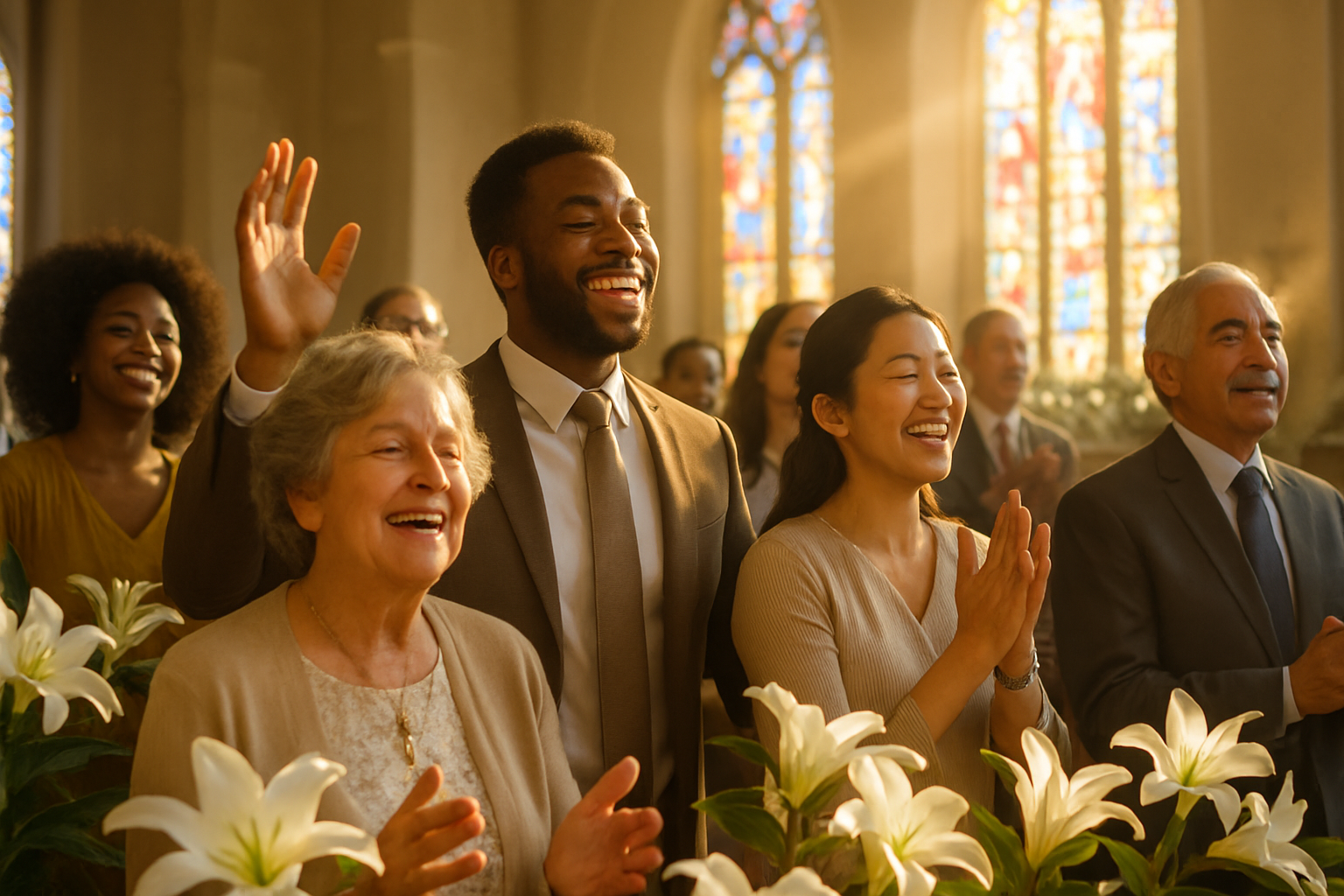
Christians around the world celebrated Easter 2026 with special services and family gatherings on April 6, demonstrating remarkable resilience and unity despite ongoing regional conflicts that have restricted access to holy sites and disrupted traditional observances across multiple continents.
From the royal family's attendance at Windsor to Lebanese Christians praying amid the roar of fighter jets, and from Burkina Faso's faithful sharing messages of hope to Jamaica's celebration of renewal symbolism, the world's 2.4 billion Christians found ways to honor the resurrection of Jesus Christ even as global tensions threatened to overshadow the sacred season.
Royal Family Returns to Easter Tradition
In a significant moment for the British Royal Family, Prince William, Kate, and their children joined other royals for Easter celebrations for the first time since Princess Kate's cancer battle. The family's united appearance at Windsor represented both personal resilience and the continuation of royal Easter traditions that have endured for centuries.
The symbolic nature of the royal family's participation resonated beyond Britain's borders, serving as a powerful reminder that Easter's message of renewal and resurrection extends to personal struggles and family challenges as well as broader societal issues.
Celebrations Amid Conflict in the Middle East
Perhaps nowhere was the tension between Easter's message of peace and contemporary realities more evident than in Lebanon, where Christian worshippers struggled to raise their voices over the roar of Israeli fighter jets flying low over Beirut during services. Despite the challenging circumstances, attendees expressed solidarity with those suffering from ongoing regional conflicts.
The Lebanese Christian community's determination to celebrate Easter despite the military activity overhead exemplified the global Christian response to adversity during the 2026 Easter season. Church leaders emphasized themes of hope, endurance, and prayer for peace in their Easter messages.
"This foundational event of our faith is permanent invitation to live in love, forgiveness and justice."
— Pastor Vincent Ilboudo, FEME President, Burkina Faso
In Burkina Faso, where ongoing security and humanitarian challenges continue to affect communities, Pastor Vincent Ilboudo delivered a powerful Easter message emphasizing the essential Christian virtues that transcend temporary difficulties. His words reflected a broader theme among Christian leaders worldwide who used Easter 2026 to call for peace and reconciliation.
Symbolism of Renewal and Hope
The spiritual significance of Easter found particular expression through traditional symbols, with Easter lilies taking center stage in many celebrations. In Jamaica, Style Observer Gardening highlighted the Easter lily as the "white apostle of hope," embodying purity and new beginnings that parallel the Christian narrative of death and resurrection.
The lily's unique life cycle—spending years dormant underground before emerging into light—served as a botanical metaphor for Jesus's death and resurrection. According to Christian tradition, Easter lilies are believed to have sprouted from the ground where Christ's blood and tears fell during the crucifixion, making them particularly meaningful during this sacred season.
Global Coordination Despite Challenges
Easter 2026 demonstrated the sophisticated international coordination that has characterized Christian observances throughout the year. Building on the successful Ramadan-Lent convergence earlier in 2026, which affected 4.5 billion believers worldwide, Easter celebrations showcased the global Christian community's ability to maintain unity while honoring diverse local traditions.
Pope Leo XIV's leadership during his first Easter as pontiff provided moral guidance that resonated far beyond Catholic communities. His direct appeals for peace and his personal participation in traditional ceremonies—including carrying the cross during Good Friday services—established a template for religious leadership addressing contemporary global challenges.
Technology Enhancing Traditional Worship
The integration of digital technology with traditional Easter worship proved particularly successful in 2026. Churches worldwide utilized mobile applications for prayer schedules and scripture reading, while virtual services connected separated families and enabled global diaspora participation. This technological synthesis preserved essential human worship elements while expanding access to Easter celebrations.
Social media platforms facilitated Easter greetings across cultural and geographical barriers, creating what observers described as a "global digital celebration" that transcended traditional boundaries while maintaining authentic spiritual significance.
Economic and Social Impact
Despite regional conflicts and travel disruptions affecting some areas, Easter 2026 generated significant positive economic effects through cultural tourism, hospitality services, and retail activities. Traditional Easter shopping patterns supported local businesses, particularly in the food service sector and cultural tourism industries.
The celebrations also demonstrated enhanced security measures across multiple regions, with governments and religious institutions coordinating to ensure peaceful observances. These security investments reflected both the challenges posed by regional tensions and the determination to maintain religious freedom and traditional celebrations.
Interfaith Dialogue and Understanding
Easter 2026's timing, following the conclusion of Ramadan, created unique opportunities for interfaith dialogue and mutual understanding. Both Christian and Islamic traditions emphasized spiritual renewal, community service, and charitable giving during their respective sacred seasons, building bridges between faith communities while honoring distinctive traditions.
Religious leaders noted the providential timing of these observances, which offered opportunities for mutual learning through shared themes of compassion, forgiveness, and hope for renewal.
Regional Celebrations Reflect Local Cultures
While maintaining core spiritual elements, Easter celebrations worldwide reflected the rich diversity of global Christianity. Bosnia and Herzegovina's reports emphasized Catholic celebrations, while various Protestant, Orthodox, and other Christian communities maintained their own liturgical traditions within the broader Easter framework.
This diversity-within-unity approach has become a hallmark of 21st-century Christian observances, allowing local cultural expressions to flourish while maintaining connection to the universal Christian message of resurrection and hope.
Looking Forward: Template for Future Observances
Easter 2026 established important precedents for international religious cooperation and cultural preservation. The successful integration of ancient traditions with contemporary realities—including technological enhancement, security adaptations, and interfaith coordination—provides a framework for future religious observances.
Success factors identified throughout the celebrations include cultural authenticity preservation, strategic technology integration, enhanced security measures, meaningful community involvement, and adaptive management that responds to contemporary challenges while maintaining spiritual character.
"Even in times of pain and difficulty, there is room for redemption, renewal and a better path."
— PM Mia Amor Mottley, Barbados (from earlier Easter message)
The resilience demonstrated by Christian communities worldwide during Easter 2026 offers hope that religious traditions can not only survive but thrive during challenging times. From royal ceremonies to village gatherings, from ancient liturgies to modern digital connections, Easter 2026 proved that faith, community, and hope remain powerful forces for unity and renewal in an interconnected yet often divided world.
As communities worldwide reflected on the Easter message of resurrection and new life, the celebrations served as a reminder that even in the face of regional conflicts, economic pressures, and social challenges, the fundamental human need for meaning, community, and transcendence continues to find expression through religious observance and shared cultural traditions.