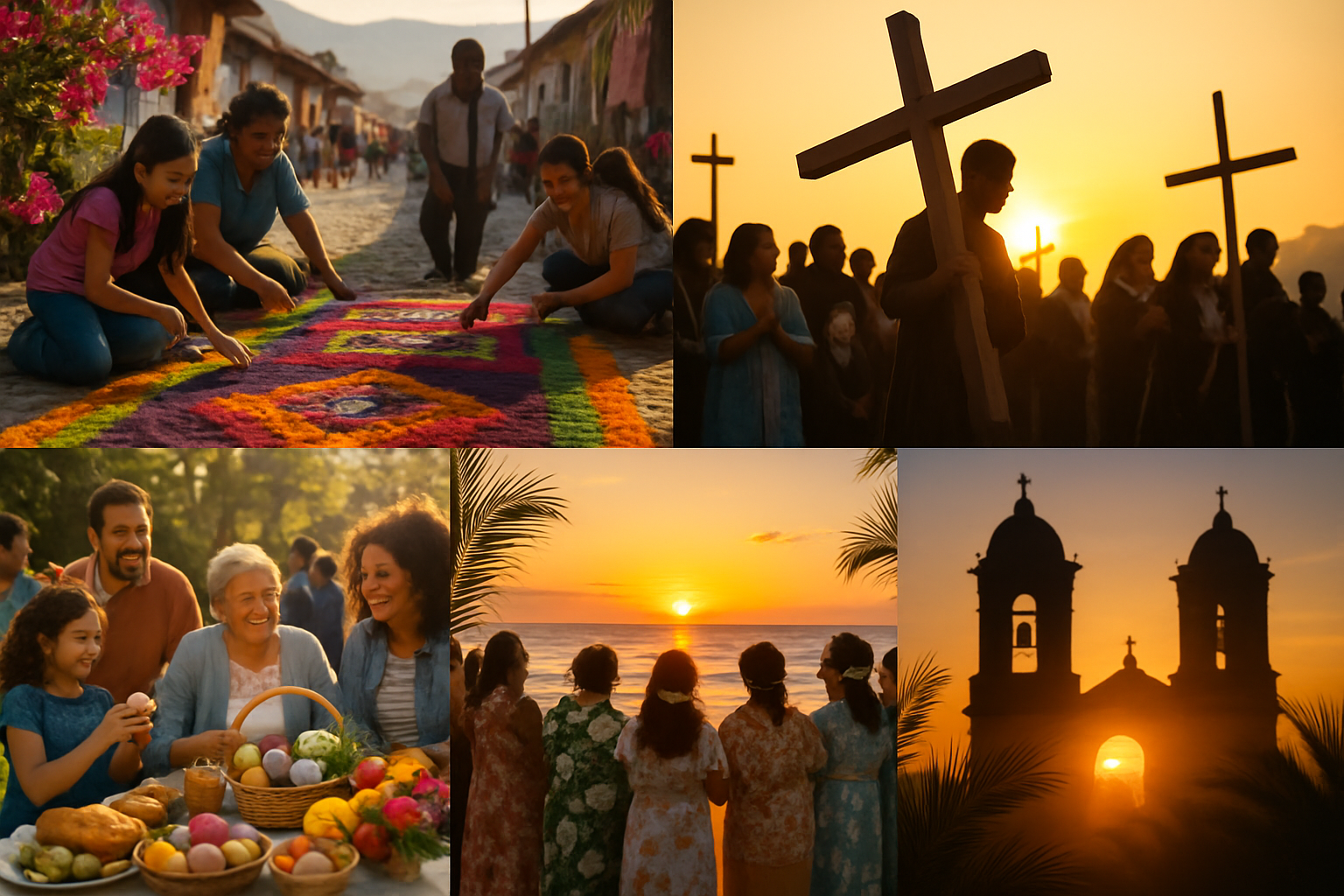
Christians across multiple continents marked Easter 2026 with remarkable displays of faith, cultural tradition, and community resilience, as millions participated in religious processions, family gatherings, and time-honored celebrations spanning from Latin America to the Pacific Islands.
From Bolivia's mountain processions at dawn to Papua New Guinea's contemplative services, Easter weekend showcased the global reach and enduring power of Christian tradition, even as communities adapted to heightened security measures and ongoing international tensions.
Latin American Traditions Flourish
In Bolivia, hundreds of faithful participated in Holy Week activities across the country. In Cochabamba, believers began their day before dawn, scaling San Pedro mountain for a special procession that has drawn increasing participation for its second consecutive year. The mountainous location attracted people from various sectors seeking reflection, devotion, and spirituality during Christianity's most sacred period.
La Paz and El Alto organized processions beginning in the early morning hours, culminating in the traditional Santo Sepulcro (Holy Sepulcher) procession in La Paz during the afternoon. Mayor Iván Arias valued the participation of various state institutions after several years, marking a significant moment of unity between religious and civic communities.
Innovative Artistry and Sacred Crafts
El Salvador demonstrated extraordinary dedication to Easter traditions through the creation of what officials describe as the country's largest alfombra (carpet) stretched across Rubén Darío street in San Salvador's Historic Center. More than 300 volunteers worked alongside municipal teams to perfect this massive artwork made from colored salt, sawdust, and carefully traced designs.
"The procession of silence, which departs from El Calvario, will envelop the night in an atmosphere of respect and reflection, bringing together entire families who keep religious traditions alive."
— Adriana Larín, Director of Historic Center Authority
Nicaragua's artisans continued their celebrated tradition in Sutiaba, León, where skilled craftspeople created colorful sawdust carpets that transformed city streets into works of art, demonstrating the intersection of faith and cultural expression that characterizes the region's approach to Easter observance.
Caribbean Reflections on Unity
Prime Minister Mia Amor Mottley of Barbados used her Good Friday message to address contemporary challenges, noting that persistent gun violence has made Easter's message of peace and redemption even more relevant to Caribbean communities. She called on citizens to "turn back to one another, protect the vulnerable, and accept shared responsibility for the peace and safety of their communities."
Mottley emphasized that the message of the cross represents transformation, reminding communities that "even in times of pain and difficulty, there is room for redemption, renewal and a better path." Her remarks reflected broader Caribbean efforts to connect traditional religious observances with urgent contemporary social issues.
Pacific Region Emphasizes Reflection
In Papua New Guinea, Easter celebrations took on a particularly contemplative character, with hundreds gathering in Hohola for Stations of the Cross processions. Local religious leaders emphasized spiritual reflection over celebration, encouraging personal introspection and renewal that transcends cultural boundaries.
The "Life in the Spirit Ministry Easter Crusade" represented a broader trend across the Pacific region toward emphasizing the internal spiritual significance of Easter rather than purely external celebrations, reflecting both indigenous spiritual traditions and contemporary Christian practice.
Safety Initiatives During Sacred Season
Costa Rica implemented comprehensive beach safety measures for Holy Week, with experts explaining the flag warning system to thousands of Easter travelers. Red Cross rescuer Ariel LaFuente described how beach flags work "similarly to a traffic light," warning visitors of dangerous conditions including high waves and rip currents that pose particular risks during the holiday period when beach visits surge.
Papua New Guinea authorities deployed both uniformed and plain-clothes police in public areas throughout Easter weekend, with commissioners calling for community reflection alongside enhanced security measures. This balanced approach reflected global efforts to maintain traditional celebrations while addressing contemporary security concerns.
Faith Amid Global Tensions
Nicaragua commemorated Good Friday as "a day of faith, forgiveness and reflection, promoting Christian love and rejection of hatred to strengthen peace and coexistence." The message resonated particularly strongly given ongoing global tensions and conflicts affecting Christian communities worldwide.
The country's Holy Week included thousands of religious, cultural, and recreational activities nationwide, demonstrating comprehensive community engagement with Easter traditions that extend beyond purely religious observance to encompass broader cultural and family traditions.
Emerging Spiritual Movements
New Zealand churches reported an unexpected influx of young people during Easter services, part of what church leaders describe as a "Quiet Revival" of Christianity. This phenomenon suggests potential shifts in global religious engagement, particularly among younger demographics traditionally less associated with formal religious practice.
The trend reflects broader patterns observed in memory of previous Easter celebrations, where ancient spiritual traditions continue finding contemporary relevance through innovative approaches that honor tradition while addressing modern spiritual needs.
Cultural Preservation Through Adaptation
Across all regions, Easter 2026 demonstrated the remarkable capacity of religious traditions to maintain their essential character while adapting to contemporary circumstances. From Bolivia's mountain processions to Nicaragua's comprehensive cultural programming, communities successfully balanced spiritual authenticity with practical necessities including enhanced security and modern logistics.
The celebrations showcased successful technology-tradition synthesis, with digital communications enabling global diaspora participation while preserving the essential human elements of community worship and cultural connection that define Easter's universal appeal.
Global Significance
Easter 2026's international scope reflects the holiday's capacity to transcend geographic, cultural, and political boundaries while honoring distinctive local traditions. The celebrations occurred against a backdrop of global challenges including climate pressures, security concerns, and international tensions, yet communities demonstrated remarkable resilience in maintaining meaningful observances.
The weekend's events continue the pattern established throughout 2026 of sophisticated international coordination that maintains authentic traditions while adapting to contemporary realities, providing templates for how ancient spiritual practices can thrive in an interconnected world through thoughtful innovation and community engagement.