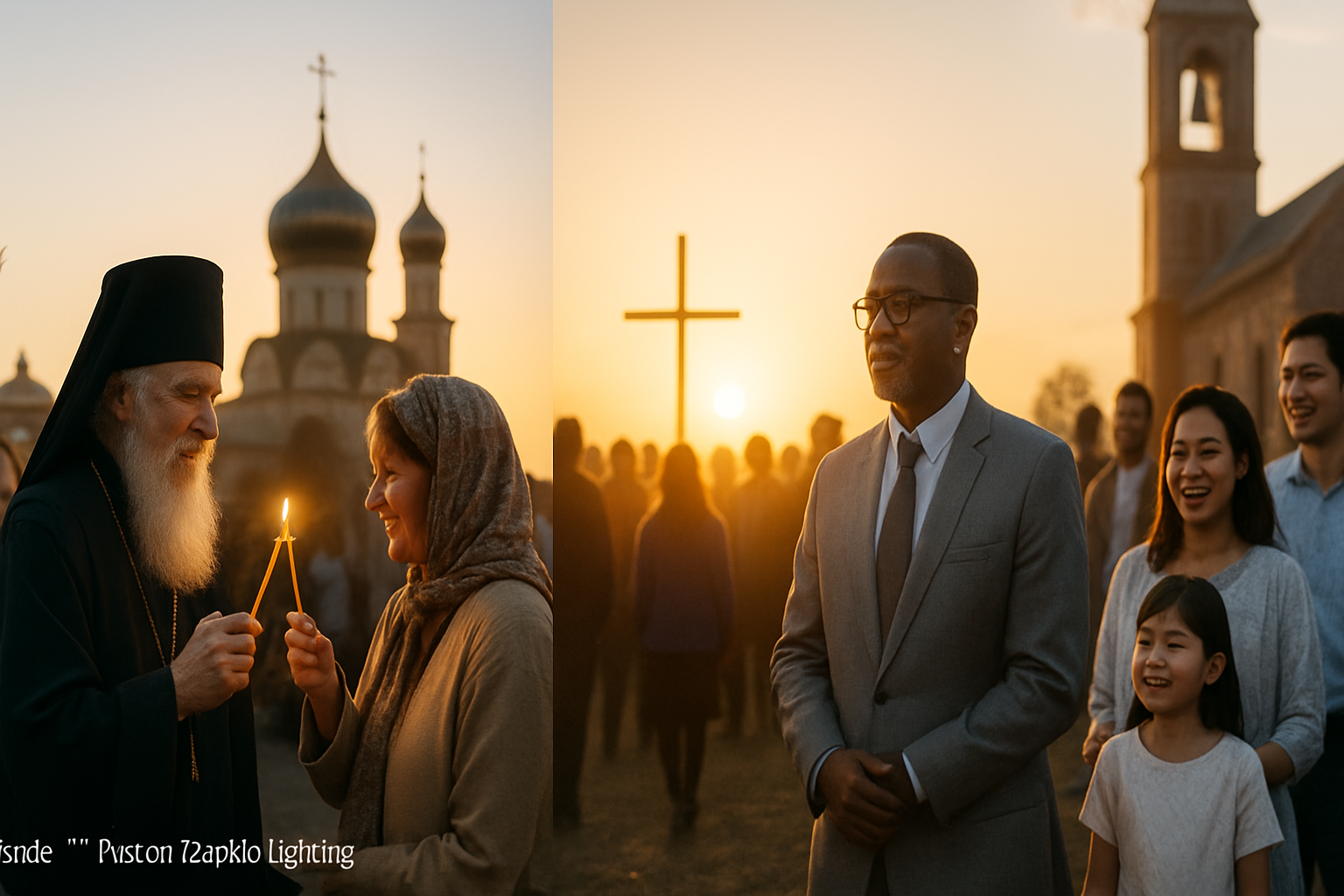
As millions of Christians around the world prepare for Easter Sunday, countries across Latin America, Northern Europe, the Caribbean, and the Pacific are showcasing the remarkable diversity and enduring strength of Holy Week traditions through enhanced security, innovative cultural programming, and unprecedented international cooperation.
From Colombia's vibrant culinary celebrations to Iceland's unique fusion of Easter with traditional Nordic activities, the 2026 Holy Week observances demonstrate how ancient Christian traditions continue to evolve and adapt while maintaining their essential spiritual character in an increasingly interconnected world.
Latin America: A Renaissance of Sacred Traditions
Colombia has emerged as a showcase for how traditional Holy Week celebrations can be enhanced through modern infrastructure and cultural innovation. In Cali, the "Mi santa cocina" (My Holy Kitchen) encounter, running from April 2-5 during this Holy Week, celebrates the culinary heritage of the Colombian Pacific at the Río Cali hotel on the traditional Boulevard. This initiative highlights how women storytellers weave their narratives while adding flavor to Pacific Colombian cuisine, creating a bridge between gastronomy and cultural memory.
The Valle del Cauca department has deployed a comprehensive security and mobility strategy to consolidate its tourist and cultural offerings. The region is positioning itself as a destination where art, religious fervor, nature tourism, and "Magical Towns" converge, demonstrating sophisticated destination management that balances economic objectives with cultural preservation.
In Cartagena, the "Vibe Tropical" initiative represents a new gastronomic and cultural approach designed to attract tourism and energize the city's offerings during Holy Week. This economic initiative aims to continue promoting Cartagena as a premier tourist destination while preserving its authentic cultural character.
Central America: Security and Celebration in Harmony
Panama has announced special schedules for Holy Week 2026, with the Panama Metro implementing extended hours to facilitate passenger mobility to transportation terminals throughout the city. The system will operate with extended hours on Thursday, April 2 (5:00 AM to midnight), demonstrating how public infrastructure adapts to serve religious and cultural needs during sacred periods.
"The Metro administration recommends that users keep their cards topped up to avoid lines and follow the instructions of security personnel at the busiest stations."
— Panama Metro Administration
Nicaragua is experiencing Holy Week amid an atmosphere of peace, with over 1,000 people returning to their homes and high tourist mobilization, according to Co-President Rosario Murillo. The country demonstrates how faith, tourism, and family reunification can converge during sacred seasons, creating multiple layers of meaning beyond purely religious observance.
Nordic Innovation: Iceland's Cultural Fusion
Iceland presents a fascinating example of how Easter celebrations can incorporate local cultural elements while maintaining Christian significance. The Westfjords region is hosting the 22nd edition of the "Aldrei fór ég suður" music festival in Ísafjörður, featuring performers including Skítamórall, Friðrik Dór, and Sykur.
Simultaneously, "Skíðavikan" (Ski Week) has begun in Ísafjörður, with activities including biathlon, cross-country skiing tours, and ski touring. The town's ski areas remain open throughout the weekend, showing how Easter celebrations can embrace the natural environment and seasonal activities that define local culture.
In northern Iceland, Akureyri offers Easter events across the town with popular ski areas in Hlíðarfjall remaining open and cross-country trails available, demonstrating the successful integration of religious observance with outdoor recreational traditions that define Nordic culture.
Caribbean and Pacific: Sports and Faith Intersect
Trinidad and Tobago is hosting a unique "three-in-one" Easter cycling event that combines the Easter International Cycling Grand Prix, the Caribbean Track Cycling Championships, and the Americas Track Cycling Championships. An eight-member team representing the "red, white, and black of T&T" includes cyclists Phoebe Sandy, Kyrah Williams, Akil Campbell, Darnell James, Jadian Neaves, Liam Trepte, veteran Adam Alexander, and Tariq Woods.
The event begins Friday at Skinner Park, San Fernando, and continues at the National Cycling Centre in Balmain, Couva, throughout the weekend. This innovative approach demonstrates how Easter celebrations can incorporate competitive sports while maintaining their spiritual significance.
Pacific Reflections: Papua New Guinea's Call for Contemplation
In Papua New Guinea, Wau Waria MP has emphasized that Easter should be a time for reflection rather than mere celebration. This perspective highlights an important dimension of Holy Week observances—the call for spiritual introspection and personal renewal that transcends cultural and geographical boundaries.
Peru provides rich context for understanding Holy Week traditions, with comprehensive coverage of what Holy Thursday commemorates in Christian tradition. The country's deep Catholic heritage demonstrates how Easter observances encompass not just individual spiritual practice but collective memory and cultural identity.
European Integration: Finland's Quiet Observance
Finland represents the European approach to Easter celebrations, with reports indicating that "Easter traffic is at its busiest today." The country's understated approach to religious observance reflects the Nordic Protestant tradition while maintaining the essential spiritual significance of the season.
This diversity in celebration styles—from Colombia's exuberant cultural festivals to Finland's quiet family observances—demonstrates the remarkable adaptability of Christian traditions across different cultural contexts while preserving their core spiritual meaning.
Technology and Tradition: A Modern Synthesis
The 2026 Holy Week celebrations showcase how technology enhances rather than replaces traditional religious practices. From Panama's metro schedule adjustments to enhanced security deployments across Latin America, modern infrastructure serves ancient spiritual needs.
Social media and digital communications enable global participation in local celebrations, allowing diaspora communities to maintain connections with their homeland traditions while creating new forms of virtual religious community. This technological integration represents a successful synthesis of traditional wisdom with contemporary capabilities.
Economic and Social Impact
The economic implications of Holy Week 2026 extend far beyond immediate tourism revenue. Countries are demonstrating sophisticated approaches to cultural tourism that support local communities while preserving authentic traditions. From Colombia's culinary initiatives to Trinidad's sporting events, these celebrations create sustainable economic benefits through cultural authenticity rather than commodification.
Enhanced security measures across Latin America reflect both the importance of these celebrations and the commitment to ensuring safe environments for both religious observance and cultural tourism. These investments in security and infrastructure demonstrate how sacred seasons can drive broader social and economic development.
Global Coordination and Local Authenticity
Perhaps most remarkably, the 2026 Easter celebrations demonstrate unprecedented levels of international coordination while maintaining distinctive local character. Countries are sharing best practices in security, cultural programming, and tourism management while preserving what makes their particular traditions unique and meaningful.
This balance between global cooperation and local authenticity represents a mature approach to cultural preservation in an interconnected world. Rather than homogenization, we see a flowering of diverse expressions of shared spiritual themes—renewal, hope, community solidarity, and sacred memory.
Looking Forward: Templates for Cultural Resilience
The success of 2026 Easter celebrations provides practical templates for how ancient spiritual traditions can maintain their essential character while adapting to contemporary realities. The combination of enhanced security, cultural innovation, technological integration, and international cooperation creates a framework that other cultural and religious celebrations can adapt to their own contexts.
As climate change, economic pressures, and technological disruption continue to challenge traditional ways of life, the adaptive strategies demonstrated during Holy Week 2026 offer hope that humanity's spiritual and cultural heritage can not only survive but thrive through thoughtful innovation and international solidarity.
From the cooking fires of Colombia to the ski slopes of Iceland, from the cycling tracks of Trinidad to the quiet roads of Finland, Easter 2026 demonstrates that the human capacity for faith, celebration, and community transcends all boundaries while honoring the particular gifts that each culture brings to our shared spiritual heritage.