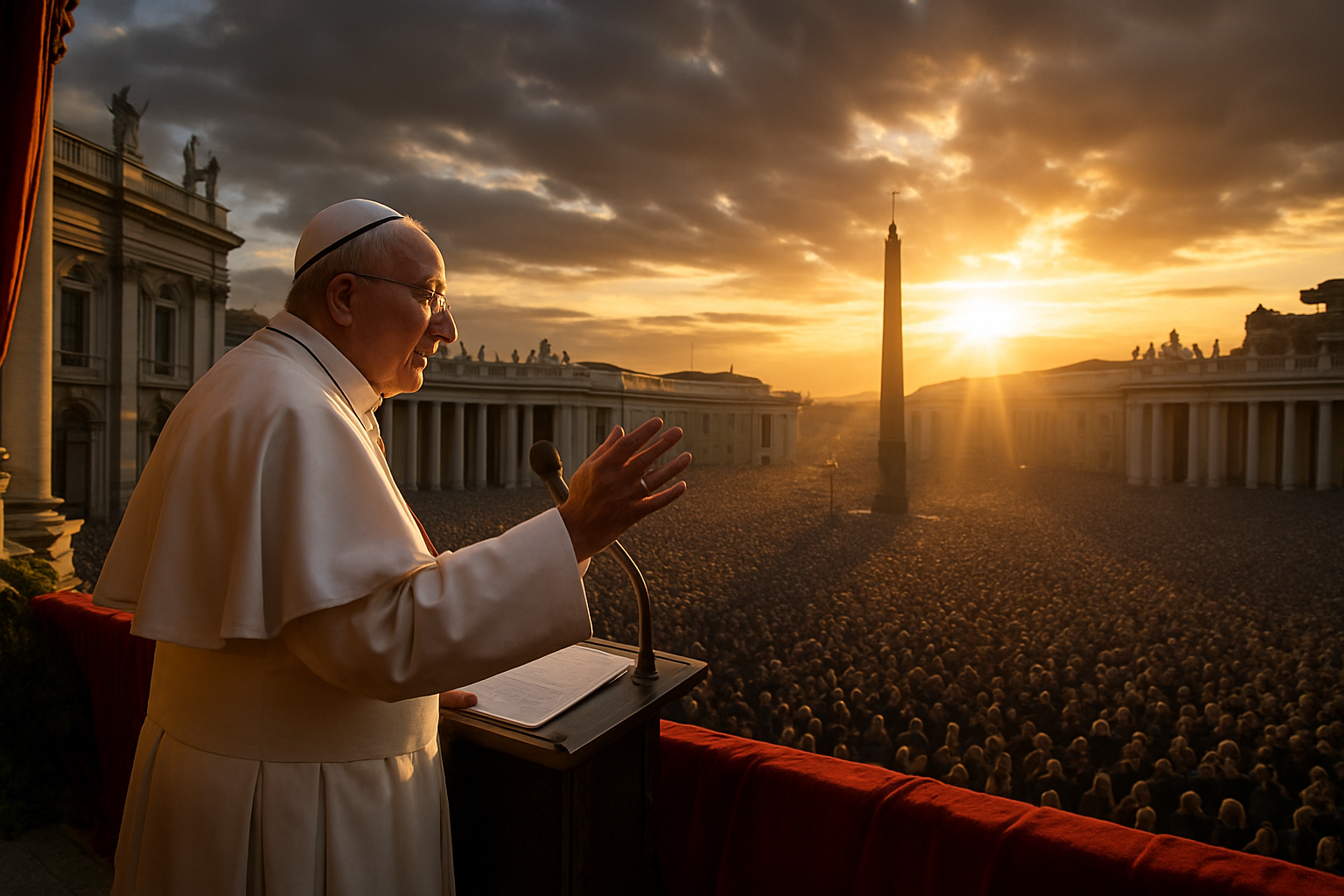
Pope Leo XIV used his first Easter address to deliver an unprecedented condemnation of global "brutality" while churches across five continents held solemn Holy Week observances marked by both deep religious fervor and mounting international tensions.
The American Pope, who has served less than a year since his historic election in May 2025, broke with traditional Easter messaging to directly address what he termed the "atrocious violence of war" affecting peoples across the Middle East and beyond. His remarks came as approximately 2.4 billion Christians worldwide observed the most sacred period of their liturgical calendar.
Papal Condemnation and Religious Renewal
During his Maundy Thursday foot-washing ceremony at the Vatican, Pope Leo XIV washed the feet of 12 priests while using the moment to urge Catholics to "stand with the oppressed." The ritual, commemorating Jesus Christ's washing of his disciples' feet before the Last Supper, took on particular significance as the Pope addressed global conflicts affecting religious communities worldwide.
"This is our God: Jesus, King of Peace, who rejects war, whom no one can use to justify war. He does not listen to the prayers of those who wage war, but rejects them."
— Pope Leo XIV, Maundy Thursday Address
The papal condemnation represents the strongest language yet used by Pope Leo XIV regarding international conflicts, marking a significant escalation from his previous calls for peace. Vatican sources indicate the Pope's remarks were specifically directed at world leaders engaged in military operations, though no nations were named directly.
Global Easter Observances Amid Challenges
Across Latin America, traditional Easter celebrations proceeded with particular intensity. In El Salvador's Izalco district, hundreds of faithful participated in the traditional "Procesión de Los Cristos" on Holy Thursday, one of the most representative expressions of popular religiosity in the Sonsonate Este municipality. The procession brought together believers in an atmosphere of contemplation and spirituality, reaffirming their faith during the commemoration of Christ's passion and death.
Meanwhile, at the church of El Calvario, dozens of penitents arrived with bandaged feet after walking long distances to fulfill promises and express gratitude for received miracles. Men and women advanced in silence and contemplation, elevating prayers in a tradition that annually brings together believers who find in sacrifice a way to express their gratitude.
Papua New Guinea's Spiritual Focus
In Papua New Guinea, the "Life in the Spirit Ministry Easter Crusade" drew hundreds of participants who emphasized spiritual reflection over celebration. Religious leaders in the region stressed that Easter should serve as a time for personal introspection and renewal, highlighting how Christian traditions transcend cultural boundaries while maintaining their essential spiritual character.
The Pacific nation's approach to Easter observance demonstrated how different cultural contexts shape religious expression while preserving core theological messages of resurrection, hope, and spiritual transformation that define the Christian faith.
Historical Context and Papal Legacy
Pope Leo XIV's Easter address comes during his first year as the Church's leader, following the death of his predecessor Pope Francis in early 2025. German media analysis suggests that the new American Pope has distinguished himself as "no self-promoter like his predecessors," focusing instead on substantive theological and moral leadership rather than media-friendly gestures.
The Pope's criticism of global violence occurs amid ongoing international tensions, particularly in the Middle East, where conflicts have affected Christian communities and limited access to holy sites. Earlier this year, there were unprecedented restrictions on Christian worship at the Church of the Holy Sepulchre in Jerusalem during Palm Sunday, marking the first such limitations in centuries and drawing international condemnation.
Easter's Universal Message in Troubled Times
Religious leaders across denominations have emphasized that Easter 2026 carries particular significance given global circumstances. The convergence of Easter with the conclusion of Ramadan has created unique opportunities for interfaith dialogue, with many communities noting how both traditions emphasize themes of spiritual purification, community solidarity, and hope for renewal.
In Germany, where church membership continues to decline, Easter services took on added meaning for remaining faithful communities. Approximately 1.2 million people left German Christian churches in 2025, representing one of the steepest membership declines in the country's religious history, making the Easter message of resurrection and renewal particularly poignant for practicing believers.
Technological Integration and Traditional Practice
This year's Easter observances demonstrated successful integration of technology with traditional religious practices. Churches worldwide utilized digital platforms to connect diaspora communities, enabling global participation through mobile applications for prayer times, scripture reading, and virtual community connections while preserving essential human elements of worship and fellowship.
The synthesis of ancient spiritual traditions with contemporary technological capabilities has allowed Easter celebrations to maintain their authentic character while adapting to modern global realities, serving fundamental human needs for community, meaning, and transcendence.
Economic and Social Impact
Easter 2026 generated significant economic activity across regions, with enhanced security investments demonstrating how sacred seasons drive broader social and economic development. Countries implemented sophisticated coordination between governments, religious institutions, and community organizations to facilitate meaningful celebrations while maintaining social stability.
The success of international religious cooperation during Easter Week has provided frameworks for future observances, showing how ancient spiritual traditions can maintain their essential character through thoughtful innovation and international collaboration.
Looking Forward: Faith in Uncertain Times
As Easter Week concludes, Pope Leo XIV's message of condemnation against global brutality resonates with believers worldwide seeking spiritual guidance amid international uncertainties. His call for peace and justice reflects the Church's continued role as a moral voice in international affairs, particularly regarding conflicts affecting civilian populations and religious communities.
The 2026 Easter celebrations ultimately demonstrated the enduring power of religious tradition and community bonds in the face of global challenges. From elaborate processions in El Salvador to contemplative services in Papua New Guinea, the universal Christian message of resurrection and hope transcended political divisions and geographical boundaries.
For millions of believers worldwide, Easter 2026 will be remembered as a time when their spiritual leader spoke truth to power while their communities reaffirmed ancient traditions that continue to provide meaning, comfort, and direction in an increasingly complex world. The Pope's condemnation of brutality, delivered during Christianity's most sacred season, established a moral framework that extends far beyond religious communities to encompass all those working for peace and human dignity.