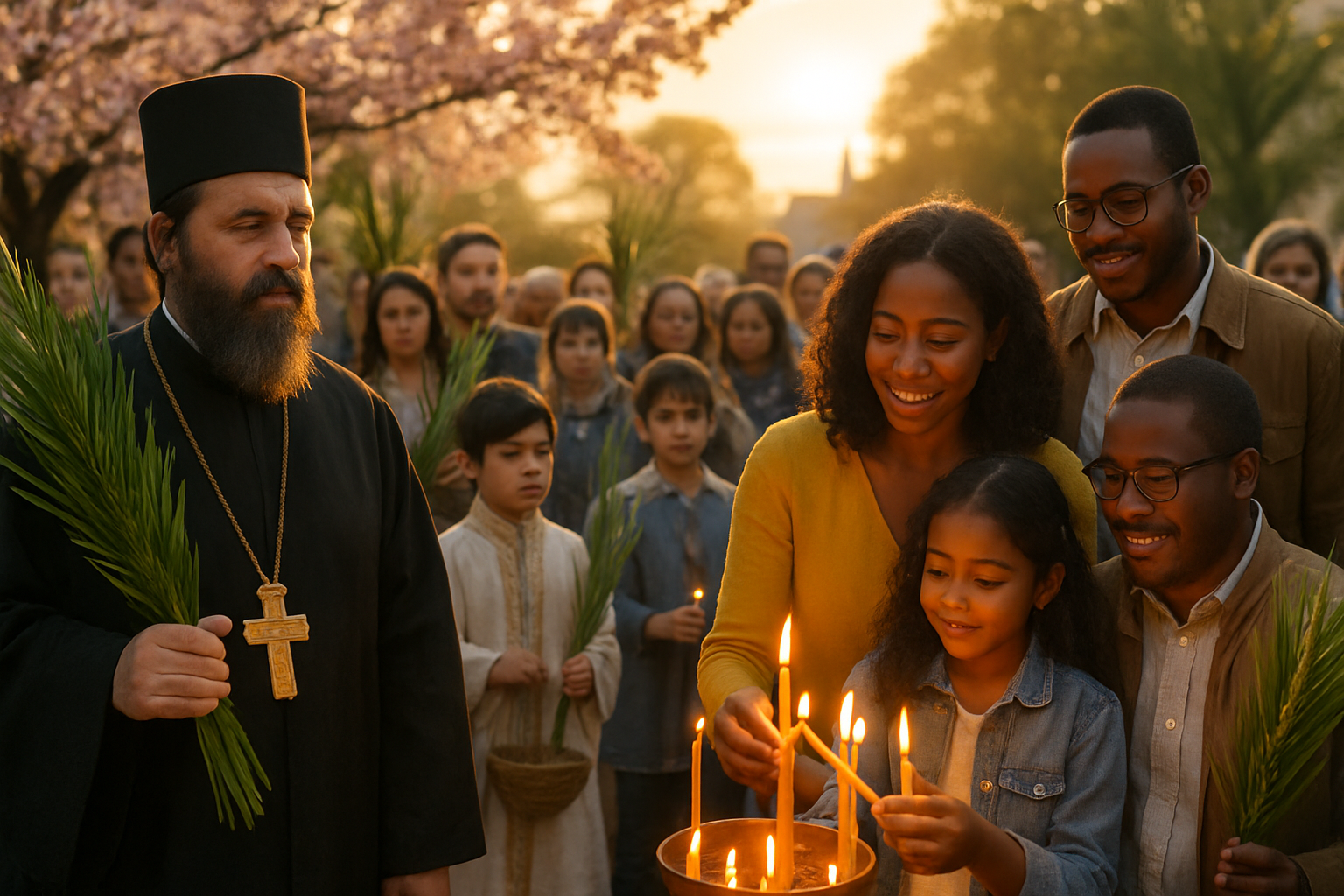
From innovative theatrical productions in Finland to traditional palm blessings in Peru, Easter celebrations in 2026 demonstrate the remarkable adaptability of religious traditions across diverse cultural landscapes, as millions worldwide prepare for Christianity's most significant celebration.
As Palm Sunday ushers in Holy Week 2026, religious observances spanning five continents reveal how ancient Christian traditions continue to evolve while maintaining their essential spiritual character. This year's celebrations occur against the backdrop of unprecedented global cooperation in religious observances, building on the successful simultaneous Ramadan-Lent convergence earlier this year that affected over 4.5 billion believers worldwide.
Nordic Innovation Meets Ancient Tradition
In Finland, the city of Kajaani is transforming traditional Easter narratives through groundbreaking theatrical innovation. The upcoming Easter play represents a radical departure from conventional passion narratives, emphasizing "hope and light instead of suffering." This innovative production uniquely combines biblical Easter stories with Finnish folk poetry and medieval theatrical traditions, creating what organizers describe as a spiritually uplifting experience that speaks to contemporary audiences while honoring historical religious practices.
The Finnish approach reflects a broader Nordic trend toward reimagining religious celebrations for modern contexts. This theological emphasis on renewal and hope rather than solely focusing on suffering demonstrates how Christian communities are adapting their messaging to resonate with contemporary spiritual needs while maintaining doctrinal authenticity.
"The play unites biblical Easter accounts with Finnish folk literature and medieval performance traditions, creating hope and light instead of suffering."
— Kajaani Easter Play Production Team
Cultural Convergence in the Pacific
Meanwhile, in Japan, an unexpected cultural phenomenon is unfolding alongside Easter preparations. Tokyo's cherry blossoms reached full bloom three days earlier than average and two days ahead of last year's schedule, according to the Japan Meteorological Agency. This early hanami season creates a unique convergence of Christian Easter celebrations with Japan's most cherished natural spectacle, offering a poignant reminder of renewal themes common across different cultural and religious traditions.
The early cherry blossom season has created unprecedented opportunities for interfaith dialogue, as Christian communities in Japan incorporate the symbolism of natural renewal into their Easter celebrations. This organic cultural synthesis demonstrates how religious traditions adapt to local environments while maintaining their universal spiritual messages.
Francophone Traditional Observance
In Mauritius, Palm Sunday observances on March 29, 2026, follow centuries-old Catholic traditions with remarkable attention to historical detail. The celebration commemorates Jesus's triumphal entry into Jerusalem six days before the Jewish Passover, when crowds laid cloaks and green branches on the ground creating "a royal path in his honor."
Mauritian Catholics participate in the traditional blessing of palm branches—using local buis, olive, laurel, or palm varieties depending on regional availability. These blessed branches, carried by faithful during processions, become treasured household items throughout the year, representing the connection between public religious celebration and private devotion that characterizes Catholic practice worldwide.
The Mauritian approach exemplifies how global Catholic communities maintain liturgical uniformity while incorporating local botanical and cultural elements, creating authentic expressions of universal Christian themes through distinctly local practices.
Nordic Ecclesiastical Traditions
Norway's religious calendar features traditional Palm Sunday mass broadcast from St. Peter's Square, connecting Norwegian faithful to the global Catholic community centered in Vatican City. This broadcast tradition represents the sophisticated technological integration that has enabled religious communities to maintain connections across vast geographical distances, particularly significant in Nordic countries where Catholic populations remain minorities within predominantly Lutheran societies.
The Norwegian experience reflects broader Scandinavian approaches to religious diversity, where minority Christian denominations maintain strong connections to international religious communities while integrating into predominantly Protestant cultural frameworks.
Latin American Cultural Memory
Peru offers perhaps the most fascinating glimpse into the intersection of religious tradition and cultural memory. In Lima, recent investigations into historical Semana Santa (Holy Week) celebrations reveal how the city once observed religious periods with extraordinary devotion. Historical accounts describe how "Lima fell silent and even horseback riding seemed profane" during Holy Week observances, before modern travel and camping transformed traditional celebration patterns.
The Peruvian case illustrates how contemporary Easter celebrations exist in dialogue with cultural memory, as communities navigate between historical religious practices and modern lifestyle changes. Palm Sunday in Peru traditionally marks the beginning of the most sacred week in the Christian calendar, with elaborate processions and community gatherings that trace their origins to colonial-era Spanish Catholic traditions adapted to Andean cultural contexts.
"Historical Lima experienced Semana Santa when the city fell silent and even horseback riding seemed profane, before travel and camping changed everything."
— El Comercio Historical Analysis
Global Religious Coordination in 2026
These diverse Easter celebrations occur within the context of 2026's unprecedented year of global religious cooperation. The successful coordination of Ramadan and Lent observances earlier this year—affecting nearly 2.5 billion believers simultaneously—established new templates for international religious accommodation and interfaith understanding.
Building on Saudi Arabia's massive religious diplomacy program that distributed 2.2 million Quran copies to 120 countries and the Catholic Church's enhanced Lenten programming, Easter 2026 represents the culmination of a year marked by sophisticated religious coordination across cultural and national boundaries.
Technology and Tradition Synthesis
Across all these celebrations, a common theme emerges: the successful integration of traditional religious practices with contemporary technological capabilities. From Finland's innovative theatrical productions to Norway's international broadcast connections, from Japan's early weather reporting enabling cultural planning to Mauritius's detailed liturgical preparations, religious communities are demonstrating remarkable adaptability.
Mobile applications for prayer times, virtual participation opportunities for diaspora communities, and enhanced communication systems are enabling global participation in local celebrations while preserving the authentic community-centered character that defines meaningful religious observance.
Economic and Social Impact
The economic implications of Easter 2026 celebrations extend far beyond religious communities. Cultural tourism, hospitality industries, and retail sectors across participating countries report significant benefits from coordinated religious celebration programming. Finland's innovative theatrical approach is attracting international attention, Japan's early cherry blossom season is boosting tourism during Easter travel periods, and traditional celebrations in Mauritius, Norway, and Peru are supporting local artisan networks and cultural industries.
Template for Future Religious Cooperation
As Holy Week 2026 unfolds, these diverse Easter celebrations provide compelling evidence for religion's continued relevance in contemporary global society. The successful adaptation of ancient spiritual traditions to modern circumstances, while maintaining authentic religious character, offers a template for future international religious cooperation.
The emphasis on hope, renewal, and community solidarity that characterizes Easter celebrations worldwide resonates across cultural boundaries, providing shared values that transcend national and linguistic differences. From Finland's innovative hope-centered narratives to Peru's culturally rich traditional observances, Easter 2026 demonstrates religion's capacity to unite diverse communities while celebrating distinctive local traditions.
As millions prepare for Easter Sunday celebrations, the global religious coordination achieved in 2026 suggests that ancient spiritual traditions will continue finding meaningful expression in an increasingly interconnected world, serving fundamental human needs for community, meaning, and transcendence while adapting to contemporary realities through thoughtful innovation and international cooperation.