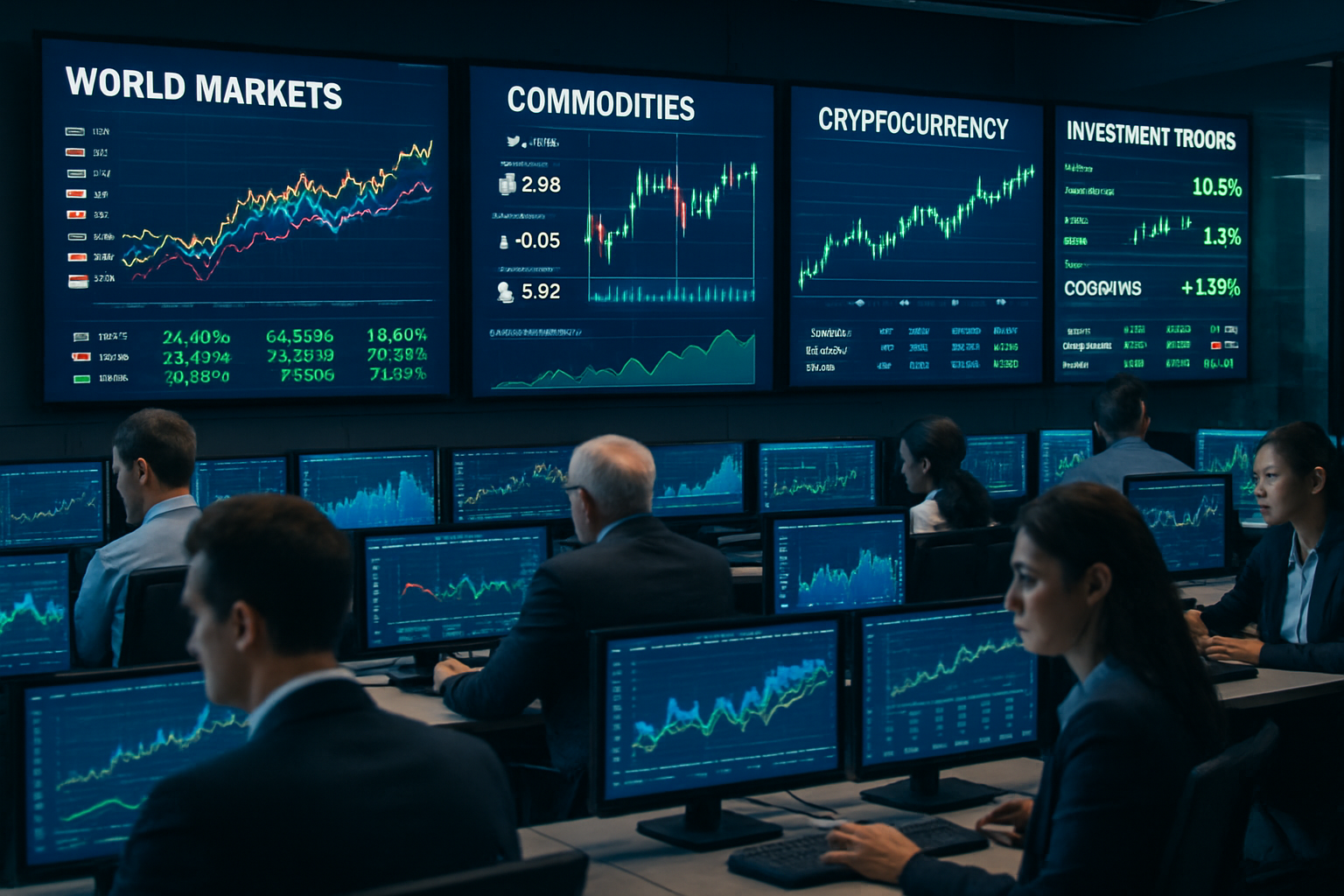
The global economic landscape continues to evolve rapidly as nations grapple with energy price volatility, investment realignments, and accelerating digital transformation, creating new patterns of international cooperation and competition across multiple continents.
Energy Price Management and Regulatory Responses
Australia's ongoing struggle with fuel price management reflects broader global challenges stemming from March 2026's unprecedented energy crisis. Western Australia has implemented mandatory price reporting through FuelWatch, with hefty fines for non-compliance, while New South Wales Fair Trading officers conducted the largest fuel price monitoring operation in history, inspecting nearly 1,800 service stations and issuing 93 fines for price gouging violations.
The crisis, which saw oil prices breach $119.50 per barrel for Brent crude during the Strait of Hormuz blockade affecting 40% of global oil transit, continues to influence regulatory frameworks worldwide. Australian fuel retailers face particular scrutiny as prices approach critical thresholds, with government officials warning that recovery to pre-crisis levels may take significantly longer than initially anticipated.
"Donald Trump says oil prices will fall rapidly. Australian fuel companies are preparing for a longer setback."
— Sydney Morning Herald Analysis
Pakistan's economic indicators show resilience despite the energy shock, with foreign investment continuing in treasury bills offering attractive 11.5% returns compared to the State Bank's 10.5% policy rate. However, 90% of foreign investment in domestic bonds was withdrawn during the crisis period, highlighting the ongoing sensitivity of international capital to geopolitical risks.
Strategic Resource Investments and Regional Partnerships
In a significant development for global lithium supply chains, South Korean giant Posco International is finalizing its $65 million acquisition of the HMN lithium project in Argentina's Salar del Hombre Muerto. The transaction, involving NRG Metals Argentina and scheduled to close April 7, positions Posco as a key player in South American lithium production with potential annual output of 15,600 tonnes of lithium carbonate.
Azerbaijan's industrial transformation continues with the establishment of the Western Industrial Park, marking a decisive shift beyond raw material exports toward diversified manufacturing. This initiative focuses on expanding iron ore processing and developing metallurgical value chains, positioning the country as a strategic player in global metals markets where supply security has become increasingly critical.

Corporate Earnings and Market Dynamics
Corporate performance across regions reveals mixed results amid global economic uncertainty. Hong Kong's financial sector demonstrated resilience in Q1 2026, with Financial Secretary Paul Chan attributing stable performance to mainland China's steady growth despite increased stock market volatility from Middle East tensions.
European markets show signs of both stress and adaptation. The UK achieved a record 52.5% renewable energy contribution to electricity generation in 2025, though fossil fuel usage also increased, highlighting the complex energy transition dynamics. Meanwhile, the Eurosystem published its comprehensive payments strategy, signaling major changes in European financial infrastructure to address technological disruption and maintain monetary sovereignty.
In the technology sector, SpaceX's confidential IPO filing represents potentially the largest public offering in history, targeting up to $50 billion in capital raising. This comes as the space industry consolidates around major players while facing operational challenges across the broader tech sector.
Circular Economy and Sustainability Initiatives
Bolivia's carbon market development, despite being decades behind global trends, illustrates emerging opportunities in environmental finance. The Bolivia Carbon Forum 2026 highlighted both the country's potential and the significant policy changes needed to monetize carbon capture effectively.
Fundares, Bolivia's foundation for recycling and sustainability, has operated for 17 years developing circular economy frameworks. According to Director Julio Silva, sustainability has evolved from aspirational to necessary for competitive success, particularly as global supply chains face increasing environmental regulation.
Currency Markets and Digital Payment Evolution
Currency dynamics continue shifting as central banks pursue increasingly independent monetary policies. China's call for enhanced US-China economic dialogue coincides with expanding trade relationships across multiple regions, while digital payment systems gain ground in practical applications.
The contrast between volatile cryptocurrency markets and stable government-backed digital payment systems becomes increasingly pronounced. Nigeria's success processing 43% of fuel sales through digital channels with same-day settlements demonstrates practical fintech applications outperforming speculative alternatives during crisis periods.
"While the world monetizes carbon capture for decades, Bolivia is just beginning to explore this market. Twenty years have passed since this possibility began, but political decisions set it aside."
— Julio Silva, Director, Fundares
Regional Economic Integration and Trade Policy
Trinidad and Tobago's Caribbean Airlines faces significant challenges with cumulative losses of over TT$1.7 billion since acquiring Air Jamaica in 2011. While Air Jamaica routes generate revenue, rising personnel and administration costs since 2020 highlight operational pressures affecting regional transportation networks.
Colombia's mining sector confronts regulatory uncertainty as foreign direct investment in mining fell 53% in the first three quarters of 2025. This occurs as global competition intensifies for critical minerals needed in energy transitions, with regulatory clarity becoming essential for attracting necessary investments.
Infrastructure Development and Economic Diversification
Cyprus demonstrates resilience with strategic positioning in energy and finance sectors. The island's renewable energy initiatives and financial services expansion provide models for small economies navigating global economic volatility through diversification strategies.
Germany's market intervention measures to prevent gas station price manipulation represent significant policy shifts in one of Europe's most market-oriented economies. These emergency responses establish new precedents for government involvement during energy crises.
Investment Strategy Evolution
The March 2026 energy crisis accelerated fundamental changes in investment approaches. Portfolio managers increasingly focus on country-specific fundamentals rather than broad regional themes, with institutional quality and regulatory clarity becoming primary success factors.
Emerging markets with strong governance frameworks consistently outperformed during global challenges, demonstrating that institutional resilience matters more than geographic categorization. This trend supports increased investment in nations implementing comprehensive economic reforms while maintaining political stability.
Digital financial infrastructure proves valuable during crises, with government-backed systems showing superior stability compared to volatile private alternatives. Slovakia's €1.3 billion digital euro pilot and Zimbabwe's Ndarama platform exemplify practical implementations of monetary technology serving real economic needs.
Long-term Economic Implications
The convergence of energy security concerns, technological transformation, and changing geopolitical relationships creates a complex environment requiring adaptive strategies. Countries successfully navigating these challenges combine innovation with institutional stability, demonstrating that economic modernization requires both technological advancement and regulatory clarity.
Supply chain diversification accelerated by recent crises fundamentally alters global trade patterns. Nations developing domestic capabilities in critical sectors while maintaining international cooperation gain competitive advantages in an increasingly multipolar economic environment.
The template being established in 2026 for crisis management, international cooperation, and economic governance will influence global economic architecture for decades. Success factors include institutional quality, policy consistency, international partnership management, and the ability to balance innovation with stability during turbulent periods.