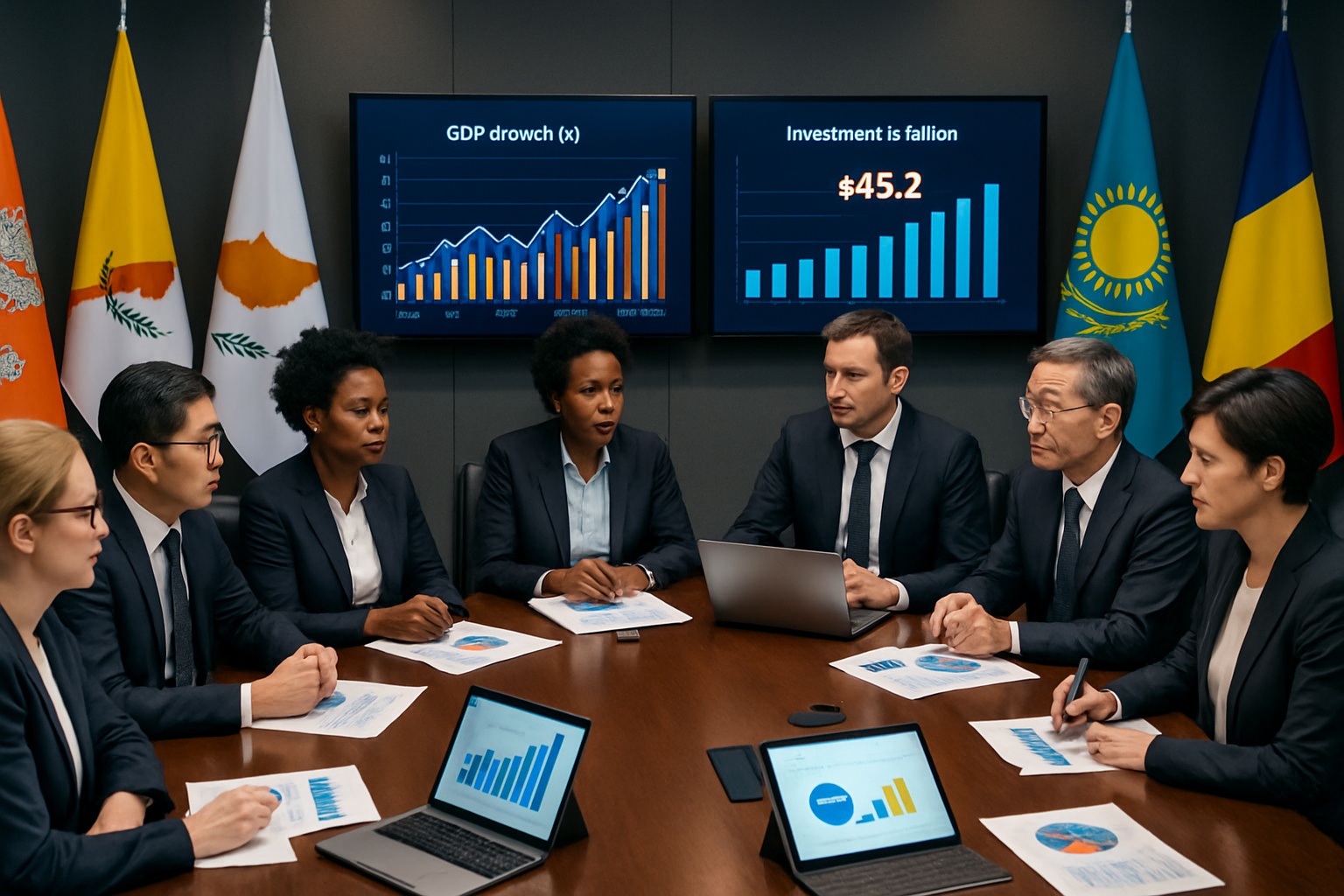
A coordinated surge in economic growth and strategic investment announcements across four nations demonstrates the strengthening momentum of global economic development, with Bhutan targeting steady 6.9% GDP expansion, Cyprus outperforming European peers, Kazakhstan securing up to $1 billion in World Bank financing, and Romania attracting major real estate investment.
Bhutan Charts Sustainable Growth Path
Bhutan's economy is transitioning from event-driven expansion to sustainable growth patterns, with the Finance Ministry's Second Quarter Economic Outlook for FY 2025-2026 projecting 6.9% GDP growth this year. This represents a measured slowdown from last year's robust 8.7% expansion, which was bolstered by major national events including the Global Peace Prayer Festival and other significant gatherings.
The Himalayan kingdom's economic strategy reflects a deliberate shift toward stability and predictability, moving away from the volatility associated with large-scale events. This approach aligns with Bhutan's unique Gross National Happiness development philosophy, emphasizing balanced and sustainable progress over rapid but potentially unsustainable expansion.
"This year's growth target represents our commitment to building a resilient economic foundation," according to Finance Ministry officials. The strategy focuses on maintaining steady progress while preserving the country's environmental and cultural values, positioning Bhutan as a model for sustainable development in the region.
Cyprus Leads European Economic Performance
Cyprus has emerged as a standout performer in the European economic landscape, with national statistical service Cystat reporting impressive 4.5% year-on-year GDP growth in the fourth quarter of 2025. This performance significantly outpaces broader eurozone averages, confirming the island nation's continued economic resilience.
The growth momentum has been particularly strong across multiple quarters, with GDP increasing 1.4% quarterly in Q4, following consistent growth of 0.9% in Q3, 0.8% in Q2, and 1.3% in Q1. This sustained performance demonstrates the underlying strength of Cyprus's diversified economy.
Key drivers of this exceptional performance include robust activity in wholesale and retail trade, motor vehicle repairs, information and communication sectors, and the hospitality industry. The tourism and business services sectors have shown particular resilience, contributing to Cyprus's position as a regional economic hub.
The consistent quarterly growth pattern suggests that Cyprus has successfully navigated recent global economic uncertainties while maintaining competitiveness in key sectors. This performance positions the country favorably for continued expansion in 2026.
Kazakhstan Secures Major World Bank Partnership
In a significant development for Central Asian economic development, Kazakhstan has entered discussions with the World Bank Group for a comprehensive partnership framework covering 2026-2031 that could provide up to $1 billion in annual financing. This ambitious initiative represents one of the region's largest international development commitments.
Deputy Prime Minister and Minister of National Economy Serik Zhumangarin led high-level meetings with World Bank representatives on February 12, reviewing the draft strategy and outlining priority cooperation areas. The framework emphasizes infrastructure development, private-sector growth, and comprehensive economic reforms designed to enhance Kazakhstan's long-term competitiveness.
"This partnership framework represents a transformative opportunity for Kazakhstan's economic modernization and regional integration efforts."
— Serik Zhumangarin, Deputy Prime Minister
The substantial annual financing commitment signals international confidence in Kazakhstan's reform trajectory and strategic position as a bridge between Europe, Asia, and the Middle East. The partnership is expected to catalyze additional private investment and support the country's diversification efforts beyond traditional resource sectors.
Priority areas include transportation infrastructure, digital economy development, renewable energy projects, and financial sector modernization. The multi-year framework provides predictability for long-term planning while maintaining flexibility to adapt to evolving economic conditions.
Romania Attracts Major Real Estate Investment
Romania's real estate sector continues to attract significant international investment, with developer Redport securing €9 million financing from Intesa Sanpaolo Bank Romania for the Vitality Est residential project in eastern Bucharest. The financing package includes a dedicated VAT facility of approximately RON 5 million, demonstrating sophisticated financial structuring.
The Vitality Est project, developed in partnership with businessman Dan Șucu, represents a major addition to Bucharest's residential landscape. Located near Lake Pantelimon and positioned in the upper-medium residential segment, the development will span 27,000 square meters and include 500 apartments plus 400 square meters of commercial space.
The first phase will deliver 145 residential units, including studios, two-room and three-room apartments, as well as units with private gardens. The development will integrate a Lidl store and benefit from proximity to major amenities including Esplanada Mall and Ikea Pallady, enhancing its appeal to residents and investors.
This investment reflects growing confidence in Romania's residential market and the country's position as an attractive destination for international real estate capital. The project's comprehensive approach, combining residential, commercial, and retail elements, demonstrates the sophistication of Romania's development sector.
Global Economic Context and Implications
These developments occur within a broader context of coordinated global economic expansion and increased international cooperation. The diversity of approaches—from Bhutan's sustainable growth model to Cyprus's service sector success, Kazakhstan's infrastructure focus, and Romania's real estate attraction—demonstrates multiple pathways to economic development.
The timing of these announcements suggests strengthening confidence in emerging market opportunities and the effectiveness of targeted development strategies. International financial institutions are demonstrating increased willingness to support large-scale, multi-year commitments, indicating optimism about global economic stability.
Regional integration initiatives, including the African Continental Free Trade Agreement and various Asian connectivity projects, are creating new opportunities for cross-border investment and economic cooperation. This trend is evident in Kazakhstan's strategic positioning and Cyprus's role as a regional business hub.
Investment Patterns and Future Outlook
The financing structures evident in these cases reflect sophisticated approaches to development funding. Kazakhstan's World Bank partnership represents multilateral institutional support, while Romania's private banking arrangement demonstrates commercial confidence in specific market segments.
Technology integration is becoming increasingly important across all these developments, with digital infrastructure, smart city concepts, and automated systems featured prominently in planning documents. This emphasis on modernization ensures that current investments will remain competitive in evolving global markets.
Environmental sustainability considerations are also playing an increasing role in project design and financing decisions. Bhutan's focus on sustainable growth, Cyprus's service sector emphasis, and Romania's integrated development approach all reflect growing awareness of long-term environmental and social impacts.
The success of these diverse approaches provides templates for other emerging economies seeking to attract investment while maintaining sustainable development principles. The combination of international partnerships, private sector engagement, and strategic planning demonstrates the sophistication of contemporary economic development strategies.
As these projects advance through 2026, they will provide valuable insights into effective approaches for balancing rapid growth with sustainability, international partnership with domestic priorities, and economic development with environmental protection.