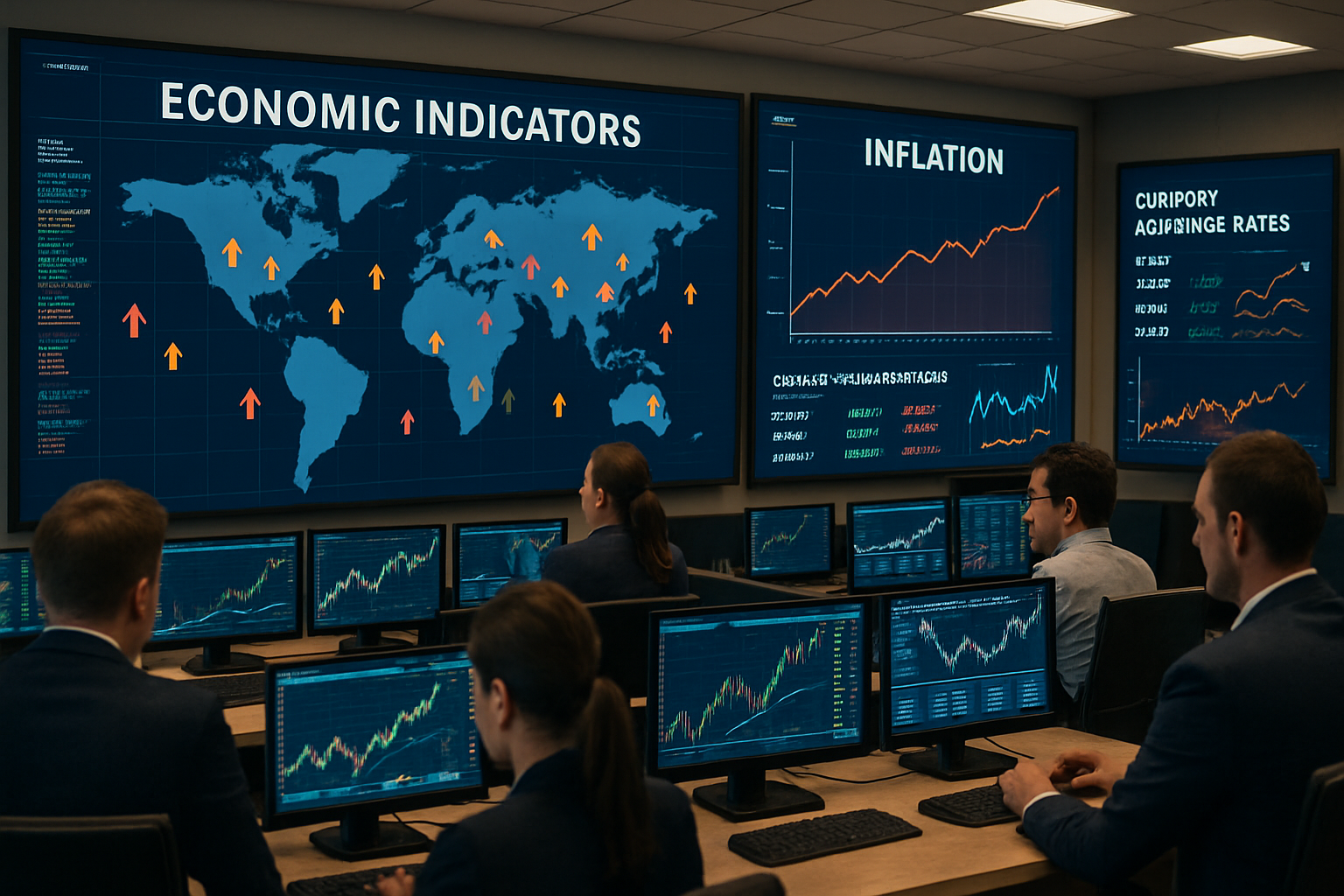
Global economic indicators painted a complex picture in March 2026, with inflation pressures mounting across several key markets while central banks navigate increasingly divergent monetary policy paths. From Bolivia's rising producer prices to Pakistan's currency fluctuations and Italy's growth concerns, the latest data underscores the fragmented nature of the global economic recovery.
Bolivia's Producer Price Index Signals Inflationary Pressures
Bolivia's National Statistics Institute (INE) reported that the Producer Price Index (IPP) registered a monthly variation of 0.07% in February compared to January, marking the latest sign of persistent inflationary pressures in the region. The accumulated increase for the year reached 0.71%, while the 12-month variation climbed to a significant 20.15%.
The modest monthly increase was primarily driven by rising prices in services, as well as in the fishing, minerals, and natural gas sectors. These industries had a positive impact on the general behavior of the indicator during February, reflecting broader commodity price pressures that have characterized global markets throughout early 2026.
"The IPP measures the behavior of average prices of goods and services at the moment they leave the place of production. Unlike other indicators, it does not consider household consumption expenditure, so the Consumer Price Index (CPI) continues to be the official reference for measuring inflation in the country."
— Bolivia's National Statistics Institute
The elevated producer price inflation in Bolivia comes amid broader regional challenges, with the country's state oil company YPFB also renegotiating fuel import contracts to ensure quality and avoid the arrival of destabilized gasoline. Minister of Hydrocarbons Mauricio Medinaceli confirmed that YPFB had renegotiated contracts to prevent defective fuel from reaching the market, following previous quality issues that resulted in nearly 5 million bolivianos in compensation payments to affected consumers.
Pakistan Faces Currency and Commodity Price Volatility
Pakistan's economic indicators revealed ongoing challenges with currency stability and commodity price pressures. The Pakistani rupee registered minor changes against the US dollar, with a buying rate of 279.4 and a selling rate of 280, while currency exchange rates continue to impact trade balances, inflation, and remittances crucial for the economy.
Gold prices in Pakistan demonstrated the volatile precious metals market, standing at Rs467,262 per tola after recording a decrease of Rs1,000 in the previous session. The price of 10 grams stood at Rs400,601, reflecting global uncertainty that has driven investors toward traditional safe-haven assets.
The fluctuations in exchange rates significantly affect foreign direct investment (FDI), as a stable and predictable exchange rate environment typically attracts foreign investors by reducing the risk of exchange rate losses. Pakistan's economy remains particularly sensitive to these variations given its reliance on remittances and imported energy.
European Growth Concerns Mount
Italy faced a significant economic outlook downgrade from Moody's, which revised the country's 2026 GDP growth forecast down to just +0.7%. The rating agency cited concerns about escalating tensions in Iran and Italy's high exposure to energy imports from the Gulf region as key factors weighing on the economic outlook.
The downward revision reflects broader European vulnerabilities to geopolitical tensions, particularly in energy markets. Italy's heavy reliance on energy imports makes it especially susceptible to supply disruptions and price volatility emanating from Middle Eastern conflicts.
Moody's also projected that Italian inflation would accelerate in the near term, with growth expected to recover only modestly to +0.8% in 2027. This cautious outlook underscores the challenging balance European policymakers face between supporting growth and controlling inflation in an increasingly uncertain global environment.
Mortgage Markets Under Pressure from Inflation
The persistent inflation pressures are creating ripple effects across financial markets, particularly in mortgage lending. Italian consumers are facing rising interest rates that are making both fixed and variable rate mortgages more expensive, forcing borrowers to explore various strategies to manage increased costs.
From extending loan maturities to refinancing options, Italian consumers are adapting to an environment of rising interest rates driven by inflation concerns. The mortgage market pressures reflect broader monetary policy challenges as central banks worldwide grapple with balancing economic growth against price stability objectives.
Central Bank Policy Divergence Intensifies
The latest economic data comes amid an era of unprecedented central bank policy divergence, marking a significant departure from the coordinated monetary responses that characterized the post-2008 financial crisis period. While the European Central Bank has maintained its deposit rate at 2%, other major economies have pursued increasingly independent approaches based on domestic economic conditions.
Historical context from recent months shows this fragmentation intensifying. In February 2026, Argentina achieved notable currency stability despite elevated inflation projections, while countries like Australia have pursued more aggressive tightening cycles. This divergence reflects the maturation of emerging market central banking and the recognition that one-size-fits-all monetary policies may be insufficient for addressing varied regional challenges.
Energy Price Volatility Complicates Policy Decisions
The economic indicators are being shaped significantly by ongoing energy market volatility. The Strait of Hormuz tensions that emerged in March 2026 have created the most severe energy security crisis in decades, with oil prices breaching $100 per barrel for the first time since 2022.
This energy price surge has complicated monetary policy decisions worldwide, as central banks must distinguish between temporary supply shocks and persistent inflationary pressures. The challenge is particularly acute for countries like Italy, which depend heavily on energy imports and face direct transmission of global energy price increases into domestic inflation.
Technology and Infrastructure Challenges
Adding complexity to the economic landscape is an ongoing global semiconductor crisis, with memory chip prices experiencing sixfold increases due to supply constraints. This technological infrastructure challenge affects everything from smart building systems to financial sector digitization, creating additional cost pressures for businesses and consumers alike.
The semiconductor shortage has forced businesses to prioritize essential technology investments while deferring non-critical upgrades, contributing to broader economic uncertainty and investment delays across multiple sectors.
Regional Economic Resilience Varies
Despite global challenges, some regions have demonstrated remarkable resilience. Cyprus, for example, has achieved a rare combination of low inflation (0.9% in February 2026) and strong labor market performance (2.8% job vacancy rate among the EU's highest), positioning it as a regional economic leader.
Such divergent performance patterns suggest that country-specific factors—including institutional quality, policy effectiveness, and economic diversification—are becoming increasingly important determinants of economic outcomes, regardless of broader global trends.
Investment Strategy Evolution
The mixed global economic signals are driving a fundamental evolution in investment strategies. Traditional broad-based regional or emerging market approaches are giving way to more sophisticated, country-specific analysis that prioritizes institutional quality, policy consistency, and local economic fundamentals over geographic proximity or historical categorizations.
This shift rewards investors with deep understanding of local conditions and regulatory environments while challenging traditional sector-based investment approaches. The success of countries with strong institutional frameworks in outperforming despite challenging global conditions demonstrates the premium now placed on governance quality and policy credibility.
Outlook: Navigating Persistent Uncertainty
As economic indicators continue to show mixed signals across global markets, policymakers and investors face an environment requiring unprecedented adaptability. The combination of persistent inflation pressures, energy market volatility, technological constraints, and geopolitical tensions creates a complex backdrop for economic decision-making.
Success in this environment appears to depend increasingly on sophisticated policy frameworks that can balance domestic objectives with international pressures, while maintaining institutional credibility and policy consistency. Countries that have invested in strong governance structures, diversified economic bases, and adaptive policy capabilities are demonstrating superior resilience to global shocks.
The March 2026 economic landscape represents a critical juncture where traditional approaches to economic coordination are being tested, and new models of economic governance may be emerging. The ability of individual countries and regions to navigate these challenges while maintaining price stability, supporting growth, and preserving social cohesion will likely determine economic outcomes for years to come.